
¤ 7 minutes Read
Triund Trek - Route, Difficulty, Best Time & Himalayan Views

The Triund Trek is one of the most popular short Himalayan hikes in Himachal Pradesh. Starting from the hills above McLeod Ganj and Dharamkot, the trail climbs through forests, rocky paths and open mountain slopes before reaching a grassy ridge at approximately 2,850 metres above sea level.
What makes this trek particularly appealing is how quickly the landscape changes. The lower sections pass through shaded woodland, while the upper trail opens towards the rugged Dhauladhar mountains. From the ridge, trekkers can see the Kangra Valley stretching out on one side and steep Himalayan slopes rising on the other.
Location
Near McLeod Ganj, Himachal Pradesh
Altitude
Approx. 2,850 m
Trek Distance
Approx. 7–9 km one way
Difficulty
Easy to moderate
Ascent Time
Approx. 4–6 hours
Best Season
March–June and September–November
Best Time to Visit Triund Trek
The best time for the Triund Trek is generally March to June and September to November, when the trail is more likely to be suitable for hiking. However, conditions vary considerably between early spring, summer and late autumn.
Spring brings milder temperatures and greener surroundings, while autumn is often preferred for clearer views of the Dhauladhar mountains. The monsoon months require greater caution because rain can make the rocky trail slippery.
March to April
Pleasant conditions are possible on clear days, although early spring may still bring cold weather and lingering snow on higher sections.
May to June
Longer daylight hours make day hikes easier to plan. The trail can become busy, and afternoon clouds or thunderstorms remain possible.
July to August
Monsoon rain can reduce visibility and make steep, rocky stretches hazardous. Heavy rainfall may also disrupt access to the trail.
September to November
Post-monsoon skies can provide excellent mountain visibility. Temperatures gradually fall, particularly during mornings and evenings.
December to February
Snow and ice can make the ascent considerably harder. Trail access may be restricted, and winter trekking should not be treated as a normal beginner hike.
Triund Trek Route - From Dharamkot to the Ridge
The most commonly used route to Triund begins near Dharamkot, above McLeod Ganj. Many trekkers approach the trail through Gallu Devi Temple, a familiar starting point where the forest path leads towards the Dhauladhar foothills.
The climb becomes more interesting as the surroundings change. Pine and oak trees dominate the early sections, while the higher stretches have fewer trees, rougher terrain and wider mountain views.
The Final Climb
The last stretch deserves a little patience. Loose stones, uneven steps and the increasing elevation can make progress slower than expected. However, the open landscape also makes it easier to appreciate the height gained during the ascent.
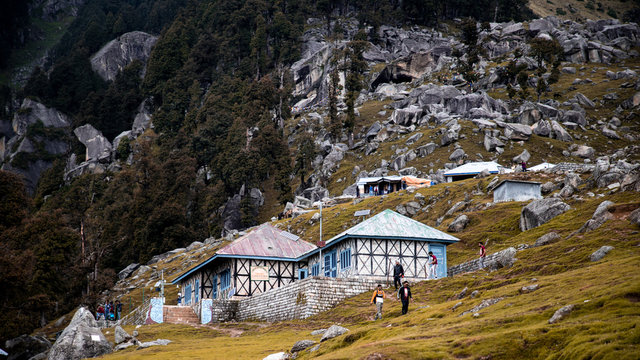
At the top, the contrast is striking: the Dhauladhar mountains rise sharply behind the ridge, while the Kangra Valley spreads out below.
How Difficult Is the Triund Trek?
Triund is generally rated easy to moderate, making it accessible to first-time trekkers with reasonable fitness. However, the difficulty comes less from technical climbing and more from the sustained uphill walk, uneven terrain and changing mountain weather.
Someone who regularly walks or exercises may find the ascent manageable. For beginners who are not used to climbing hills, the steeper sections can be tiring, particularly towards the end.
Can Beginners Complete the Triund Trek?
Yes, many beginners complete Triund successfully, especially when they start early and maintain a comfortable pace. Taking short breaks, carrying enough drinking water and wearing shoes with reliable grip can make the climb easier.
However, people with limited walking experience should avoid rushing. Snow, heavy rain or icy patches can turn an otherwise manageable hike into a much more demanding outing.
What to Expect at Triund Top
Reaching Triund feels different from walking through the forest below. The trees give way to a broad, grassy ridge, with the Dhauladhar mountains forming a dramatic backdrop. There are no elaborate structures or sightseeing points here. The landscape itself is the main attraction.
- The Dhauladhar Mountain Wall
- Views Across the Kangra Valley
- The Open Ridge
What to Carry for the Triund Trek
Packing for Triund is fairly straightforward if you are planning a day hike. The main priorities are comfortable footwear, enough water and clothing that can handle sudden weather changes. Even when McLeod Ganj feels warm, conditions can be noticeably colder and windier higher up.
Triund Day Trek Packing Checklist
Triund Trek Permits, Entry Rules and Camping
Before planning your hike, it is important to understand that Triund lies within a regulated mountain area. Forest authorities may control access, visitor numbers and camping activities to protect the environment and manage trekking safety.
Entry Permission
Trekkers should confirm the current registration or permit requirements before arriving at the trailhead. Do not assume that access is unrestricted throughout the year.
Camping Restrictions
Overnight camping at Triund is subject to forest department regulations. Do not assume that carrying your own tent or booking through a private operator automatically permits an overnight stay.
Trail Access and Safety Checks
Authorities may restrict trekking during snowfall, heavy rainfall or other unsafe conditions. Follow instructions at forest checkpoints and avoid continuing along a closed route.
Conclusion
Triund is a rewarding introduction to trekking in the Dhauladhar range. The climb requires effort, but reaching the open ridge and seeing the mountains rise above the Kangra Valley makes the experience worthwhile.
The key to enjoying Triund is planning around your own fitness and the conditions on the trail. Choose a suitable season, start with enough daylight and allow yourself time to enjoy the surroundings rather than rushing to the top.
For those visiting McLeod Ganj, the trek adds a different perspective to the region. Beyond the busy streets and hillside cafés, Triund reveals the quieter, more rugged landscape that defines this part of Himachal Pradesh.
Explore Himachal Pradesh
Varanasi Blogs
- Uttar Pradesh Cultural guide
- Places to visit in Varanasi
- Places to visit nearby Varanasi
- India’s most popular destination
- India’s archaeological marvels
Recommended articles
- Uttar Pradesh Cultural guide
- Places to visit in Varanasi
- Places to visit nearby Varanasi
- India’s most popular destination