
¤ 8 minutes Read
Gateway of India: History, Architecture & Things to See

The Gateway of India stands at the edge of Mumbai Harbour, overlooking the Arabian Sea. With its enormous stone arch, intricate carvings and constant movement of ferries, it is one of the city’s most recognisable landmarks.
Built to commemorate the 1911 visit of King George V and Queen Mary to India, the monument was completed in 1924. Its design combines elements of Indian and Islamic architecture, reflecting the architectural style favoured for several prominent buildings during British rule.
Location
Apollo Bunder, Colaba, Mumbai
Completed
1924
Architect
George Wittet
Height
26 metres
Architectural Style
Indo-Saracenic
Built To
Commemorate the 1911 royal visit
History of the Gateway of India
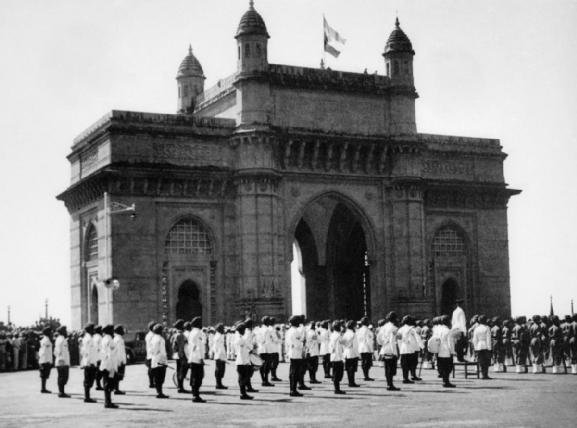
The Gateway of India was conceived during British rule, when Bombay, now Mumbai, was an important port and commercial centre. Although the monument was intended to welcome royalty arriving by sea, its most memorable historical moment came decades later, when British soldiers departed from India.
From a Royal Visit to a National Landmark
In December 1911, King George V and Queen Mary arrived in Bombay during their visit to India. The permanent Gateway had not yet been constructed, so a temporary ceremonial structure was used for the royal reception.
The foundation stone was laid on 31 March 1913. Scottish architect George Wittet designed the monument, and construction began in 1920 after the necessary waterfront reclamation work.
A Different Meaning After Independence
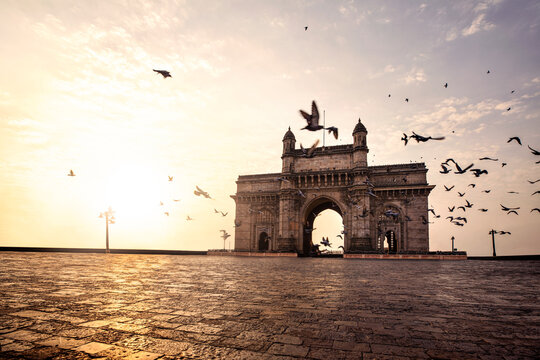
The Gateway was originally built as a ceremonial entrance representing British imperial authority. Following India’s independence in 1947, its meaning began to change.
The departure of British troops in February 1948 gave the monument an unexpected place in the story of India’s transition from colonial rule. An arch once associated with welcoming British royalty became linked to the end of Britain’s military presence.
Today, the Gateway remains a reminder of both chapters of history. Its original purpose explains why it was built, while the events of 1948 explain why it holds a significance far beyond its architecture.
Architecture of the Gateway of India
Designed by Scottish architect George Wittet, the Gateway of India combines Indo-Saracenic architecture with elements inspired by Islamic and Gujarati building traditions. Constructed primarily from yellow basalt and reinforced concrete, the monument rises approximately 26 metres above the waterfront.
The Grand Central Arch
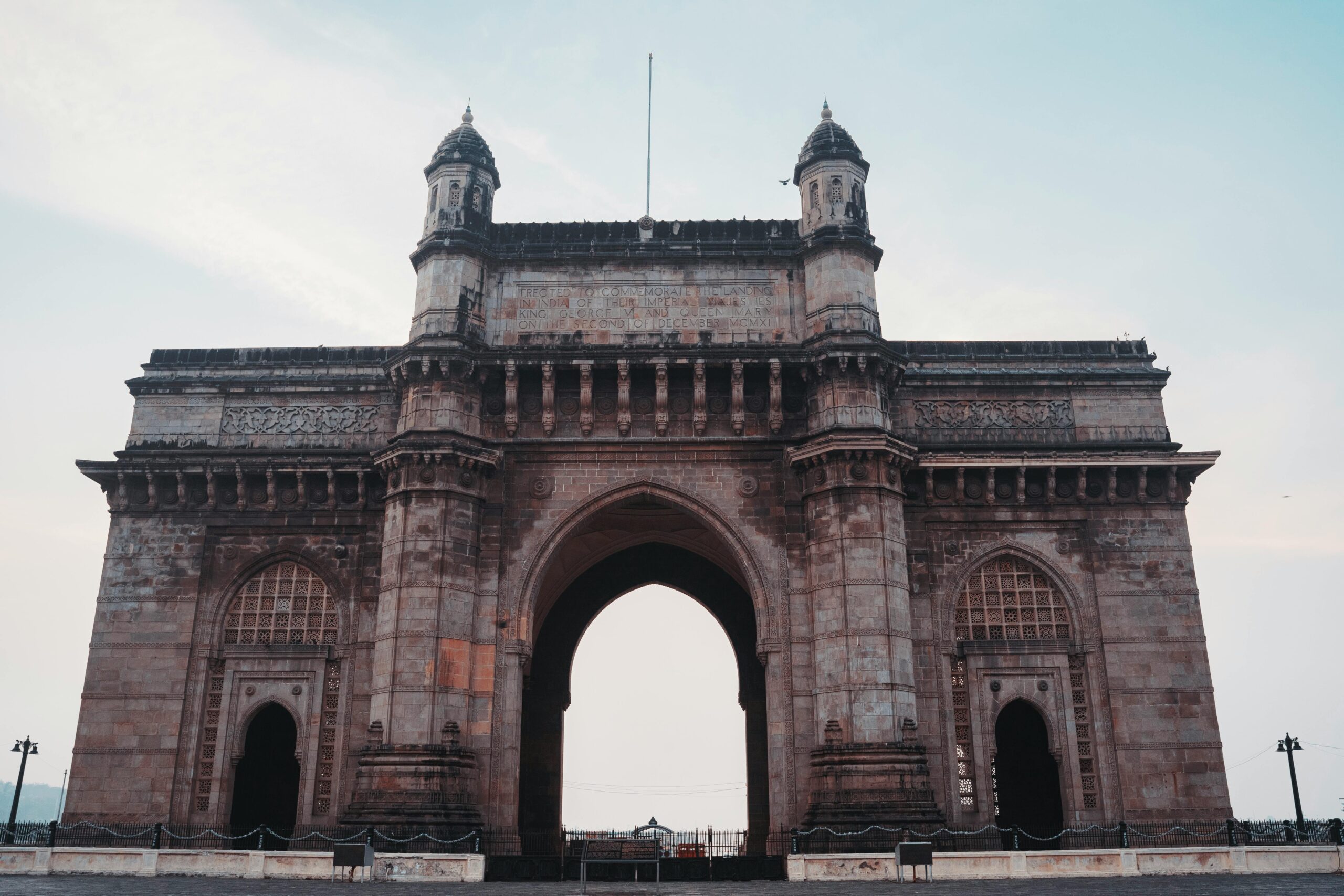
The monument’s most prominent feature is its large central arch, approximately 15 metres high. Its pointed shape and decorative detailing draw inspiration from Islamic architecture.
The opening frames views of Mumbai Harbour, connecting the ceremonial structure with its original purpose as an entrance from the sea.
Four Corner Turrets
Small turrets rise above the monument’s corners, giving the structure its distinctive silhouette.
Their domed tops and ornamental detailing reflect architectural influences found in historic buildings across western India.
Stone Carvings and Latticework
Look closely at the upper sections of the Gateway. Decorative stone patterns, carved borders and perforated screens add detail to its otherwise imposing form.
These features soften the appearance of the massive stone structure and reveal the craftsmanship involved in its construction.
Why the Waterfront Location Matters?
The Gateway was designed to be seen by people approaching Bombay by ship. Its position at Apollo Bunder allowed the monument to serve as a ceremonial entrance to the city.
The broad waterfront setting also makes its proportions easier to appreciate. From the harbour, the arch appears against Mumbai’s skyline, while the open plaza on the landward side provides a clear view of its symmetrical design.
Unlike monuments built within enclosed courtyards, the Gateway’s architecture depends partly on its relationship with the sea. That setting remains an essential part of how the landmark is experienced today.
Interesting Details About the Gateway of India
Beyond its familiar appearance, the Gateway of India has several details that are easy to overlook. Some relate to the monument’s original purpose, while others reveal how its surroundings have changed.
The Gateway Was Built After the Taj Mahal Palace Hotel
The hotel opened in 1903, more than two decades before the Gateway’s completion. Although the two landmarks now appear inseparable, the Taj Mahal Palace was already an established part of Bombay’s waterfront when construction of the arch began.
Its Steps Once Had a Ceremonial Purpose
The steps leading towards the harbour were part of the monument’s original design. They connected the waterfront landing area with the ceremonial entrance, allowing important visitors arriving by sea to approach the city through the arch.
The Monument Has Large Interior Halls
The Gateway is not simply a freestanding arch. Its structure includes halls on either side, designed to accommodate ceremonial gatherings. These spaces are not normally part of the public visitor experience.
The Waterfront Was Modified for Its Construction
Building the Gateway required changes to the Apollo Bunder waterfront. Land reclamation and the construction of a new seawall helped create the setting seen today. The broad approach to the monument was therefore part of a larger transformation of the shoreline.
Places to Visit Near the Gateway of India
The Gateway of India is a convenient starting point for exploring South Mumbai. Several museums, historic buildings and lively streets are within a short distance of the waterfront.

Chhatrapati Shivaji Maharaj Vastu Sangrahalaya
A major museum displaying Indian art, sculpture and archaeological collections.

Flora Fountain
An ornate nineteenth-century fountain surrounded by historic buildings in the Fort district.
Marine Drive
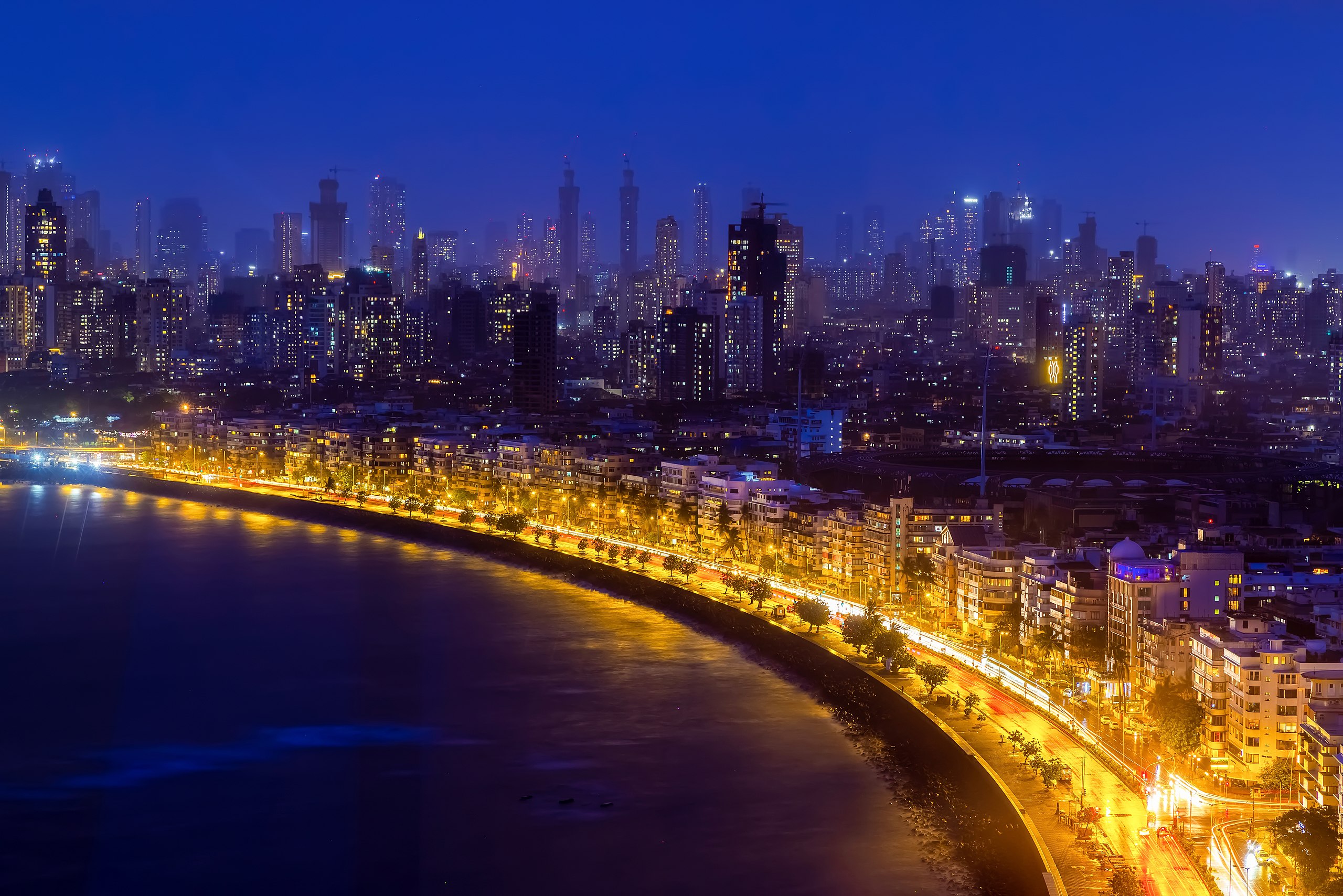
A long coastal promenade overlooking Back Bay. It is particularly popular in the evening, when the curved shoreline begins to light up.

Colaba Causeway
A busy shopping street known for souvenirs, cafés, clothing and street stalls.
Conclusion
The Gateway of India has witnessed Mumbai’s transformation from a colonial port city into one of India’s busiest urban centres. Its original ceremonial purpose belongs to the past, but the monument remains closely connected to everyday life along the waterfront.
The sound of ferry boats, the crowds gathering in the plaza and the historic buildings surrounding Apollo Bunder give the area a character of its own. It is a place where Mumbai’s history remains visible amid the activity of the modern city.
For anyone exploring South Mumbai, the Gateway provides a memorable starting point, with the harbour on one side and some of the city’s best-known streets and landmarks on the other.
Explore Maharashtra

Varanasi Blogs
- Uttar Pradesh Cultural guide
- Places to visit in Varanasi
- Places to visit nearby Varanasi
- India’s most popular destination
- India’s archaeological marvels
Recommended articles
- Uttar Pradesh Cultural guide
- Places to visit in Varanasi
- Places to visit nearby Varanasi
- India’s most popular destination