
¤ 9 minutes Read
Ajanta Caves, Maharashtra: History, Buddhist Paintings & Rock-Cut Architecture

Hidden within a horseshoe-shaped cliff overlooking the Waghora River in Maharashtra, the Ajanta Caves preserve some of India’s finest examples of ancient Buddhist art. From the outside, the caves appear as a series of openings cut into the rocky hillside. Inside, however, they reveal elaborate prayer halls, monastic chambers, carved pillars and paintings that have survived for centuries.
The most remarkable feature of Ajanta is its wall paintings. They portray scenes from the life of the Buddha, stories of his previous births and details of everyday life in ancient India. Their expressive faces, graceful figures and carefully arranged compositions show the extraordinary skill of the artists who worked here.
History of Ajanta Caves
The history of Ajanta stretches across several centuries, but the caves were not created as one continuous project. Their development took place in two major periods, separated by a long interval. Each phase reflects changes in Buddhist religious practices, artistic traditions and the rulers who supported the monasteries.
Inside the Ajanta Caves: Understanding Their Rock-Cut Architecture
Unlike buildings assembled from stone blocks, the Ajanta Caves were carved directly into the basalt cliffs. Craftsmen worked into the rock, gradually shaping interiors with pillars, ceilings, doorways and sculptural details. A mistake could not simply be corrected by replacing a stone, making careful planning essential.
Although the caves share the same rocky setting, their interiors served different purposes. The two principal architectural forms were chaityagrihas (prayer halls) and viharas (monasteries).
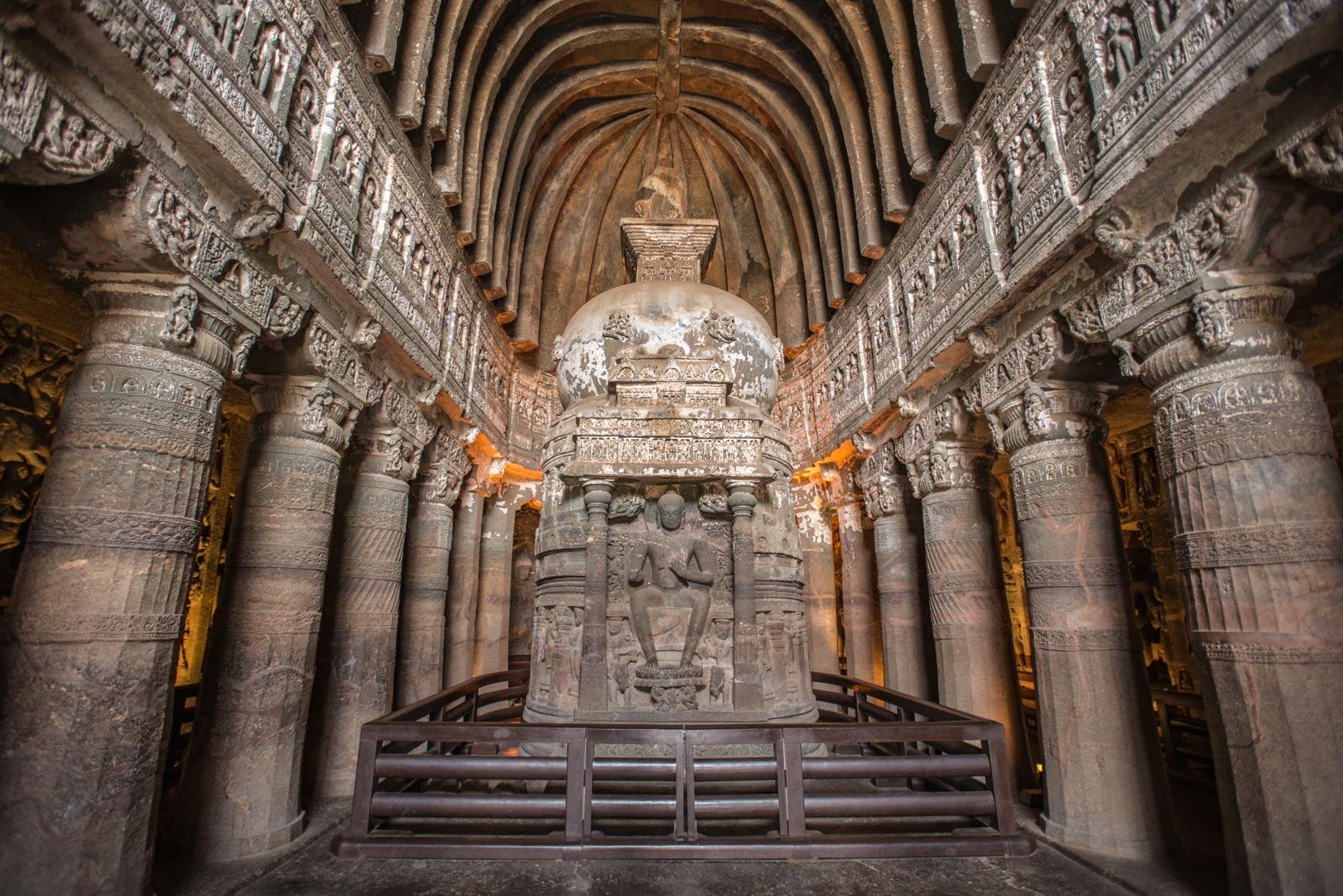
Chaityagrihas: Prayer Halls
These halls were designed for communal worship. Their central aisles lead towards a stupa, with rows of pillars defining the interior space. Cave 19 and Cave 26 are notable examples of the later, more elaborately decorated prayer halls.
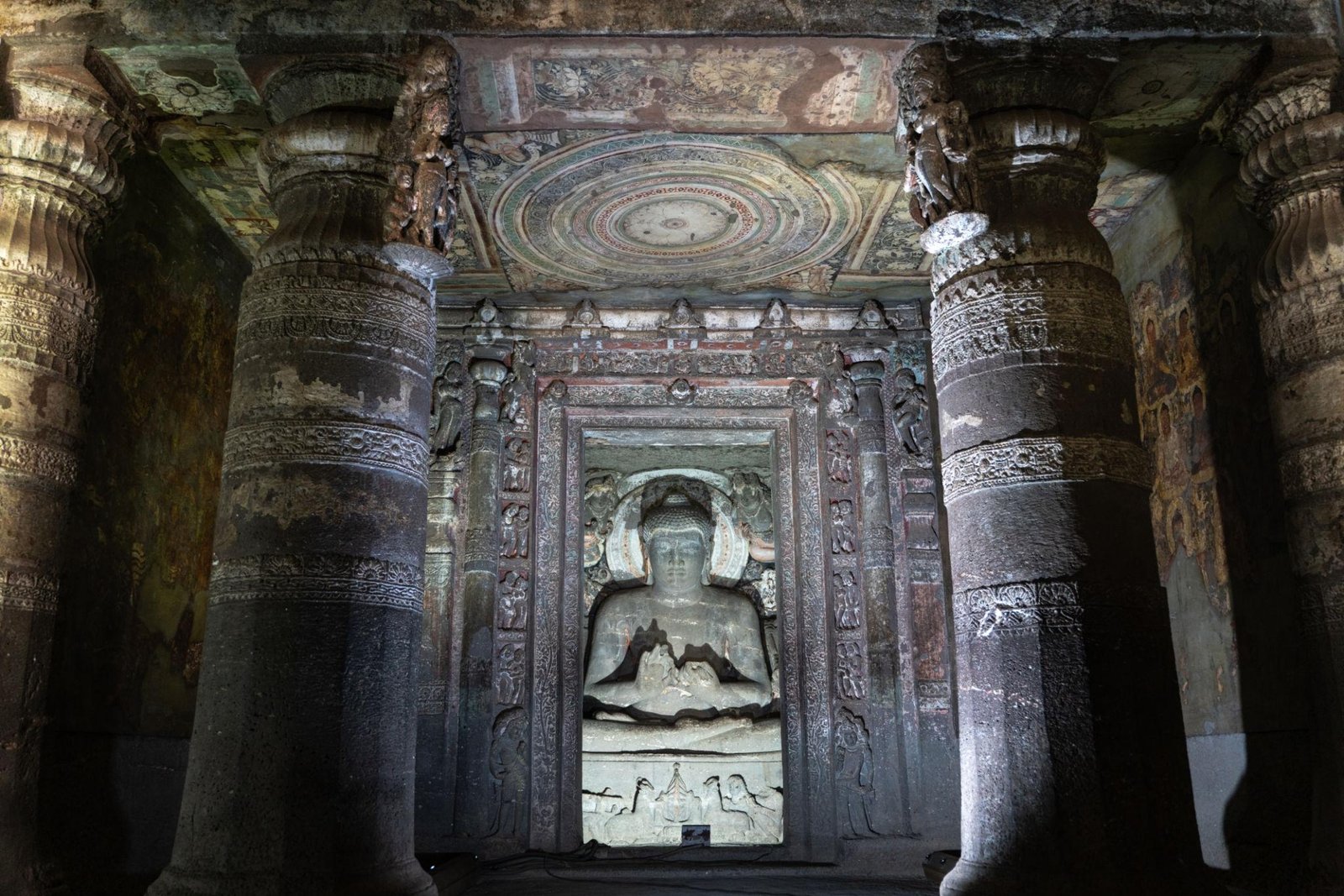
Viharas: Monastic Residences
These caves generally contain a central hall surrounded by smaller rooms used by monks. Later viharas also include shrines with Buddha images, showing how the monasteries developed into increasingly elaborate religious spaces.
The Paintings of Ajanta Caves: Stories Told Through Colour
The paintings inside the Ajanta Caves are among the most important surviving examples of ancient Indian art. Created on carefully prepared rock surfaces, they portray Buddhist teachings through expressive faces, detailed costumes, royal settings and scenes of ordinary life.
Many paintings illustrate the Jataka tales, which describe the Buddha’s previous lives. Rather than presenting each story in a separate frame, the artists sometimes arranged several moments from a narrative within the same composition. This allowed viewers to follow a story across the painted surface.
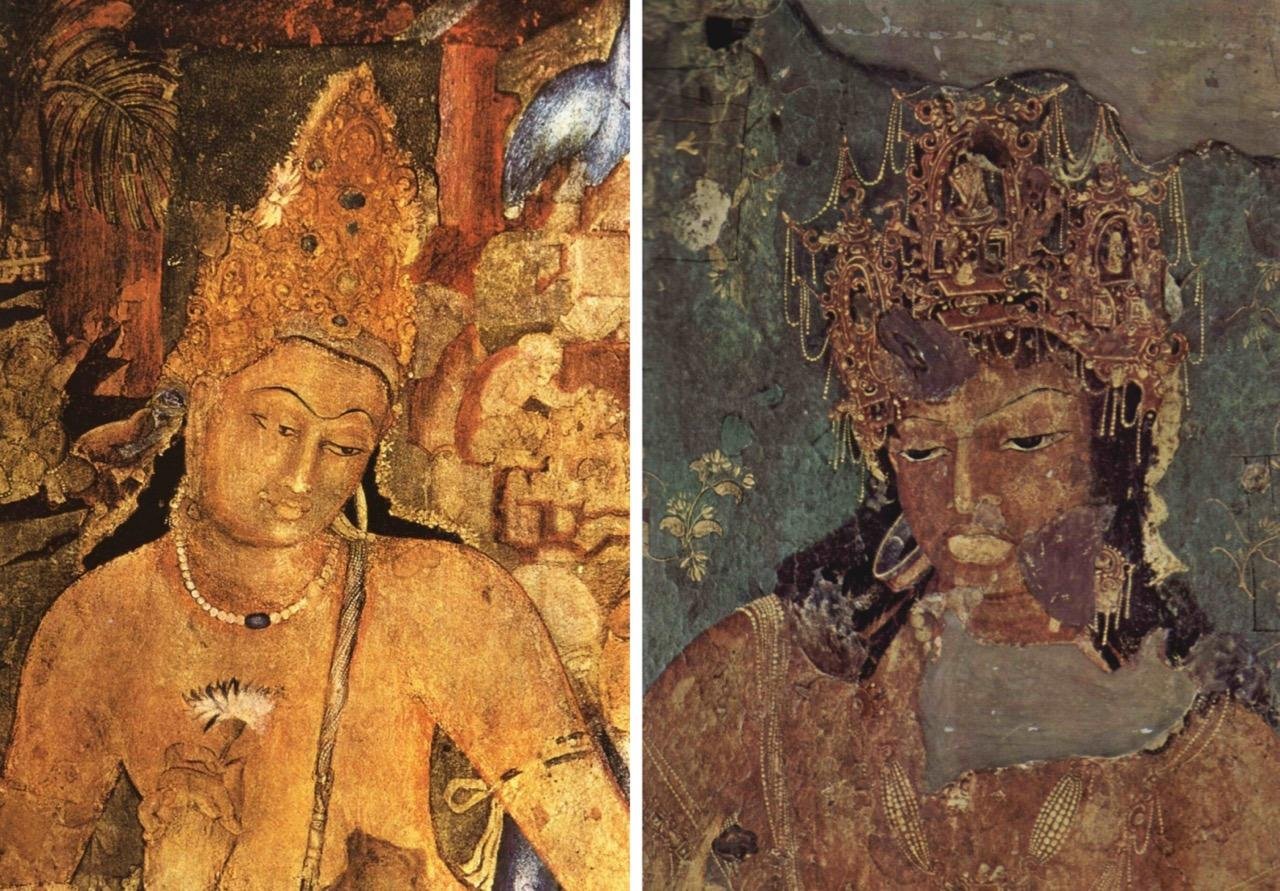
Vajrapani Bodhisattva
Located near the celebrated Padmapani image, depicted with elaborate jewellery. Together, these figures show how Ajanta’s painters used posture, facial expression and ornamentation to distinguish important Buddhist figures.
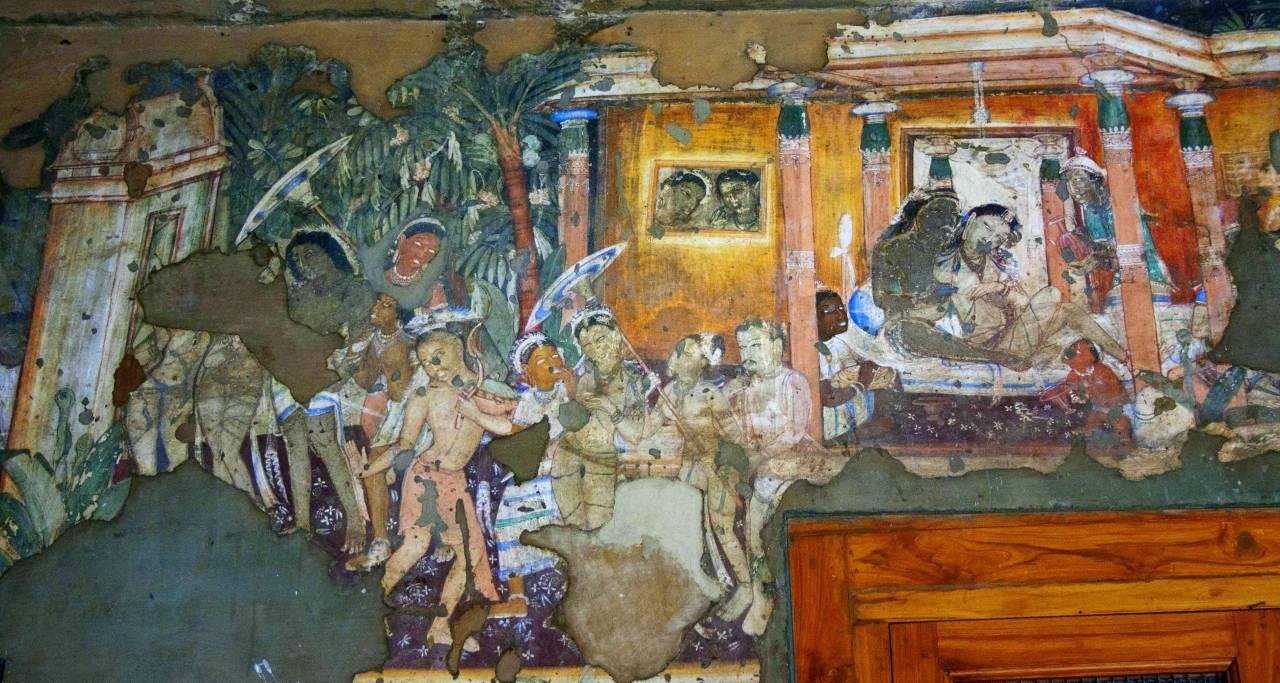
Jataka Narratives
Cave 17 contains extensive narrative paintings, including episodes from the Vessantara Jataka. Its compositions bring together people, animals and architectural settings to communicate stories about generosity, compassion and moral choices.
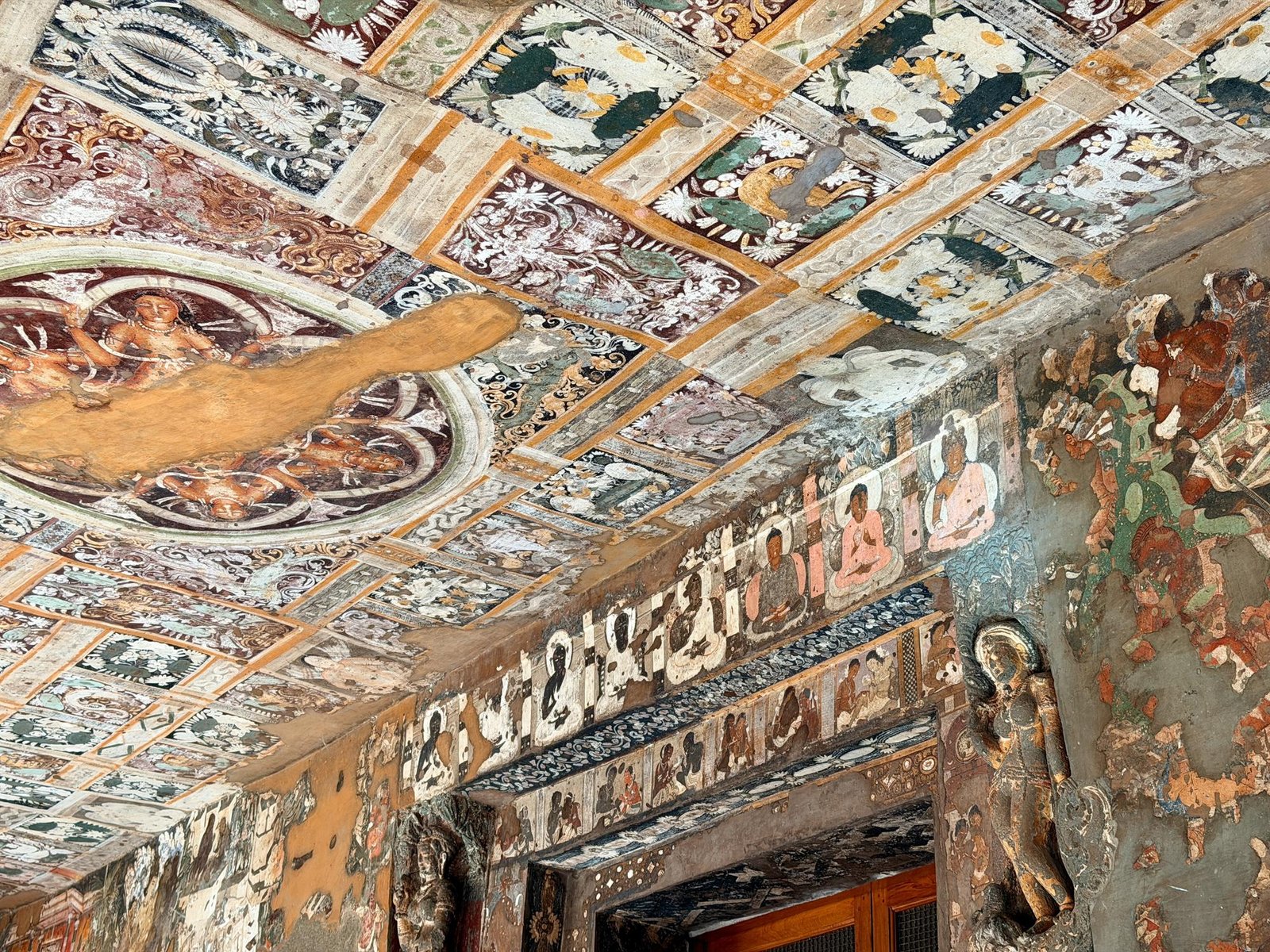
Decorative Ceiling Paintings
Not every painting tells a religious story. Several ceilings contain geometric patterns, floral arrangements, animals and ornamental designs. These details are easy to overlook when attention is focused on the larger wall paintings.
How Were the Ajanta Paintings Made?
The artists did not generally paint directly onto bare stone. They first prepared the rock with layers of plaster, creating a smoother surface for the artwork.
Pigments derived from mineral and other natural materials were then applied to the prepared surface. The paintings are commonly described as using a tempera-like technique rather than true fresco, in which pigments are applied to wet plaster.
The Performing Art of Varanasi
A vibrant hub for performing arts. The city has a rich tradition in classical music, dance, and theater, with world-renowned artists and performers drawing inspiration from its divine ambiance. Classical music forms like Hindustani classical, including tabla and sitar performances, are deeply rooted in the city’s cultural identity. Bharatanatyam and Kathak dance forms also flourish here, often performed at temples and ghats, embodying the spiritual essence of Varanasi. The city’s connection with music and dance continues to inspire generations, preserving its artistic legacy.

Why Ajanta Caves Remain an Important Part of India's History
Ajanta’s importance lies in the extraordinary amount of ancient art that has survived within its rock-cut interiors. Many early Indian paintings have been lost to time, leaving relatively few examples through which historians can study the artistic traditions of that period.
The surviving murals at Ajanta help fill that gap. They preserve details of clothing, jewellery, musical instruments, courtly life and religious practices that written records alone cannot fully describe.
The caves also reveal how Buddhist art changed over several centuries. Early worship spaces centred on stupas, while later excavations placed greater emphasis on images of the Buddha and elaborate narrative paintings.
Beyond the Caves: The Waghora Valley and Ajanta's Natural Setting
The artwork may be Ajanta’s main attraction, but the surrounding landscape is an important part of the experience. The caves occupy a curved cliff above the Waghora River, with wooded slopes and rocky formations extending across the valley.
Stepping outside the excavations reveals something that is difficult to appreciate from within: how closely the ancient monastery complex was connected to its natural surroundings.

Nearby Attractions to Explore Around Ajanta Caves
A visit to Ajanta can also be combined with other historical and cultural sites in Maharashtra. Some are suitable for a stop during the journey, while others are better explored as part of a longer trip through the region.
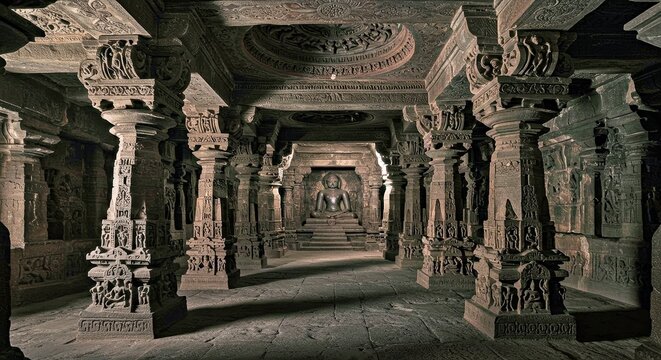
Ellora Caves
Another UNESCO World Heritage Site, Ellora contains Buddhist, Hindu and Jain rock-cut monuments.

Bibi Ka Maqbara
Built during the Mughal period, this marble-domed mausoleum is often compared with the Taj Mahal.

Daulatabad Fort
Rising above a steep hill, Daulatabad Fort is known for its defensive gateways, fortified walls and difficult approach routes

Grishneshwar Temple
Located near Ellora, this Shiva temple is traditionally recognised as one of the twelve Jyotirlinga shrines
Conclusion
The Ajanta Caves offer a remarkable opportunity to understand how Buddhist art and architecture developed in ancient India. From the simplicity of the early prayer halls to the detailed paintings and sculptures of the later monasteries, each phase reveals the skill and imagination of the people who created them.
What makes Ajanta particularly memorable is the survival of its paintings. Despite centuries of exposure and deterioration, they continue to communicate stories, emotions and details of a world that existed more than a thousand years ago.
Explore Maharashtra
Varanasi Blogs
- Uttar Pradesh Cultural guide
- Places to visit in Varanasi
- Places to visit nearby Varanasi
- India’s most popular destination
- India’s archaeological marvels
Recommended articles
- Uttar Pradesh Cultural guide
- Places to visit in Varanasi
- Places to visit nearby Varanasi
- India’s most popular destination