
¤ 8 minutes Read
Ellora Caves: History, Architecture and the Remarkable Kailasa Temple

The Ellora Caves in Maharashtra are among India’s most extraordinary rock-cut monuments. Located near Chhatrapati Sambhajinagar (formerly Aurangabad), this UNESCO World Heritage Site contains 34 caves carved into the basalt cliffs of the Charanandri Hills. The complex includes Buddhist monasteries, Hindu temples and Jain shrines, developed over several centuries.
Ellora is especially famous for the Kailasa Temple, also known as Cave 16. Unlike a conventional temple built by assembling stone blocks, this enormous structure was carved directly from solid rock. Its courtyards, pillars, sculptures and towering shrine were created by removing stone from the hillside.
34
Principal caves
3
Religious traditions
6th - 10th
Centuries CE, broadly
1983
UNESCO inscription
History of Ellora Caves: Centuries of Rock-Cut Architecture
The Ellora Caves in Maharashtra are among India’s most extraordinary rock-cut monuments. Located near Chhatrapati Sambhajinagar (formerly Aurangabad), this UNESCO World Heritage Site contains 34 caves carved into the basalt cliffs of the Charanandri Hills. The complex includes Buddhist monasteries, Hindu temples and Jain shrines, developed over several centuries.
Ellora is especially famous for the Kailasa Temple, also known as Cave 16. Unlike a conventional temple built by assembling stone blocks, this enormous structure was carved directly from solid rock. Its courtyards, pillars, sculptures and towering shrine were created by removing stone from the hillside.
Architectural Details Worth Noticing
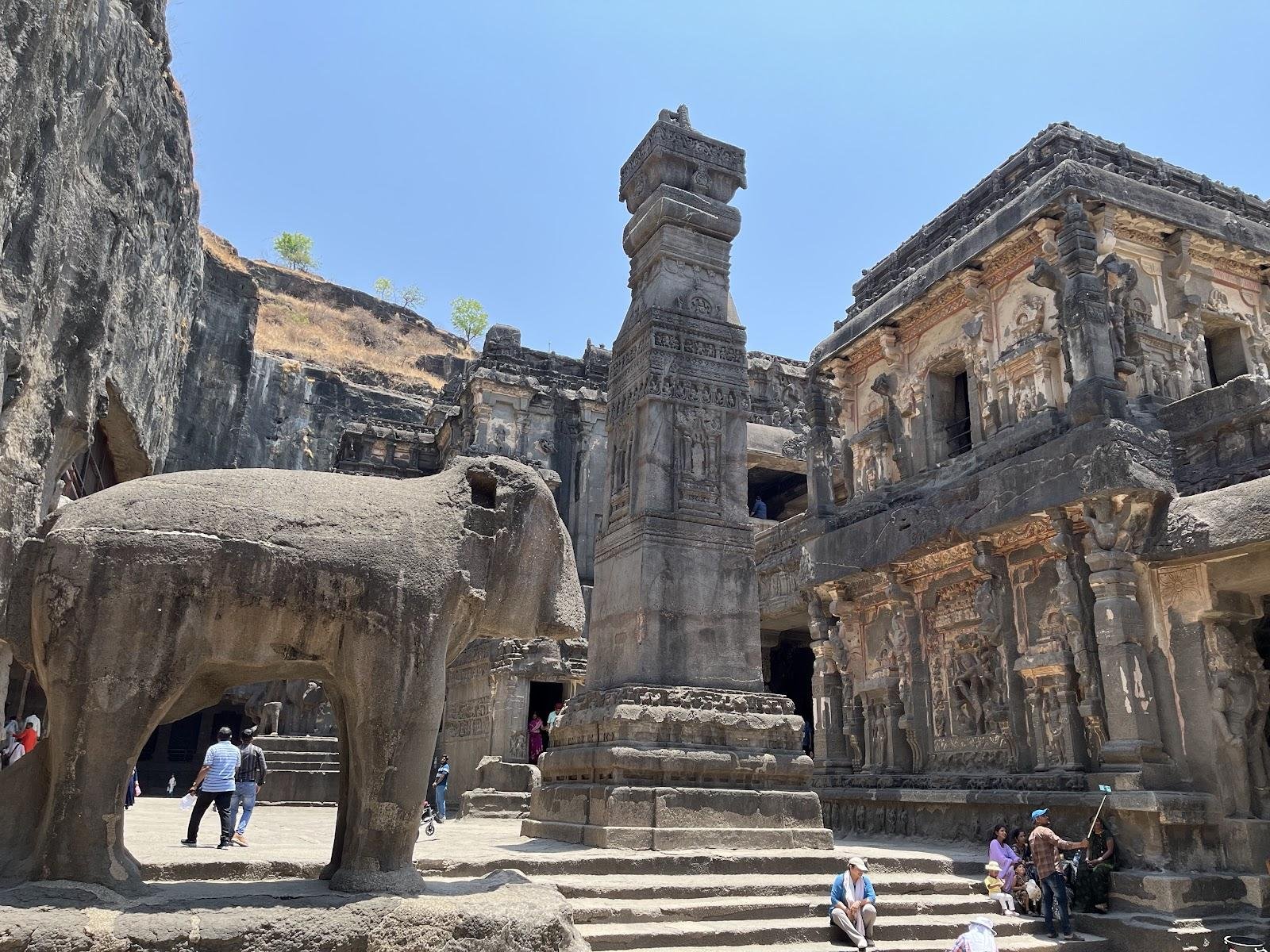
The Nandi Mandapa
A separate pavilion houses Nandi, Shiva’s sacred bull. Its placement directly in front of the main shrine follows an important convention of Shiva temple architecture.
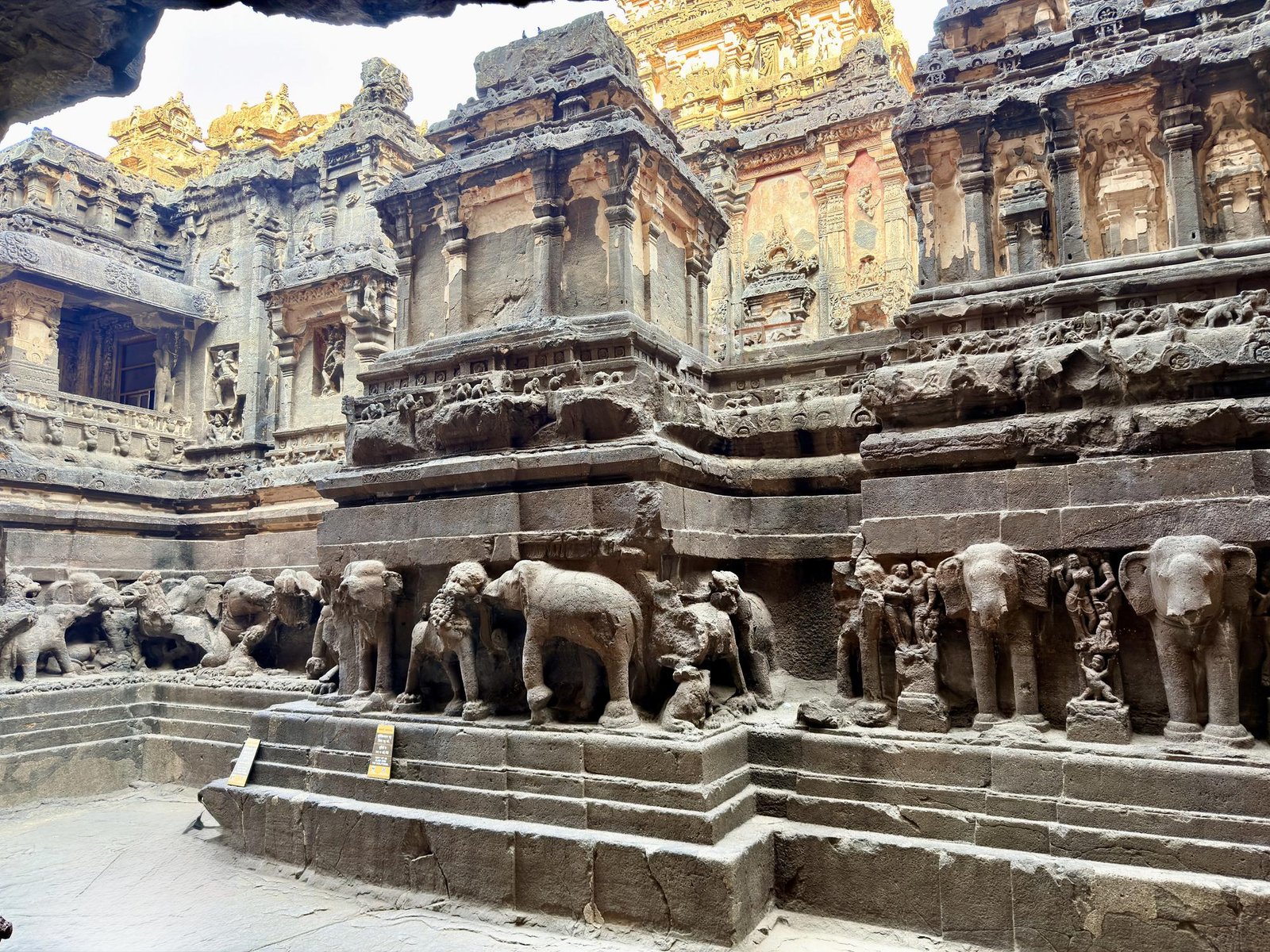
Elephants Carved into the Base
Rows of sculpted elephants appear to support portions of the temple’s raised platform. Their arrangement contribute to the impression of a monumental structure resting on powerful animals.
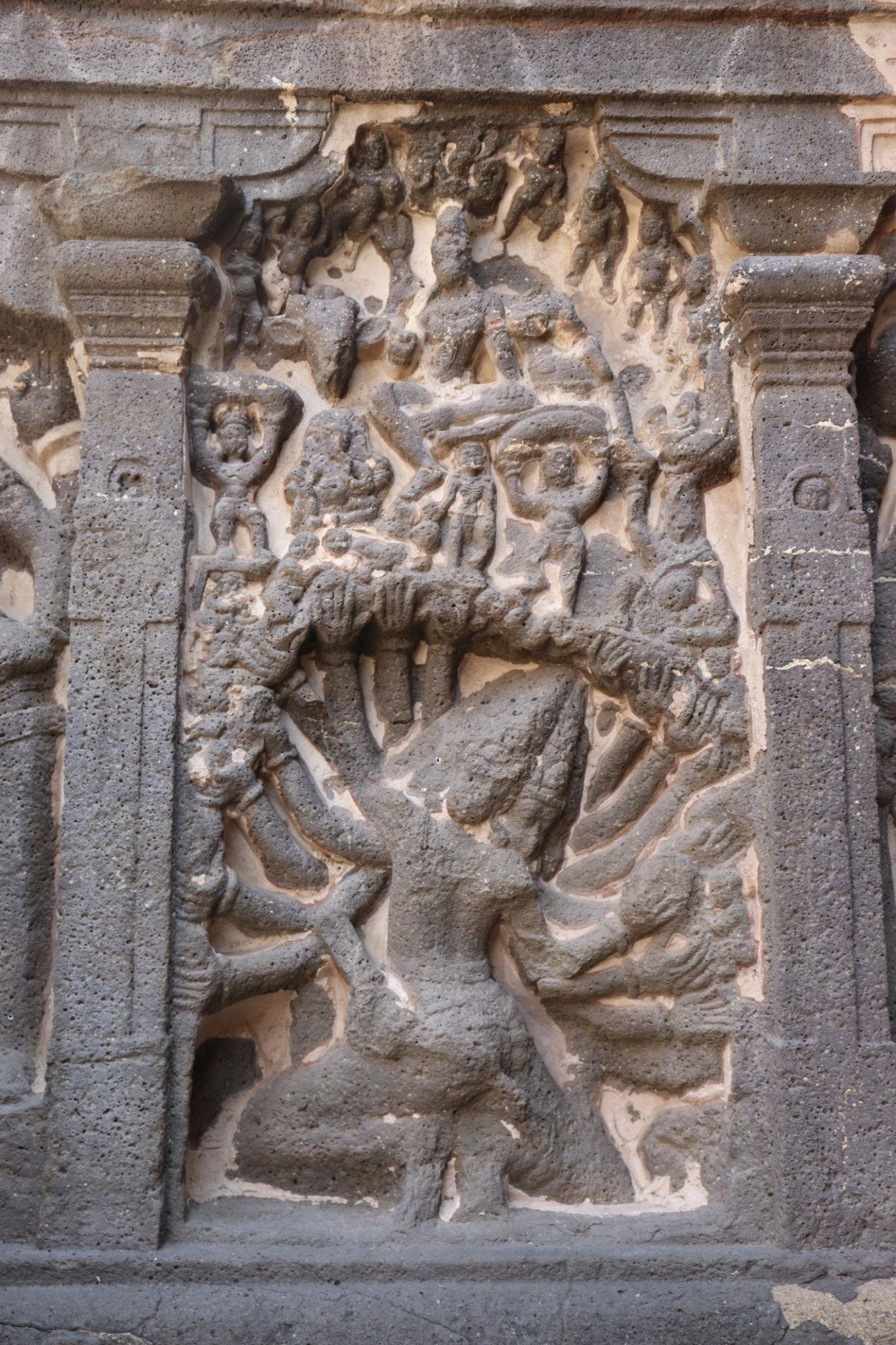
Ravana Shaking Mount Kailash
One of the temple’s celebrated reliefs depicts Ravana attempting to lift Mount Kailash while Shiva and Parvati sit above.
Beyond Kailasa: Buddhist and Jain Caves Worth Exploring
Kailasa may attract the most attention, but some of Ellora’s finest details are found in its quieter caves. The Buddhist excavations include impressive assembly halls and multi-storeyed monasteries, while the Jain caves are known for their delicate carvings and carefully decorated interiors.

Vishvakarma Cave
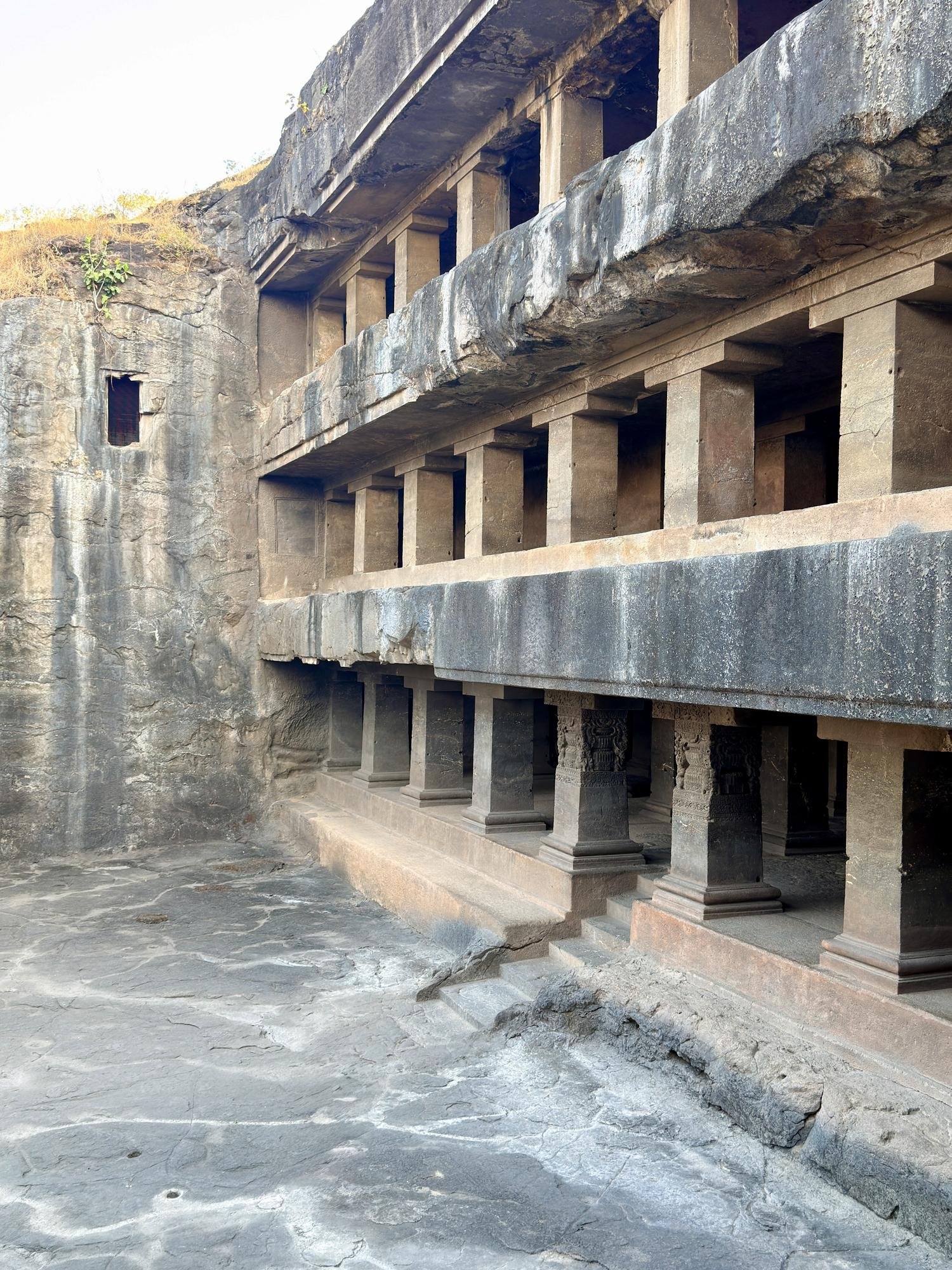
Tin Tal
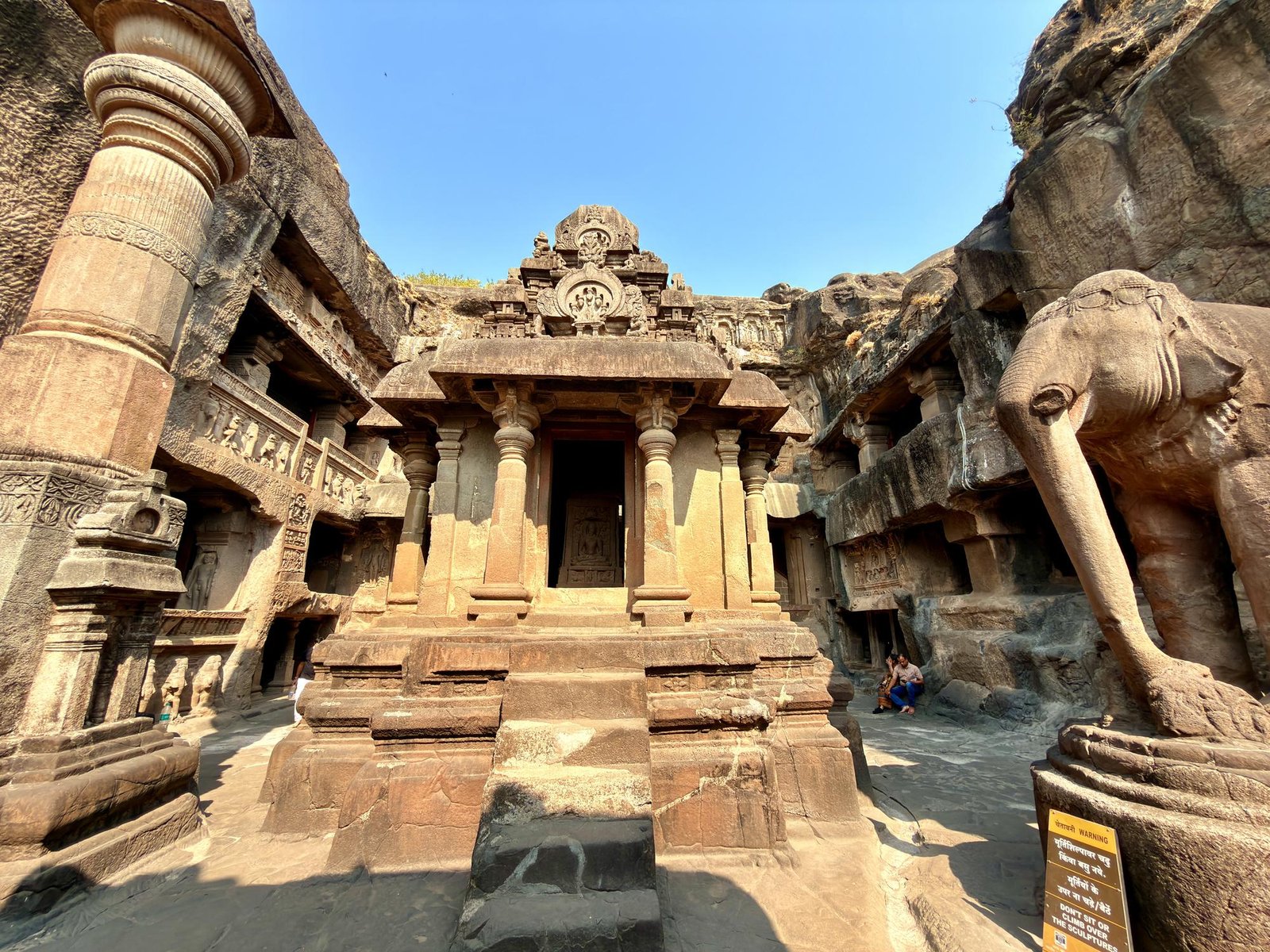
Indra Sabha
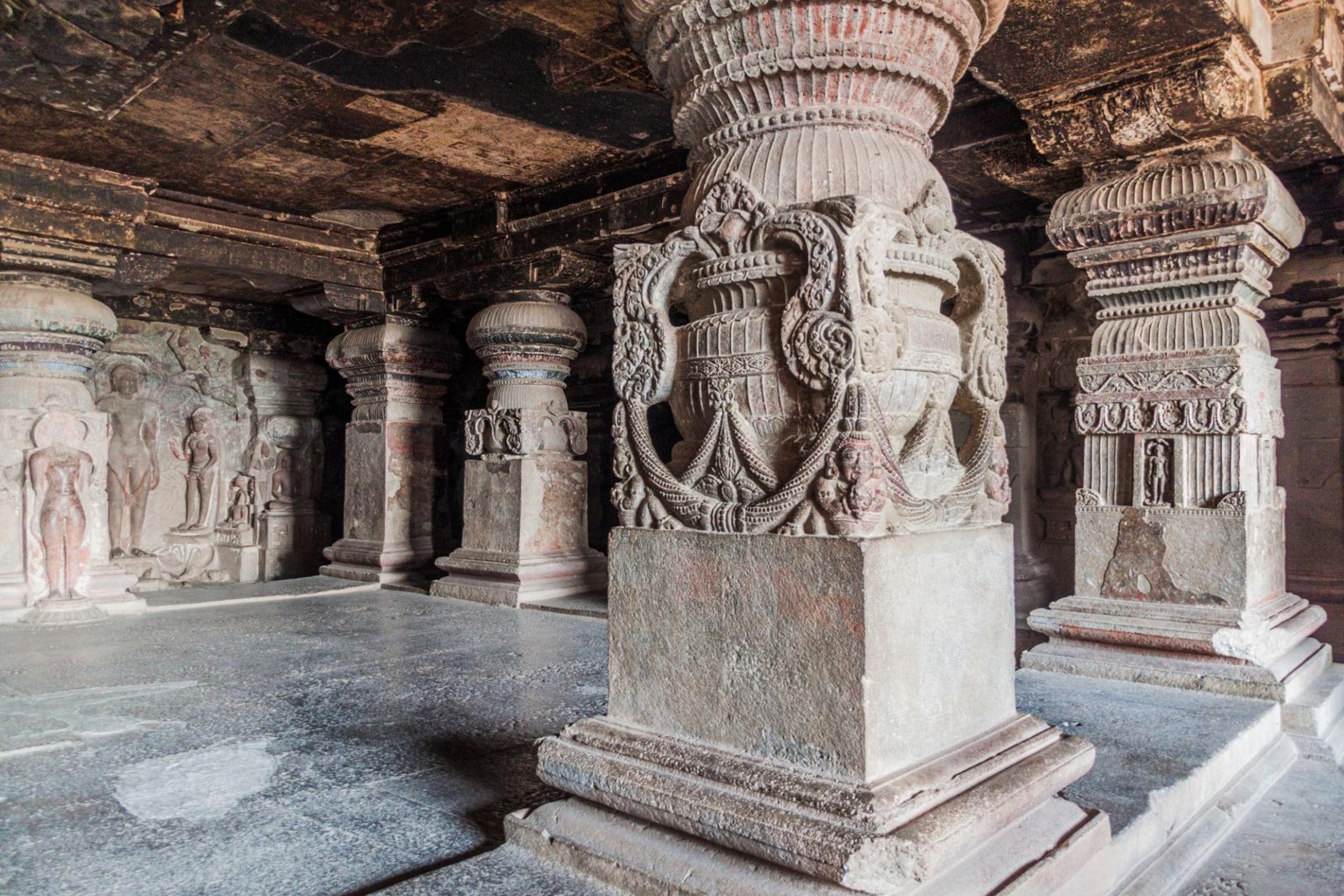
Jagannatha Sabha
A Temple Carved from a Single Rock Mass
The most striking aspect of Kailasa is how its individual architectural elements remain connected to the original rock. The gateway, courtyard, main shrine and surrounding galleries were shaped through excavation.
From an elevated viewpoint, the relationship between these features becomes clearer. The temple rises from the centre of a deep rock-cut enclosure, with the surrounding cliff walls revealing the enormous amount of material removed during construction.

The Role of the Rashtrakuta Dynasty
The Rashtrakutas ruled large parts of the Deccan and became important patrons of art and architecture.
Their association with Ellora is particularly significant because of the Kailasa Temple. Its excavation required careful planning on an enormous scale, with craftsmen working downward through the rock rather than constructing the building from the ground upward.
The temple marked a major achievement in India’s rock-cut architectural tradition.
Kailasa Temple: Ellora's Most Extraordinary Excavation
At Cave 16, the scale of Ellora’s rock-cut architecture becomes immediately apparent. The Kailasa Temple resembles a freestanding stone temple surrounded by a spacious courtyard. Yet the entire complex was carved from the hillside, rather than assembled from separate blocks of stone.
Dedicated to Lord Shiva, the temple takes its name from Mount Kailash, regarded in Hindu tradition as Shiva’s sacred abode. Its construction is closely associated with the 8th-century Rashtrakuta ruler Krishna I.
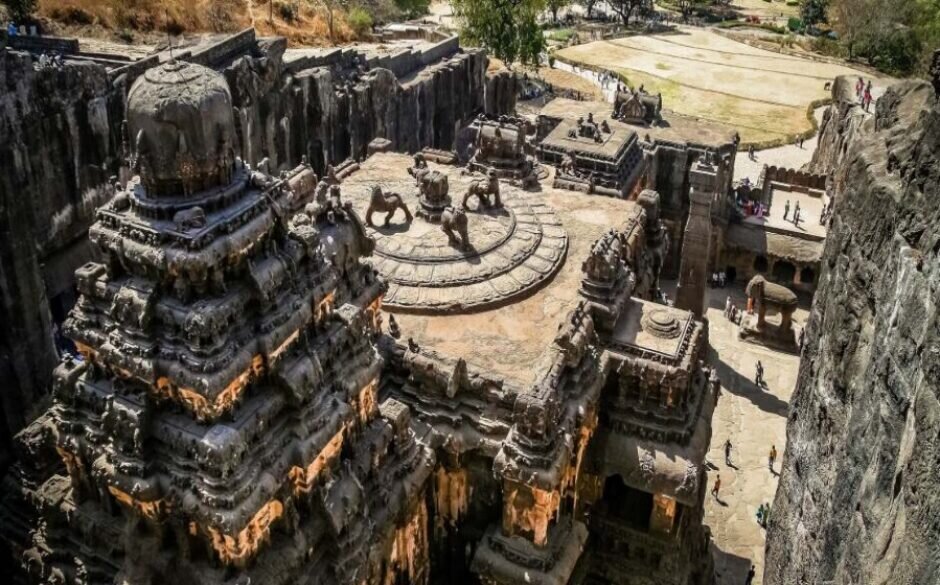
How Was the Kailasa Temple Carved?
Most conventional buildings rise from their foundations. Kailasa was created in the opposite direction.
Craftsmen excavated downward through the basalt rock, removing enormous quantities of stone to separate the central temple from the surrounding hillside. They then shaped the remaining rock into pillars, halls, stairways, shrines and sculptures.
Nearby Attractions to Explore Around Ellora Caves
Ellora is surrounded by several interesting places, including a medieval fort, a historic temple and one of Maharashtra’s best-known pilgrimage sites. Some are close enough to combine with your cave visit, while others are better explored as part of a longer trip around Chhatrapati Sambhajinagar.

Grishneshwar Temple
One of the twelve Jyotirlinga shrines dedicated to Lord Shiva. The temple is known for its red-stone architecture and remains an active place of worship.

Daulatabad Fort
Built around a steep hill, Daulatabad Fort is notable for its defensive passages, massive gateways and commanding views. The climb requires additional time and physical effort.

Bibi Ka Maqbara
This 17th-century Mughal mausoleum is known for its symmetrical gardens, minarets and white-domed central structure. Its design is often compared with the Taj Mahal.

Aurangabad Caves
These Buddhist rock-cut caves contain sculptures, shrines and decorative carvings. They offer an interesting comparison with Ellora’s Buddhist excavations on a smaller scale.
Conclusion
The Ellora Caves are remarkable not simply for their size, but for the variety of ideas and craftsmanship preserved within one hillside. From the carefully arranged Buddhist monasteries to the sculpted Hindu temples and intricately decorated Jain shrines, each group reveals a different approach to carving architecture from solid rock.
The Kailasa Temple remains the complex’s greatest architectural achievement, yet the smaller caves deserve attention too. Their pillars, sculptures and unfinished surfaces help visitors appreciate the planning and skill involved in creating these monuments.
Explore Maharashtra
Varanasi Blogs
- Uttar Pradesh Cultural guide
- Places to visit in Varanasi
- Places to visit nearby Varanasi
- India’s most popular destination
- India’s archaeological marvels
Recommended articles
- Uttar Pradesh Cultural guide
- Places to visit in Varanasi
- Places to visit nearby Varanasi
- India’s most popular destination