
¤ 8 minutes Read
Badrinath Temple, Uttarakhand: History, Significance & Travel Guide
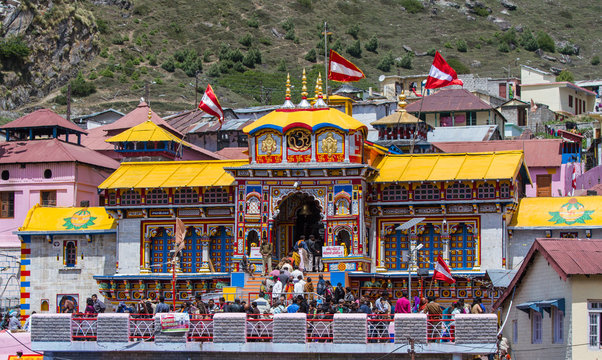
High in the Garhwal Himalayas, Badrinath Temple sits beside the Alaknanda River, surrounded by steep mountain slopes and snow-covered peaks. The journey here is part of the experience, with winding mountain roads leading to a town that becomes a busy pilgrimage centre during the warmer months.
Dedicated to Lord Vishnu, Badrinath is one of the four sacred destinations of the Char Dham pilgrimage and an important stop on Uttarakhand’s Chota Char Dham circuit. Its religious importance draws devotees from across India, while its location gives the temple a character quite different from shrines in the plains.
The temple’s colourful entrance, the nearby Tapt Kund hot spring and the dramatic Himalayan surroundings are among its most recognisable features. Yet Badrinath’s significance goes beyond its setting. Centuries of religious traditions, stories associated with Vishnu and the temple’s seasonal worship practices have shaped its place in Hindu pilgrimage.
Architecture of Badrinath Temple: What to Notice
Badrinath Temple looks quite different from many of India’s ancient stone temples. Its brightly painted façade, arched windows and compact structure create a striking appearance against the surrounding mountains.
Rather than describing the architecture in one long paragraph, this section uses a visual feature guide to help readers recognise the temple’s important details.
The Colourful Main Entrance
The temple’s entrance features a prominent arched doorway surrounded by brightly painted architectural details. Its multi-level façade includes decorative windows and a small roof structure above the entrance, making it one of the most photographed parts of the shrine.
Sabha Mandap and Darshan Mandap
Inside, the temple is organised into distinct spaces. The Sabha Mandap serves as an assembly hall, while the Darshan Mandap is the area from which devotees approach and view the presiding deity. These lead towards the innermost sanctuary.
The Garbhagriha
The Garbhagriha is the temple’s innermost sanctum, housing the black stone image of Lord Badrinarayan. The deity is depicted seated in a meditative posture, an important feature of Badrinath’s worship tradition.
Rituals and Traditions at Badrinath Temple
Badrinath Temple looks quite different from many of India’s ancient stone temples. Its brightly painted façade, arched windows and compact structure create a striking appearance against the surrounding mountains.
Rather than describing the architecture in one long paragraph, this section uses a visual feature guide to help readers recognise the temple’s important details.
A Temple That Closes for Winter
Unlike temples that remain open throughout the year, Badrinath follows a seasonal worship tradition. Its doors generally open in spring and close around October or November as winter approaches.
During the winter closure, worship associated with Lord Badrinarayan continues at Pandukeshwar, where Uddhav and Kubera are traditionally worshipped. The precise opening and closing dates are announced each year.
Beyond the Temple: Sacred Places Around Badrinath
A visit to Badrinath often includes several sacred sites beyond the main shrine. Some are closely connected with pilgrimage rituals, while others are associated with stories from Hindu scriptures and local traditions.
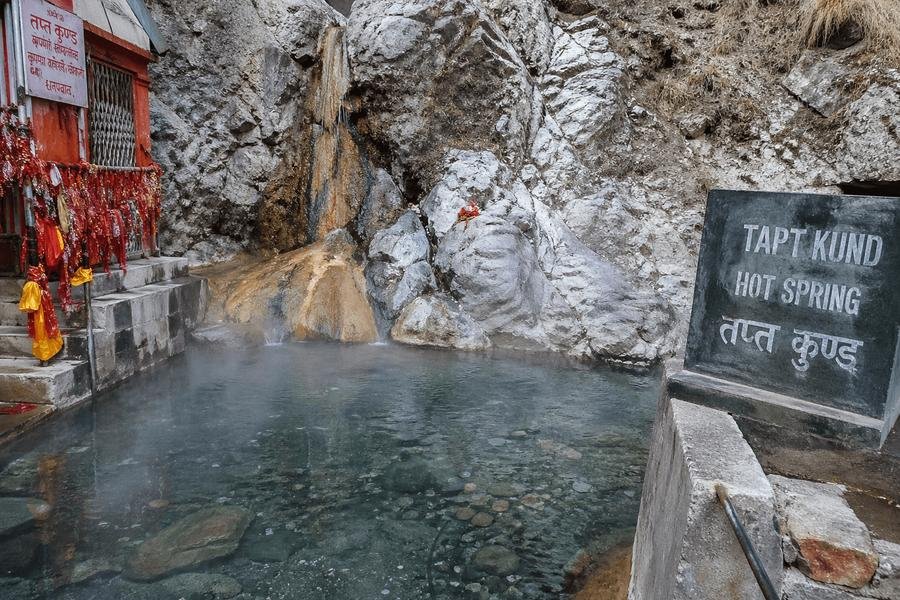
Tapt Kund
A natural hot-water spring associated with Lord Agni. Pilgrims traditionally bathe in its waters before entering the temple for darshan. The contrast between the warm spring water and the cold Himalayan surroundings makes it an unusual feature of the pilgrimage.
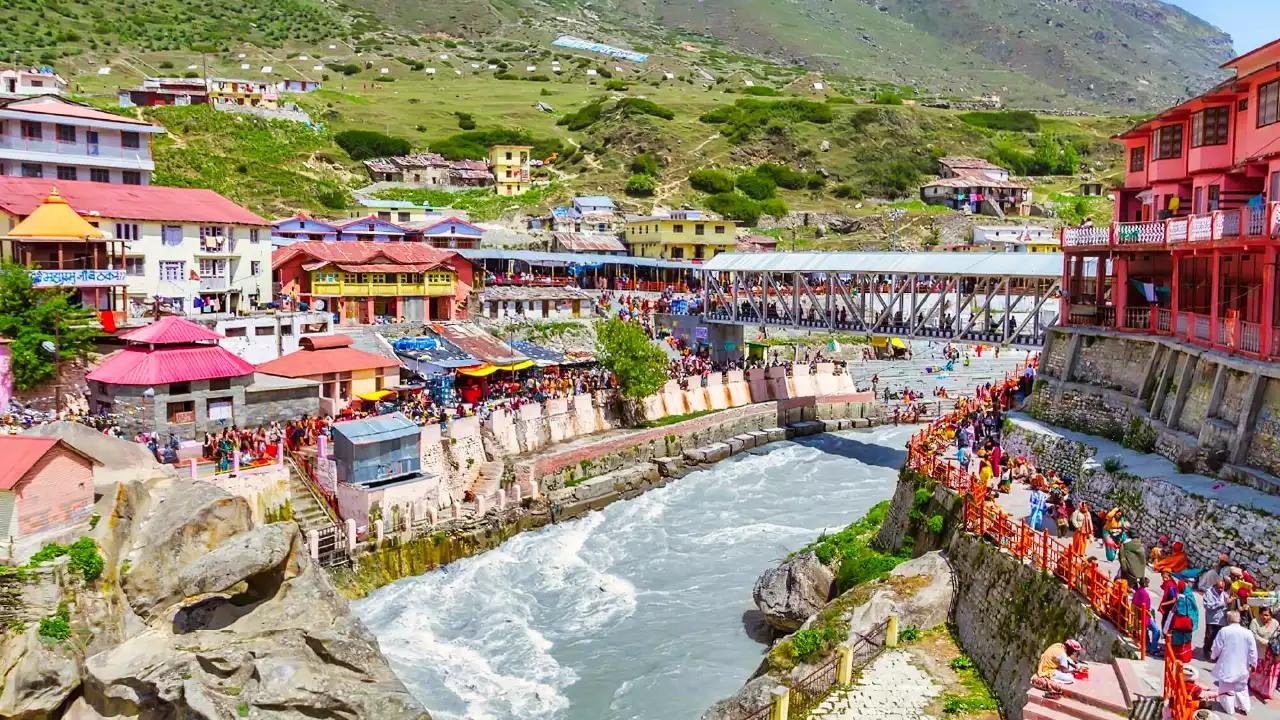
Brahma Kapal
A sacred riverside site along the Alaknanda, where Hindu families perform pind daan and other ancestral rites. The site is particularly significant for pilgrims who visit Badrinath to offer prayers for departed family members.
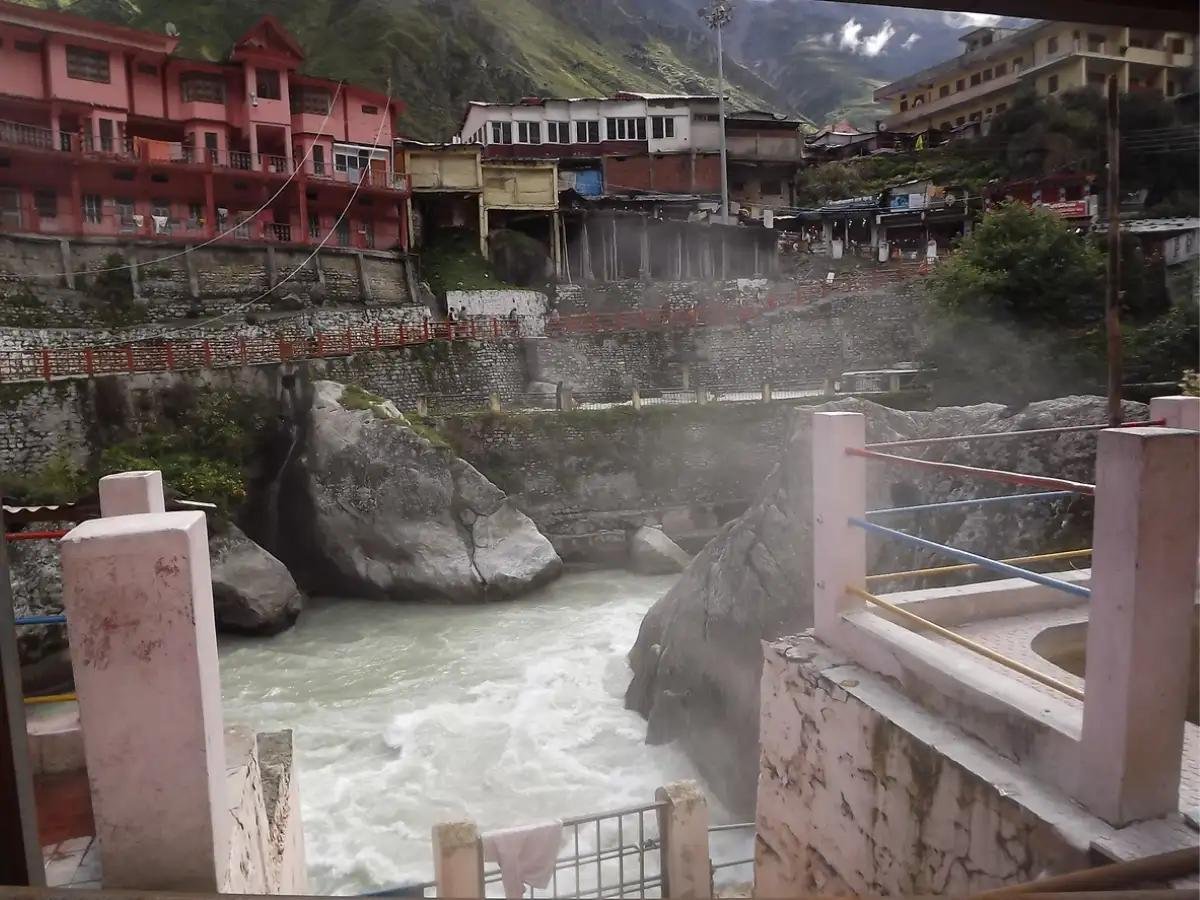
Narad Kund
A sacred pool near the Alaknanda River, traditionally associated with Sage Narada. According to temple tradition, Adi Shankaracharya recovered the image of Lord Badrinarayan from this pool. The account remains part of the shrine’s religious narrative rather than a historically verified archaeological event.
A detail worth knowing
Badrinath is one of the four pilgrimage destinations in the wider Char Dham tradition associated with Adi Shankaracharya. The other three are Dwarka, Puri and Rameswaram. It is also part of Uttarakhand’s separate Chota Char Dham circuit.
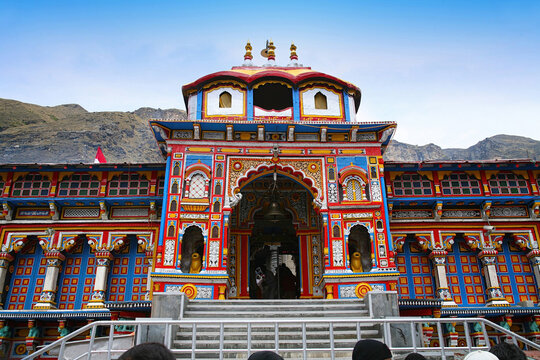
A Temple Surrounded by Mountains
Badrinath stands at an altitude of approximately 3,133 metres in Uttarakhand’s Chamoli district. The temple lies on the banks of the Alaknanda River, with the Nar and Narayan mountain ranges forming its dramatic backdrop.
The Neelkanth peak rises above the surrounding landscape and is one of the area’s most recognisable natural landmarks. Its snow-covered summit is especially striking against the colourful temple buildings below.
How to Reach Badrinath
By Air
Jolly Grant Airport near Dehradun is the main commercial airport used for the journey. From there, travellers continue towards Badrinath by road.
By Train
Rishikesh and Haridwar are commonly used rail access points for the onward journey. Badrinath itself has no railway station.
By Road
Badrinath is connected by mountain roads through Joshimath. Pilgrims commonly travel via Rishikesh, Devprayag, Rudraprayag, Karnaprayag and Joshimath before reaching the temple town.
Why Is Badrinath Sacred to Lord Vishnu?
According to Hindu tradition, Lord Vishnu performed deep meditation in the Himalayas at the site associated with present-day Badrinath. Goddess Lakshmi is believed to have taken the form of a Badri tree to shelter him from the harsh mountain weather.
This traditional account is closely associated with the name Badri Vishal, by which the deity is also worshipped. The temple’s presiding deity is Lord Badrinarayan, a form of Vishnu depicted in a meditative posture.
The Connection with Adi Shankaracharya
Badrinath is traditionally associated with Adi Shankaracharya, the philosopher and religious teacher who lived around the eighth century CE according to a commonly accepted chronology.
Temple tradition credits him with restoring worship at Badrinath and recovering the image of Lord Vishnu from Narad Kund, near the Alaknanda River.
These accounts form an important part of the shrine’s religious history, although the details of its earliest establishment are not firmly documented.
Places to Explore Near Badrinath
The mountain landscape around Badrinath holds more than pilgrimage sites. A short journey beyond the temple leads to traditional Himalayan settlements, waterfalls, high-altitude valleys and places associated with stories from the Mahabharata.

Vasudhara Falls
A tall waterfall descending through a rugged Himalayan landscape. Reaching it involves a mountain trek, so suitable weather and physical preparation are important.
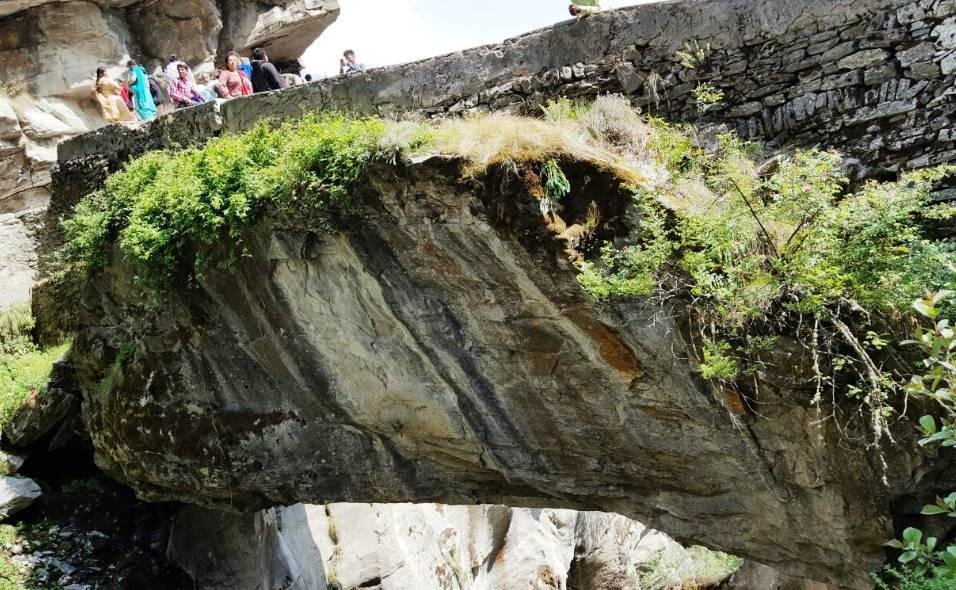
Bheem Pul
A large natural stone bridge over the Saraswati River. Local tradition associates its formation with Bhima, one of the Pandava brothers.
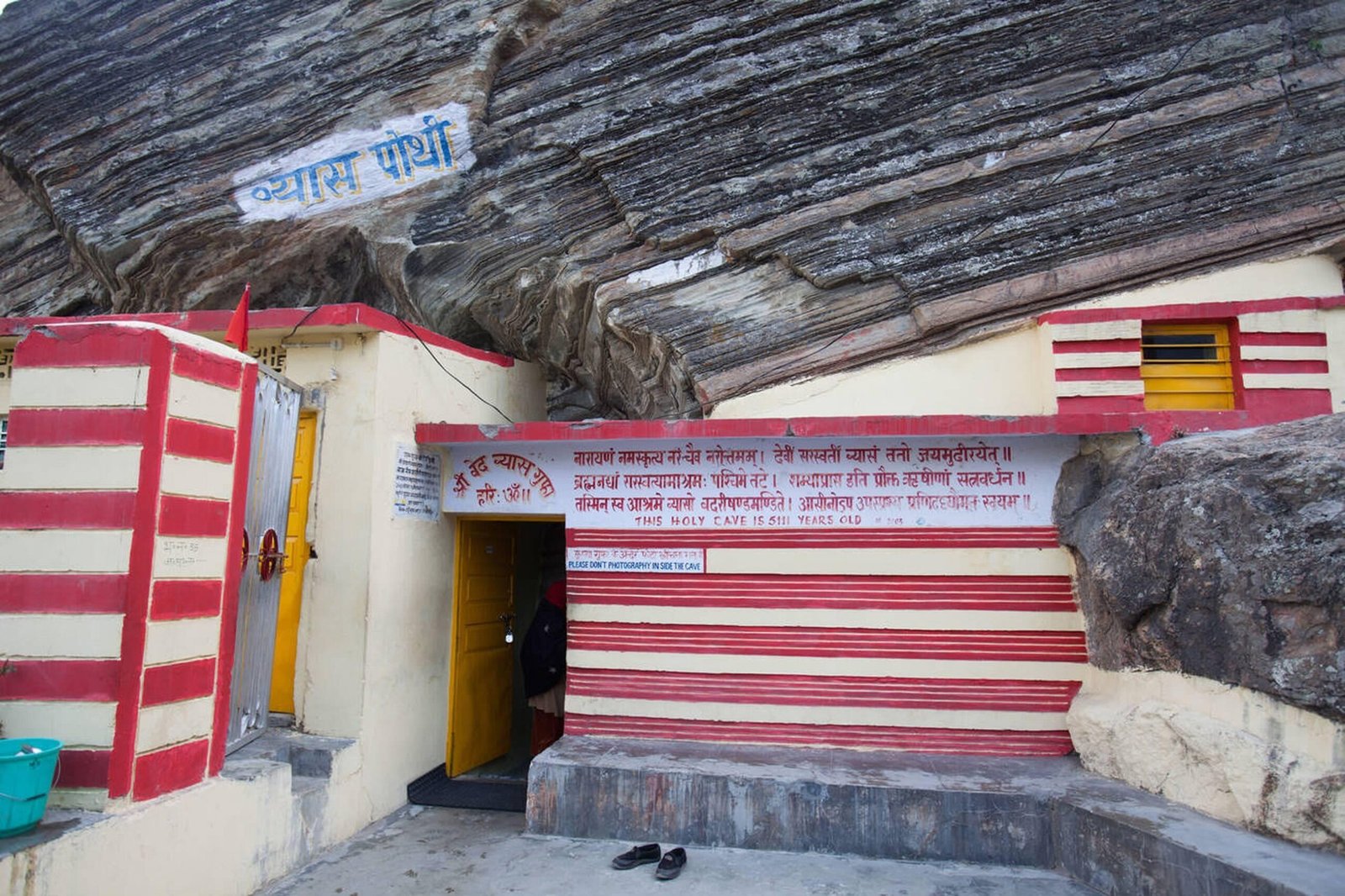
Vyas Gufa
A cave shrine traditionally associated with Sage Vyasa and the composition of the Mahabharata. It is an important stop for visitors interested in the region’s religious stories.
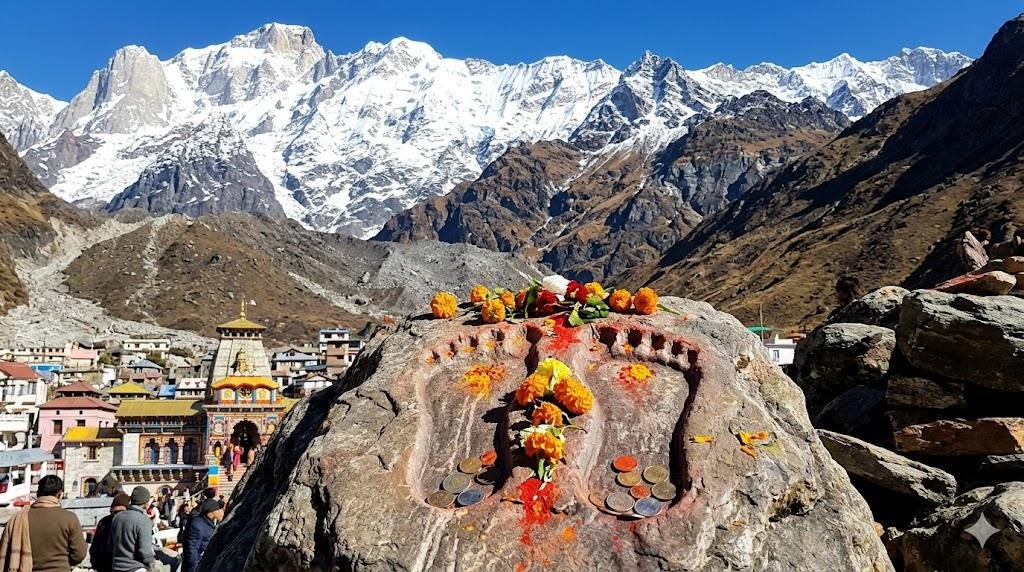
Charan Paduka
A rock bearing impressions traditionally believed to represent Lord Vishnu’s footprints. The site is reached by an uphill walk from the temple town.
Conclusion
Badrinath is a place where the landscape and religious traditions are closely connected. The Alaknanda River, the surrounding peaks and the centuries-old worship of Lord Vishnu all contribute to the identity of this Himalayan pilgrimage centre. For pilgrims, Badrinath remains an important destination for prayer and spiritual observance. For other visitors, the journey provides an opportunity to understand the traditions and communities of the Garhwal Himalayas.
Explore Uttarakhand

Varanasi Blogs
- Uttar Pradesh Cultural guide
- Places to visit in Varanasi
- Places to visit nearby Varanasi
- India’s most popular destination
- India’s archaeological marvels
Recommended articles
- Uttar Pradesh Cultural guide
- Places to visit in Varanasi
- Places to visit nearby Varanasi
- India’s most popular destination