¤ 10+ minutes Read
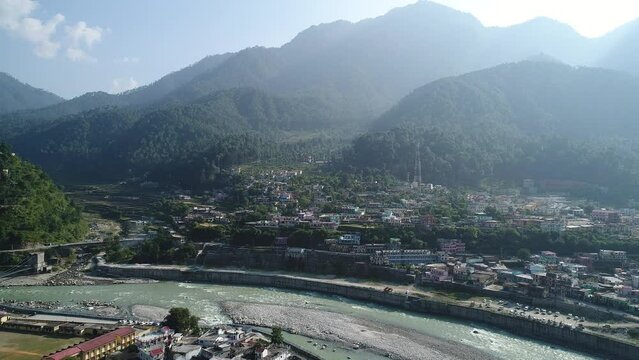
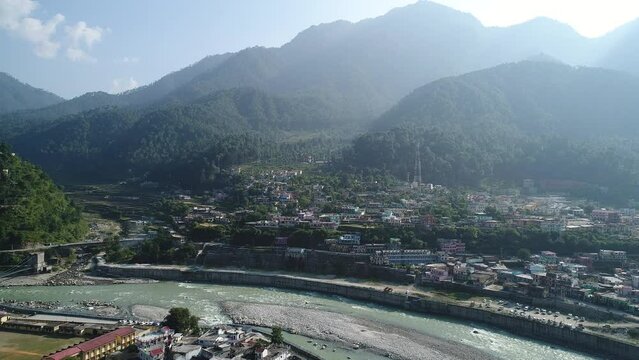
Uttarkashi, often referred to as “Kashi of the North,” is a sacred town nestled in the rugged terrains of the Garhwal Himalayas in Uttarakhand. Situated on the banks of the holy Bhagirathi River, it serves as a pivotal spiritual hub and a gateway to some of India’s most revered pilgrimage sites, including Gangotri and Yamunotri. Surrounded by majestic peaks and dense forests, Uttarkashi offers a profound blend of spirituality, adventure, and untouched natural beauty that beckons pilgrims, trekkers, and seekers of peace alike.
Wiki Link: Uttarkashi wiki page
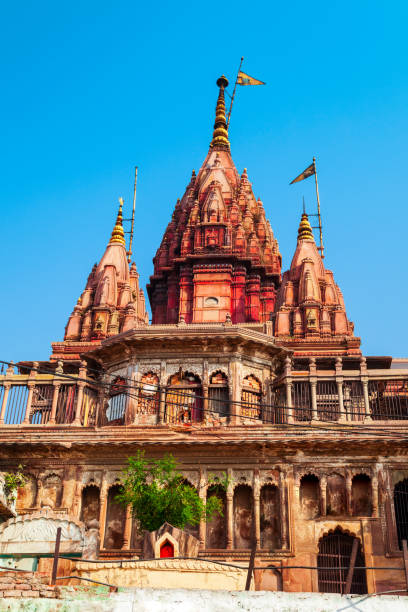
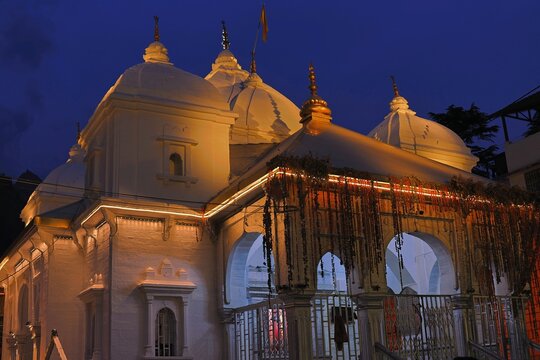
The spiritual nucleus of Uttarkashi, this ancient Shiva shrine is a mandatory stop for pilgrims commencing their sacred Char Dham Yatra.
A serene ashram perched above the Bhagirathi, offering a tranquil retreat for meditation with breathtaking Himalayan views.
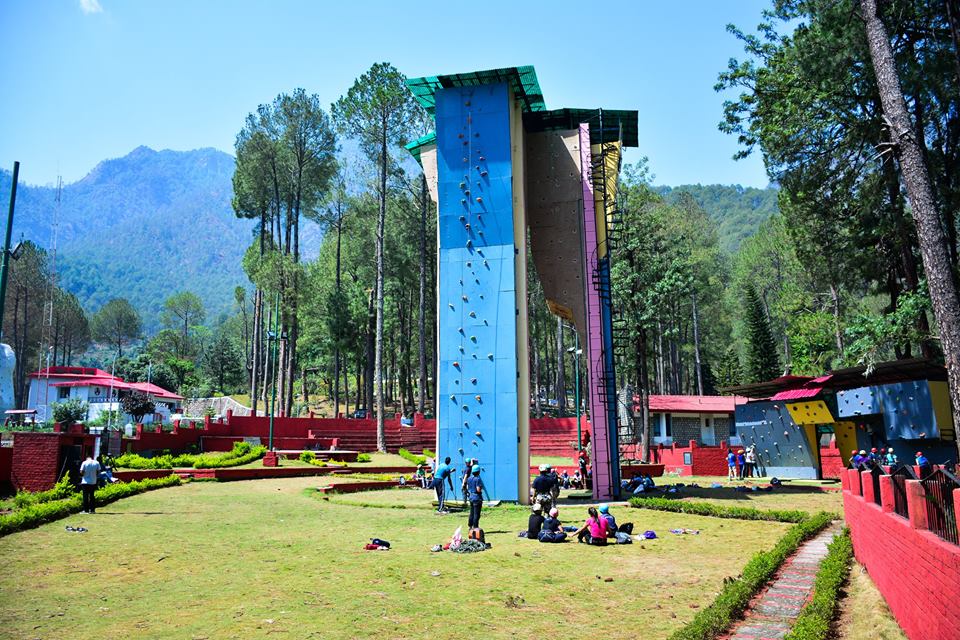
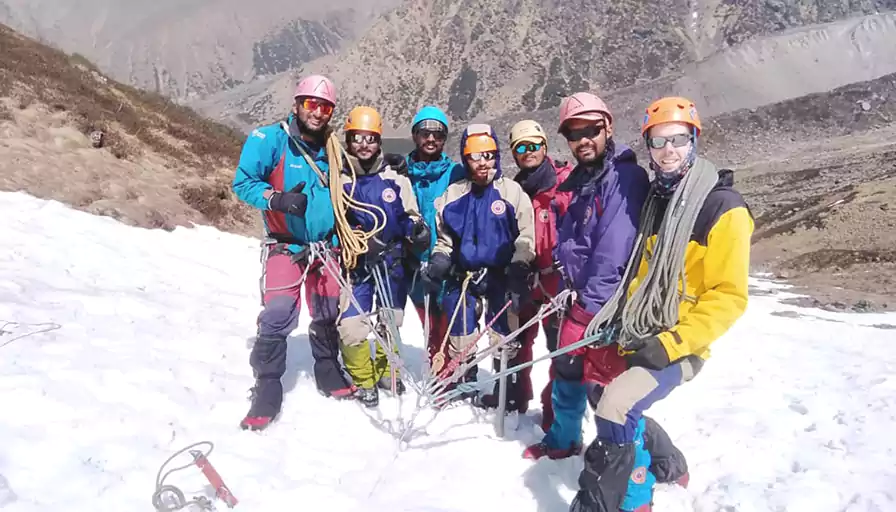
India’s premier mountaineering institute, featuring a fascinating museum that chronicles the exploits of legendary Himalayan climbers.
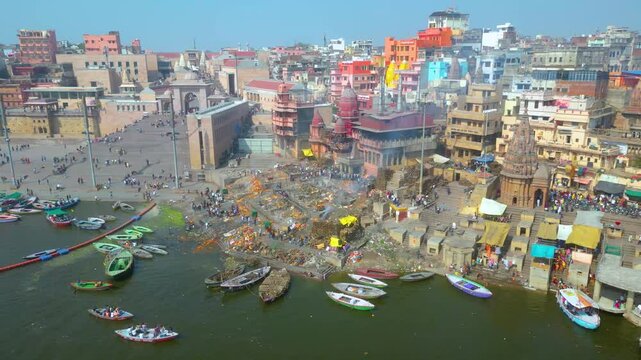
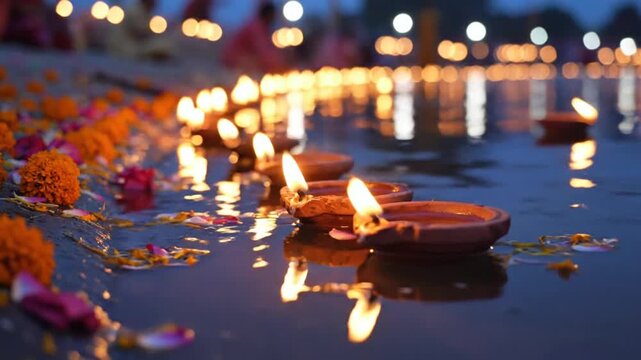
The sacred riverfront steps where devotees gather for evening aarti, witnessing the holy Bhagirathi flow against a majestic mountain backdrop.
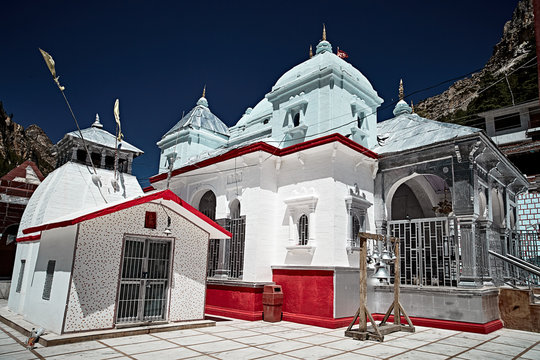
The sacred origin point of the Ganges, this revered Char Dham shrine stands amidst spellbinding Himalayan grandeur.
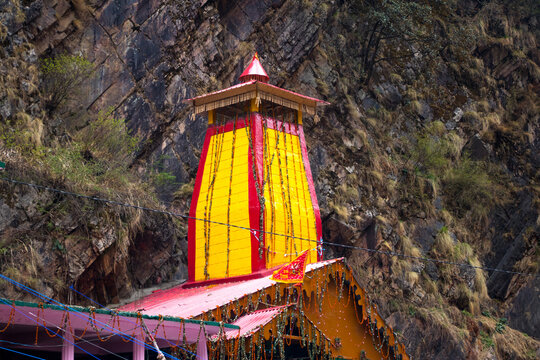
The hallowed source of the Yamuna River, offering pilgrims a spiritually enriching trek to its temple and geothermal springs.
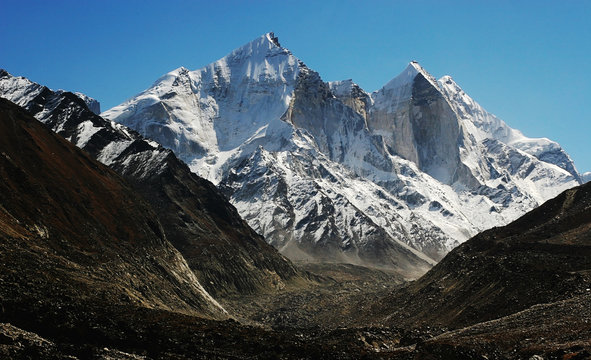
The formidable snout of the Gangotri Glacier, marking the precise birth of the Bhagirathi River through an epic high-altitude trek.
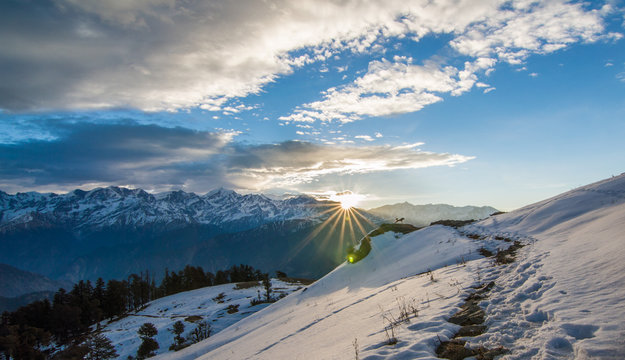
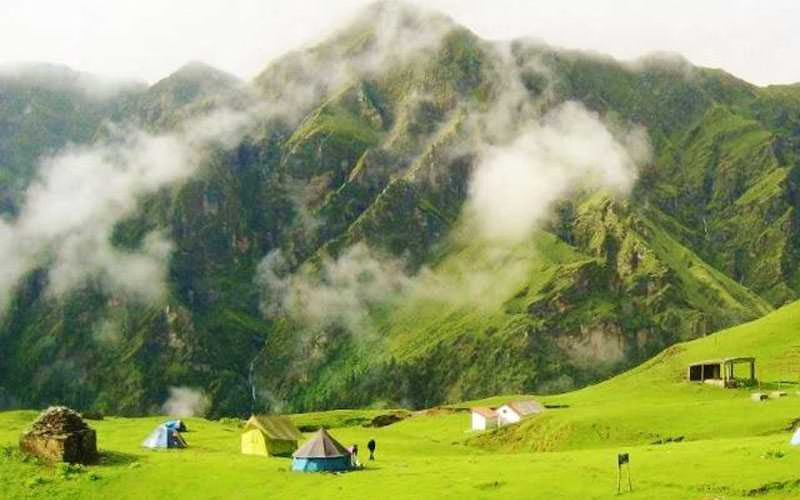
A sprawling high-altitude meadow paradise, renowned for its panoramic Himalayan vistas and unforgettable summer trekking experiences.
Immerse yourself in the spiritual, adventurous, and natural essence of Uttarkashi. From temple visits and riverside meditations to challenging treks and mountaineering courses, the town offers experiences that nourish the soul and challenge the spirit.
Witness the mesmerizing evening ritual at Vishwanath Ghat, where lamp-lit hymns echo across the sacred Bhagirathi waters.
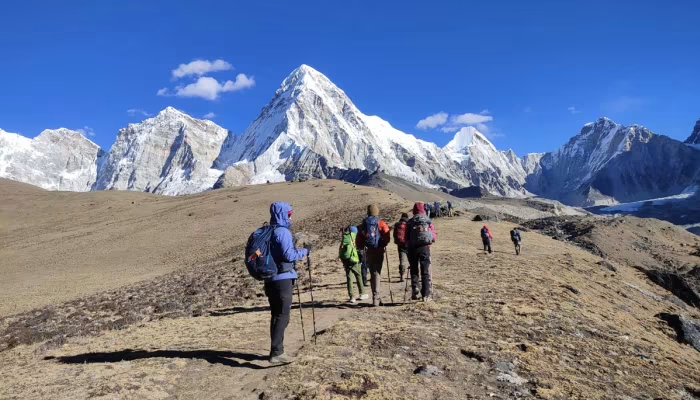
Set out from Uttarkashi on legendary treks to Gaumukh, Dayara Bugyal, and Dodital, each revealing breathtaking Himalayan vistas.
Discover mountaineering history at NIM’s museum or challenge yourself with professional training courses at this premier institute.
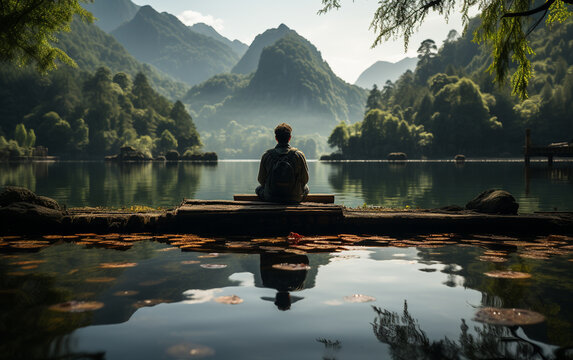
Find profound tranquility with riverside meditation and yoga sessions, enveloped by the majestic silence of the Himalayas.
The cultural landscape of Uttarkashi is deeply intertwined with its religious identity and the rhythms of mountain life. The performing arts here are expressions of devotion, folklore, and the traditions of the Garhwal region.
Garhwali Folk Music
Bhajan & Kirtan
Mangal Geet
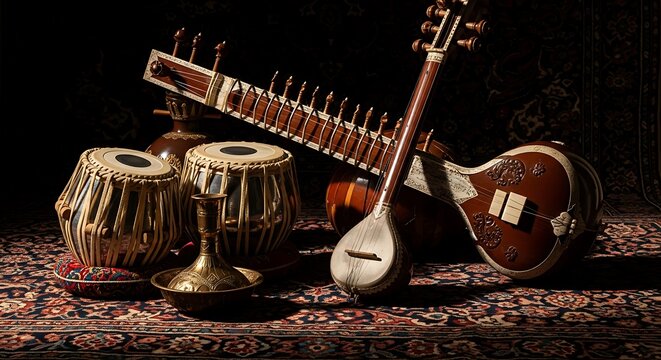
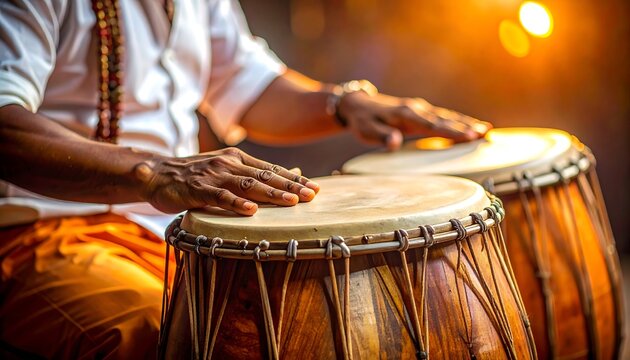
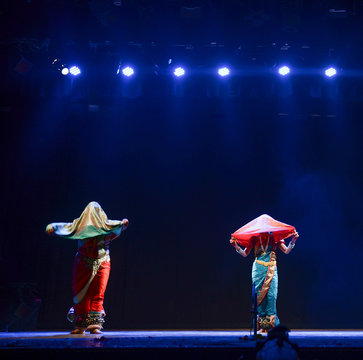
Uttarkashi’s musical heritage is deeply rooted in the devotional Garhwali folk traditions, with soulful Bhajans and Kirtans echoing through its temples and mountain valleys during daily prayers and festivals. The region is renowned for Jagar, a unique ritualistic music form that invokes local deities and spirits through haunting melodies and rhythmic incantations, preserving ancient folklore. Traditional Mangal Geet and wedding songs accompany life’s ceremonies, while the vibrant beats of Dhol-Damau and melodies of Hurka (string instrument) provide the soundtrack for community celebrations, reflecting the simple yet profound rhythms of Himalayan life.
Pandav Nritya
Chholiya Dance
Langvir Nritya
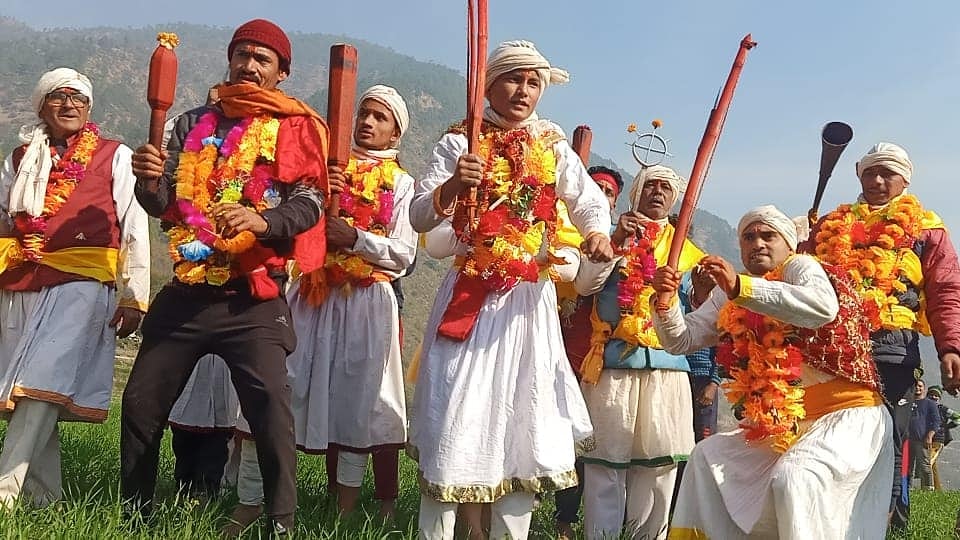
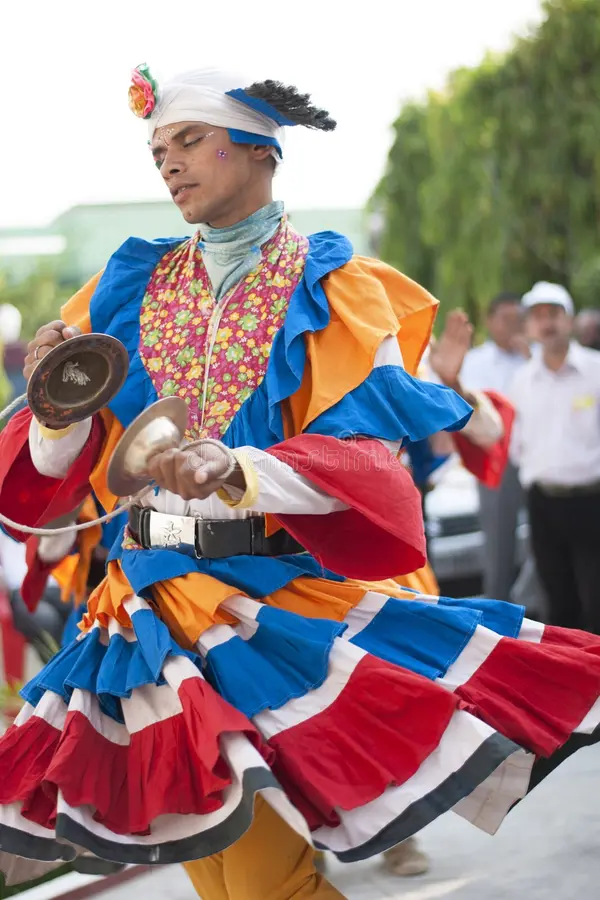
Uttarkashi is home to the vibrant Pandav Nritya, a ritualistic dance-drama that enacts episodes from the Mahabharata, particularly the tale of the Pandavas, performed with elaborate costumes and ceremonial devotion during annual fairs. The martial Chholiya Dance, traditionally performed at weddings, features dancers wielding swords and shields, moving to the powerful beats of Dhol-Damau in a spectacular display of valor and tradition. Graceful folk expressions like Barada Nati and the acrobatic Langvir Nritya (where performers balance on bamboo poles) add to the region’s diverse dance repertoire, celebrating harvests, festivals, and the indomitable spirit of the Garhwal hills.
Uttarkashi vibrates with a unique energy—a profound sense of sacredness amplified by the imposing silence of the Himalayas. The constant flow of the Bhagirathi River, the chants from ancient temples, and the sight of sadhus and pilgrims create an atmosphere of deep spirituality. It’s a place where time seems to slow down, allowing visitors to disconnect from the chaos of modern life and reconnect with their inner selves amidst nature’s majesty.
Uttarkashi’s heritage is fundamentally spiritual and mythological. Believed to be the place where Goddess Ganga descended to Earth, its history is etched in Hindu scriptures. The town has been a center of learning and penance for sages and saints for millennia. The architecture of its temples, though simple, holds immense religious significance, and its identity as the gateway to the Char Dham Yatra has cemented its place as one of the holiest regions in India.
The cuisine of Uttarkashi is simple, wholesome, and influenced by the high-altitude Himalayan lifestyle. It primarily consists of locally grown grains and vegetables, offering warmth and energy.
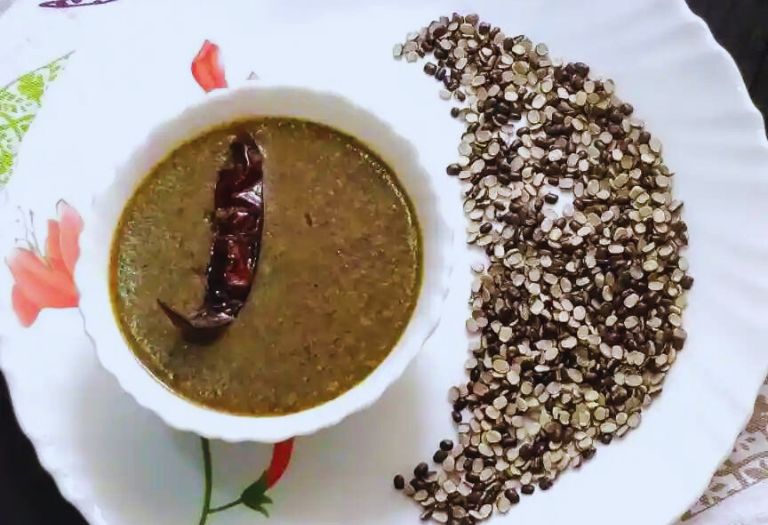
A rich, protein-packed dish made from roasted and ground black gram dal, cooked to a thick, flavorful consistency.
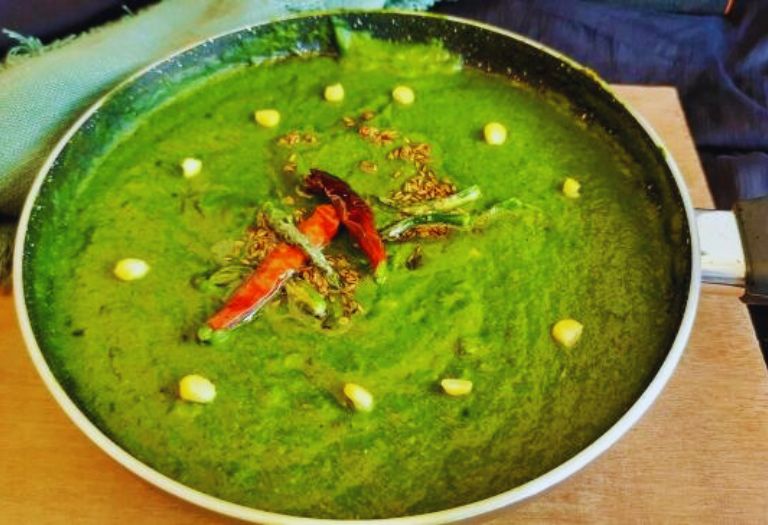
A nutritious green curry prepared from a paste of spinach and fenugreek leaves, cooked with buttermilk and rice flour.
A simple yet flavorful stir-fry of boiled potatoes tempered with local spices, mustard oil, and dried red chillies.
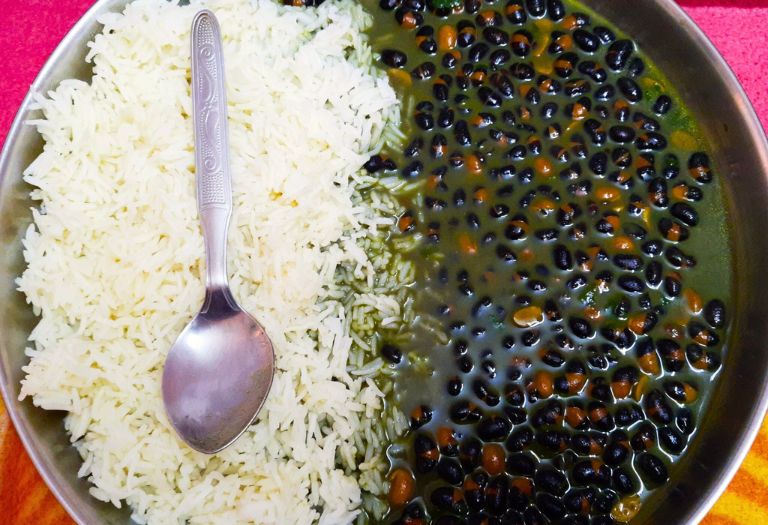
A tangy and slightly sour curry made from black soybeans, cooked with traditional Garhwali spices for a unique flavor.
Shopping in Uttarkashi is less about commercial goods and more about acquiring items of spiritual significance and locally sourced natural products.
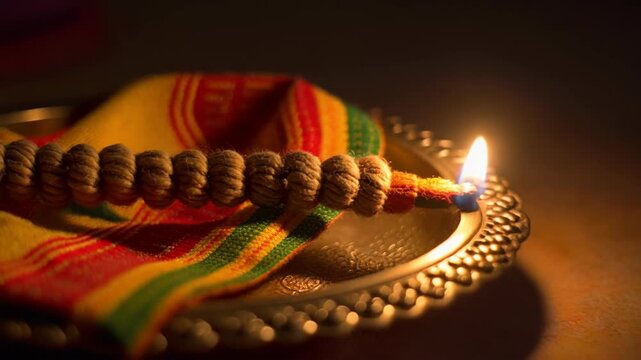
Shops near Kashi Vishwanath Temple sell authentic Rudraksha beads, crystals, copper utensils, and various puja items.
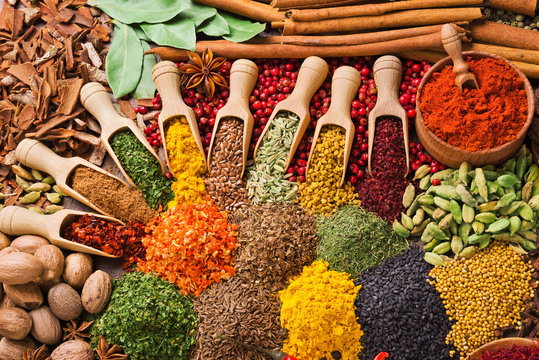
Local markets offer prized herbs like Guchhi mushrooms and Kuth, along with medicinal spices and Kala Jeera.
Hand-knitted woolen socks, gloves, caps, and sweaters provide warmth and make practical souvenirs from the hills.
Pure, organic Himalayan honey collected from high-altitude forests is a healthy and natural product to take home.
The best time to visit Uttarkashi is from April to June and September to November. Summer (April-June) offers pleasant weather (15°C to 30°C), ideal for temple visits and trekking. Post-monsoon (Sept-Nov) brings clear skies and stunning views. The Char Dham Yatra typically runs from May to October. Winters (Dec-Mar) are very cold, with heavy snowfall, often cutting off road access to higher altitudes.
Altitude Acclimatization: Uttarkashi itself is at a moderate altitude (~1158m), but treks and destinations like Gangotri (3415m) are much higher. Acclimatize properly before attempting high-altitude treks.
Road Conditions: Mountain roads can be narrow, prone to landslides, and in poor condition, especially during/after monsoon. Drive carefully or hire experienced local drivers.
Weather Awareness: Mountain weather is unpredictable. Always check forecasts and be prepared for sudden changes, especially during treks.
Stay Hydrated: The high altitude and physical activity can lead to dehydration. Drink plenty of water.
Respect Local Customs: Dress modestly, especially in temple towns. Remove footwear before entering temples.
Travel Insurance: For treks and adventure activities, it is highly recommended to have travel insurance that covers high-altitude trekking and medical evacuation.
Permits: For certain treks (like Gaumukh), you may need permits from the Forest Department. Check and obtain these in advance.
Uttarkashi town is compact and can be explored on foot. For nearby attractions and pilgrim spots, local taxis (jeeps) are the most common and convenient mode of transport. Shared jeeps and buses are available for travel between Uttarkashi, Gangotri, Yamunotri, and other towns. For trekking, it's essential to hire local guides and porters from registered agencies. Roads can be narrow and winding, so travel times are often longer than expected.
Unauthorized Guides/Porter: At trek starting points, be wary of unlicensed guides or porters demanding high fees. Always hire through registered trekking agencies or the GMVN (Garhwal Mandal Vikas Nigam) office.
Overcharging by Taxis: Taxi fares to Gangotri, Yamunotri, and other destinations are often fixed by local unions. Inquire about the standard fare beforehand or book through a reliable counter to avoid being overcharged.
Accommodation Touts: Upon arrival at the bus stand, you may be approached by touts offering cheap hotels. Verify the accommodation yourself or book in advance, especially during the peak Char Dham season.
Fake Prasad/Puja Items: Buy puja items and prasad from established, government-recognized shops near temples to ensure authenticity and fair pricing.
Fake "VIP" Darshan: At Gangotri and Yamunotri, there is no official VIP darshan system. Be cautious of anyone offering to skip the queue for a fee.
Overpriced Equipment Rentals: If renting trekking gear (sleeping bags, tents, etc.) in Uttarkashi, inspect the quality carefully and compare prices from multiple shops before renting.
Uttarakhand Cultural Guide
Places to Visit in Uttarkashi
Places to Visit Nearby Uttarkashi
India’s Most Sacred Pilgrimages (Char Dham)
India’s Best Trekking Destinations
Uttarakhand Cultural Guide: The Land of Gods
The Complete Char Dham Yatra Guide
Himalayan Treks from Uttarkashi: Gaumukh & Beyond
Exploring the Serene Meadows: Dayara Bugyal Trek