Architectural Mechanics, Dynastic Ambition, and Historiographical Riddles of the Kakanmath Shiva Temple —————————-
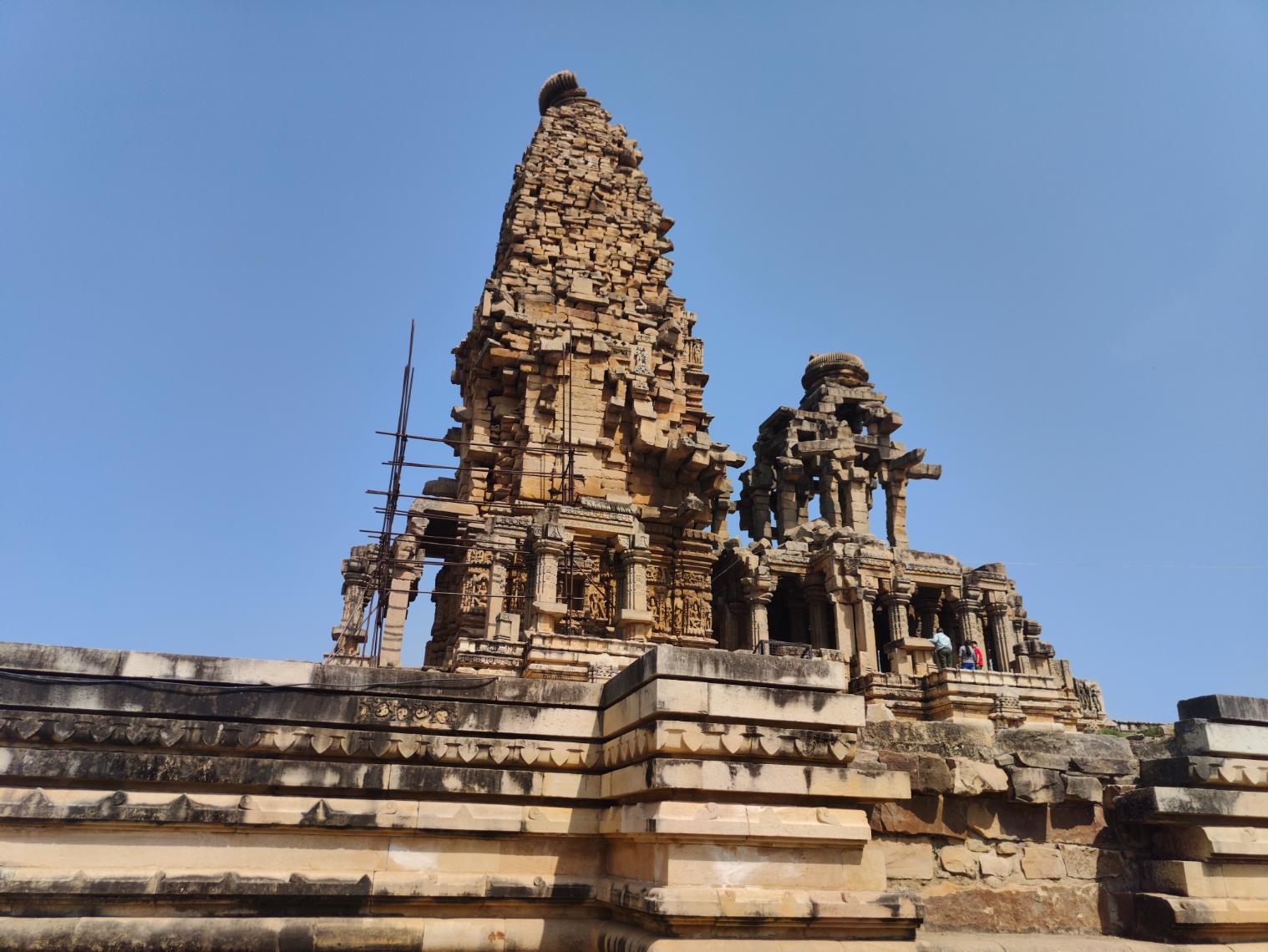
Tucked deep within the dry terrain of Sihoniya—once the sprawling, fiercely contested medieval capital of Siṁhapānīya in the Morena district of Madhya Pradesh—lies the Kakanmath Shiva Temple. It is less a pristine, textbook monument and more a haunting, gravity-defying ruin that roars through its absolute silence. Commissioned somewhere between 1015 and 1035 CE by King Kirttiraja of the understudied Kachchhapaghata dynasty, this monumental pile represents a singular, highly experimental regional peak of early North Indian Nagara temple architecture. We know this not merely from stylistic guesswork or art historical inference, but from concrete epigraphic records: the famous Sas-Bahu Temple inscription in Gwalior fort explicitly credits Kirttiraja with raising a spectacular stone web to the “consort of Parvati” right here at Siṁhapānīya. Local memory, mixing history with romance, claims the name itself honors Queen Kakanvati, blending dynastic muscle with personal devotion, though etymologists suggest a more glittering origin derived from Kanak(gold) and Matha (shrine).
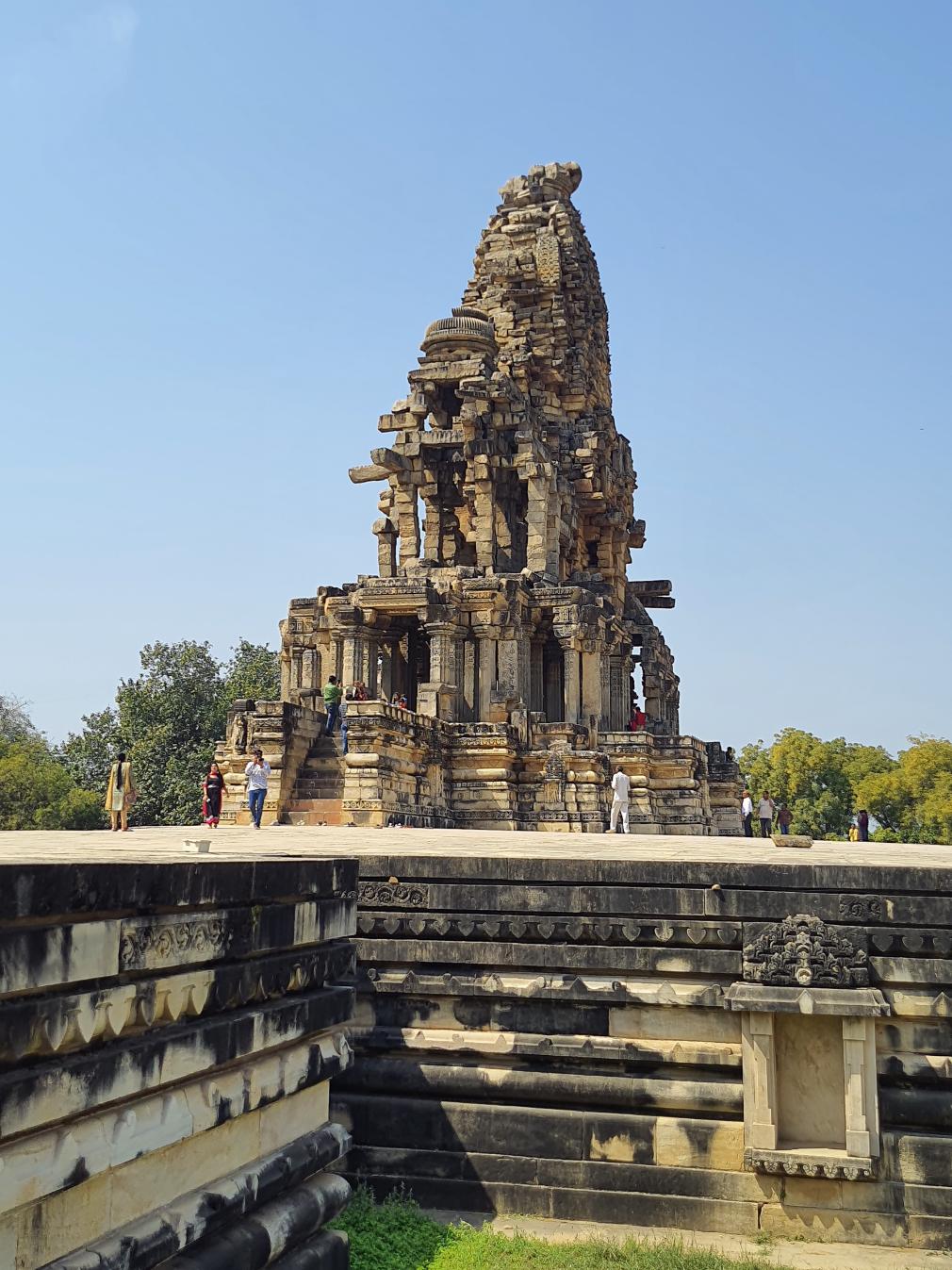
Originally, Kakanmath was not an isolated, wind-swept spire but the anchor of a vast, highly coordinated panchayatana (five-shrine) grid. Time, violent shifts in geological stability, and successive waves of medieval iconoclasm ground the four peripheral shrines to dust, leaving the central core to pierce the skyline entirely alone. Elevated on a massive, heavily molded stone plinth (jagati or pitha), the structural layout follows a strict, sacred axis designed to manage the psychological experience of a devotee. A pilgrim would first ascend the steps into the Mukha-mandapa (entrance porch), move through the dark, pillar-dense Gudha-mandapa (inner hall), pause briefly at the restrictive threshold of the Antarala(vestibule), and finally face the dark expanse of the Garbhagriha (sanctum sanctorum).Within this inner sanctum sits an enormous, deep-set Shiva Linga, enveloped by a dark circumambulatory corridor (pradakshinapatha) that breaks outward into dramatic lateral transepts.
The Mechanics of Equilibrium: Dry Stone Engineering
What baffles modern structural engineers and visiting architects is how this jagged monument still stands. Soaring nearly 30 meters (100 feet) into the open air, the shikhara(spire) looks entirely stripped bare—its ornate, outer stone casing has long since fallen away, exposing a rough, terrifyingly skeletal core of red and grey sandstone. The entire structure was assembled without a drop of concrete, lime mortar, or binding slurry. This is a pure example of classical dry stone masonry. The building survives entirely on dead weight, absolute balance, and the precise geometric interlocking of massive stone blocks where friction resists horizontal shifts.
This precarious, floating appearance naturally birthed local legends. Villagers still tell stories about how ghosts, ghouls, or supernatural spirits stacked these multi-ton stones in a single night under demonic orders, abandoning the project mid-spire the moment the morning cock crowed. In reality, the temple proves an astonishingly advanced grasp of trabeated (post-and-beam) engineering and counter-weight physics. By clustering sixteen columns into four massive quadrants within the central hall, the Kachchhapaghata builders distributed the crushing downward thrust of the stone spire outward across the wide base of the plinth, making the building surprisingly elastic against seismic waves.
Iconography and the Fluid Pantheon
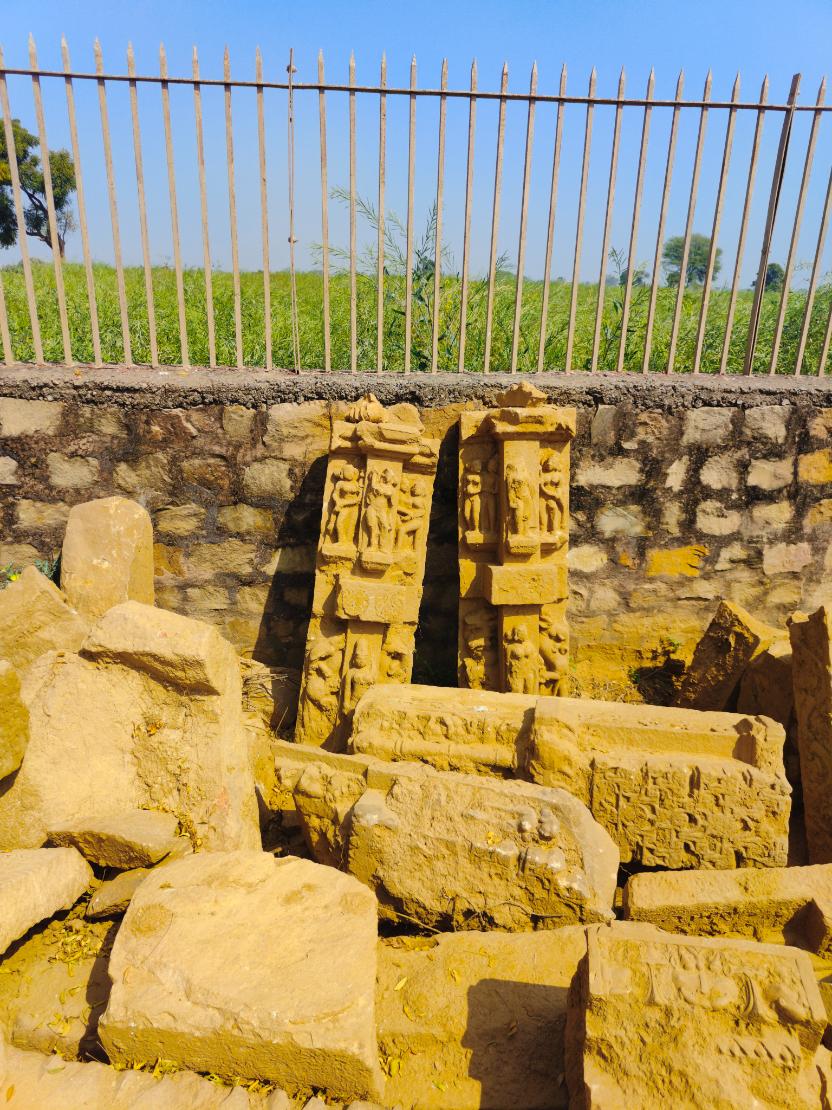
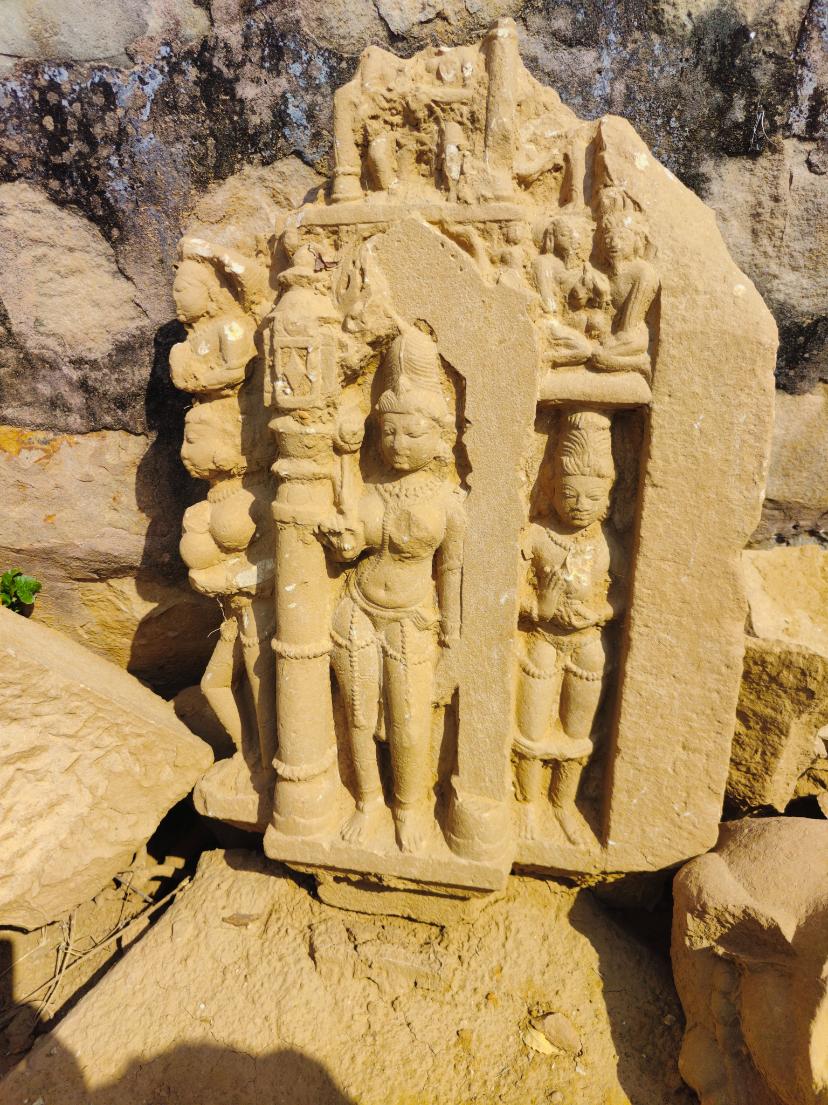
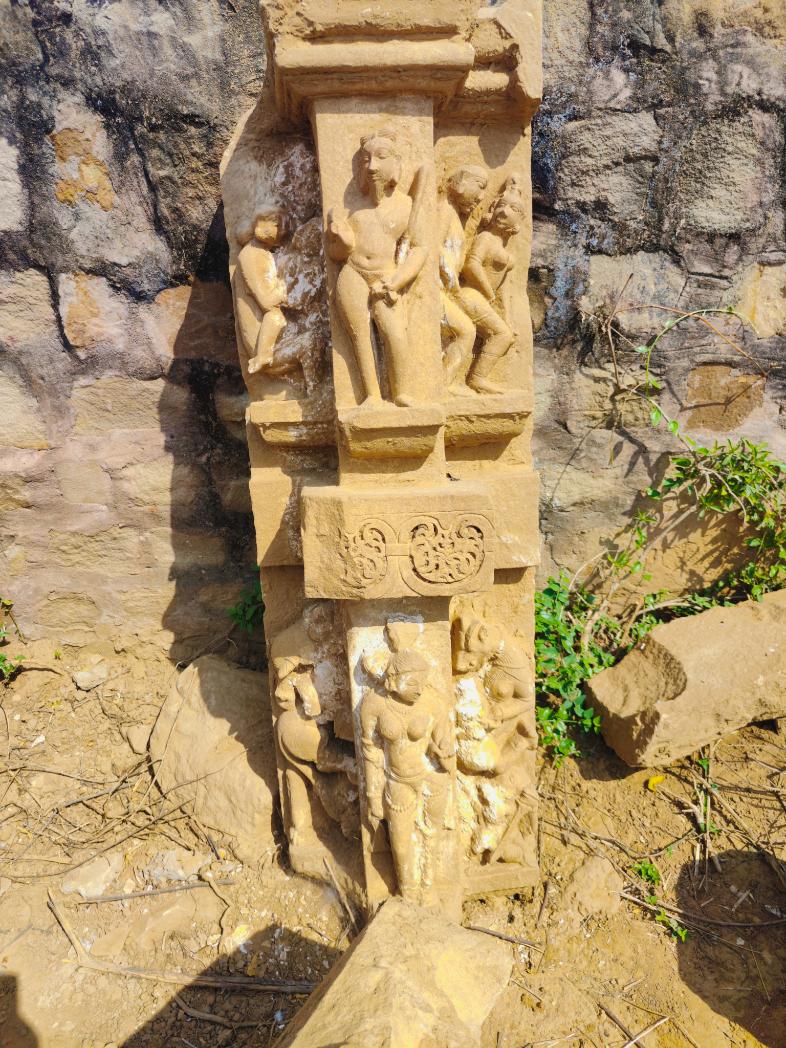
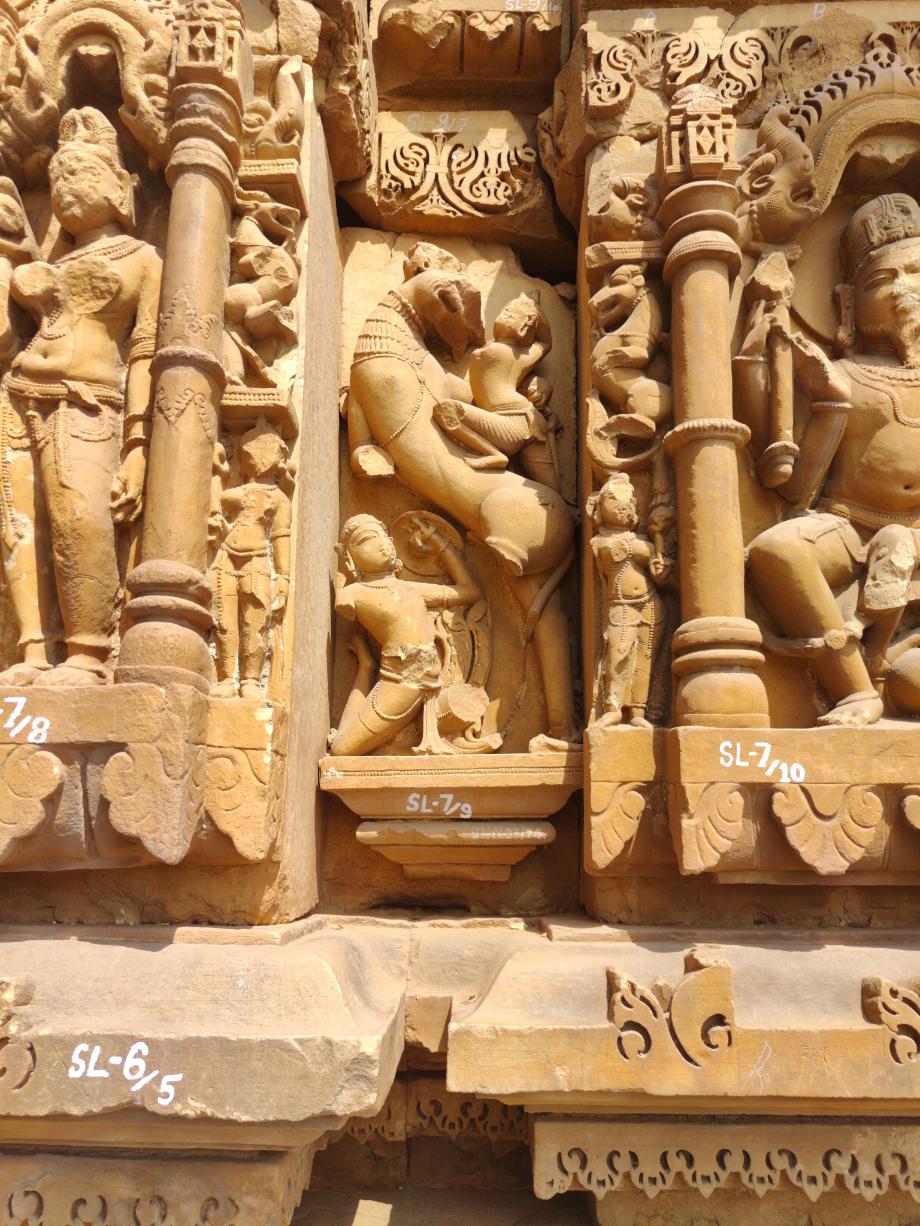
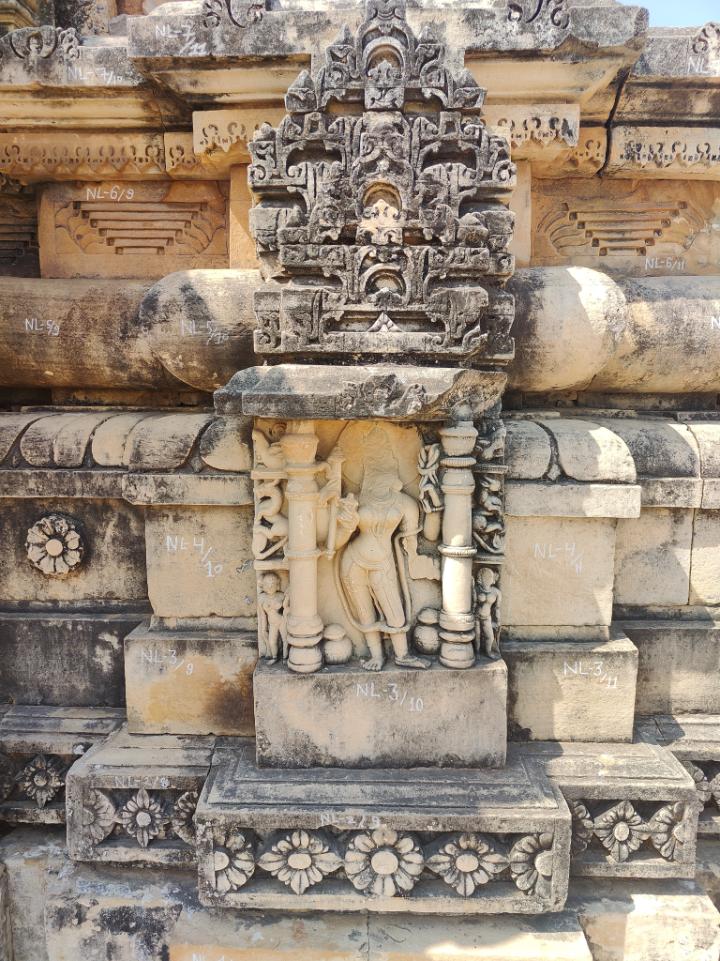
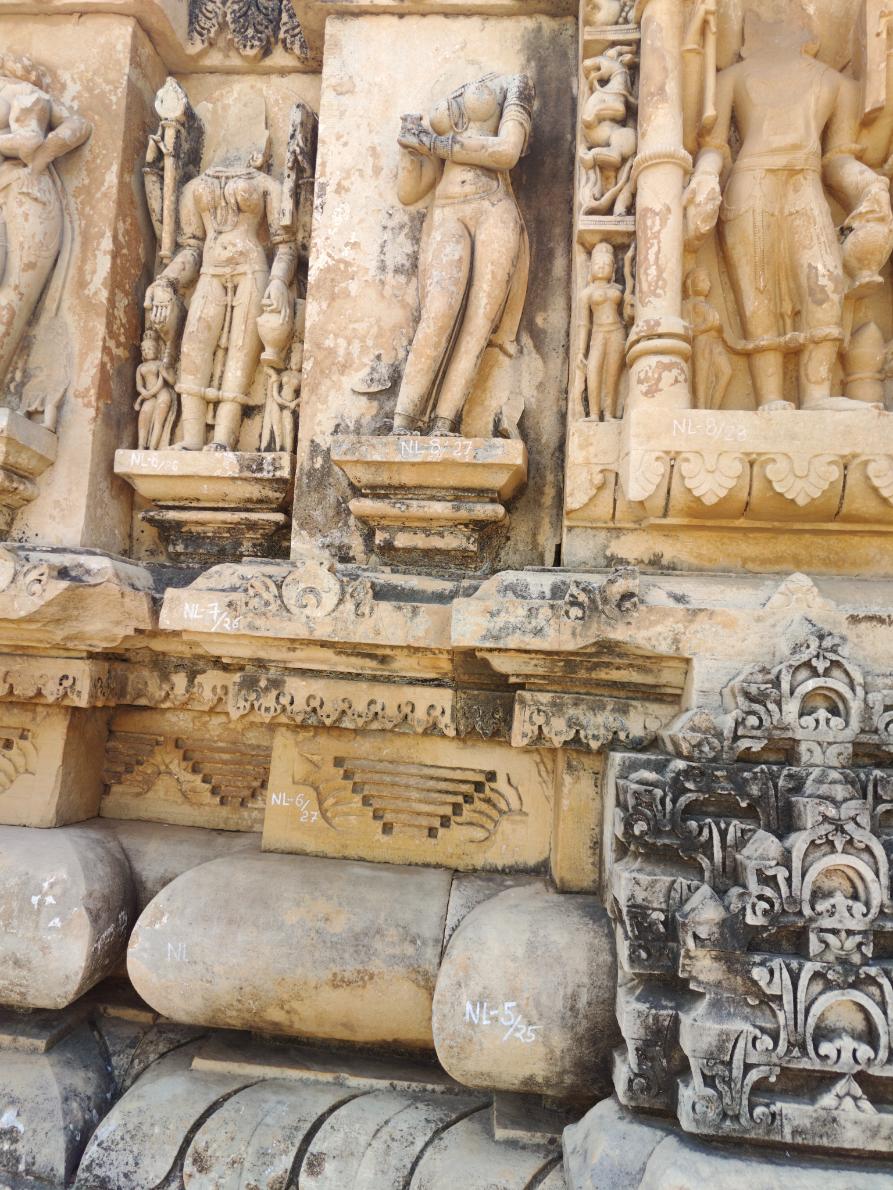
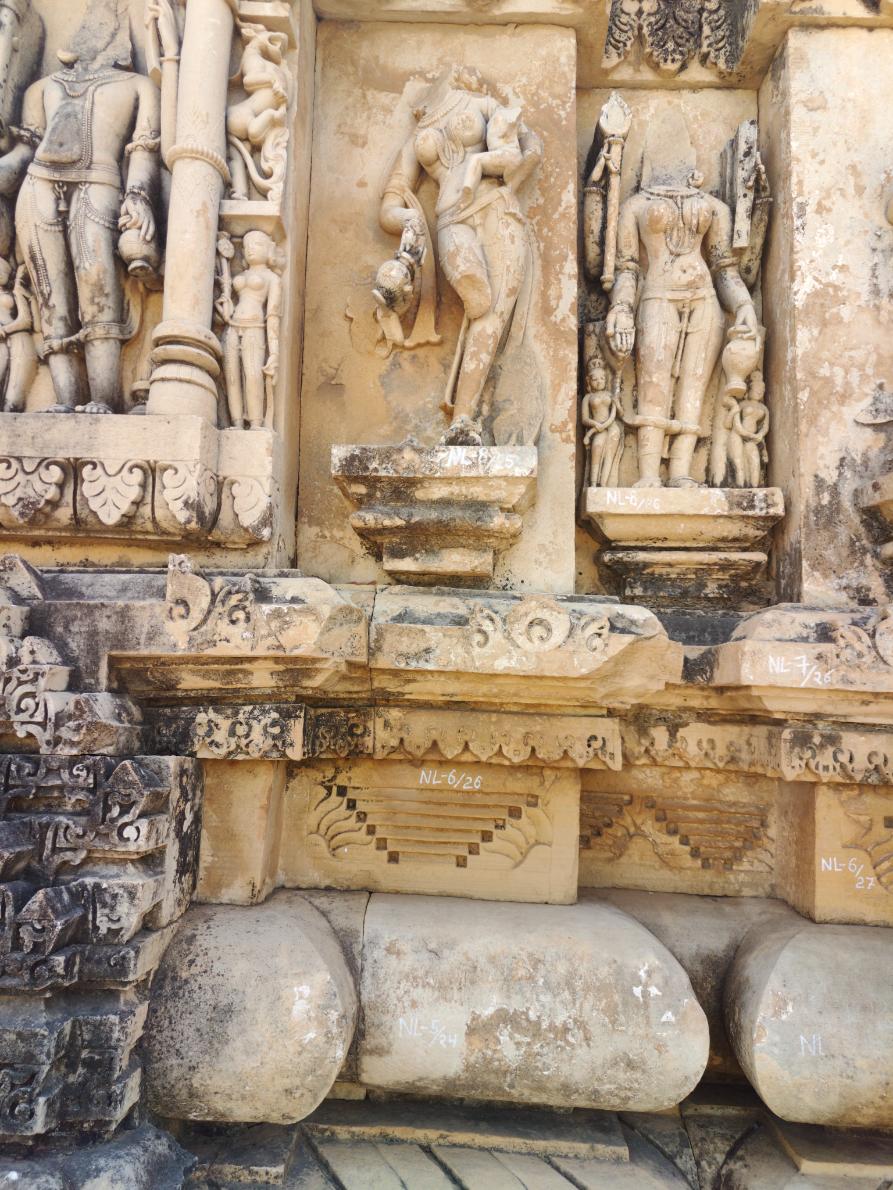
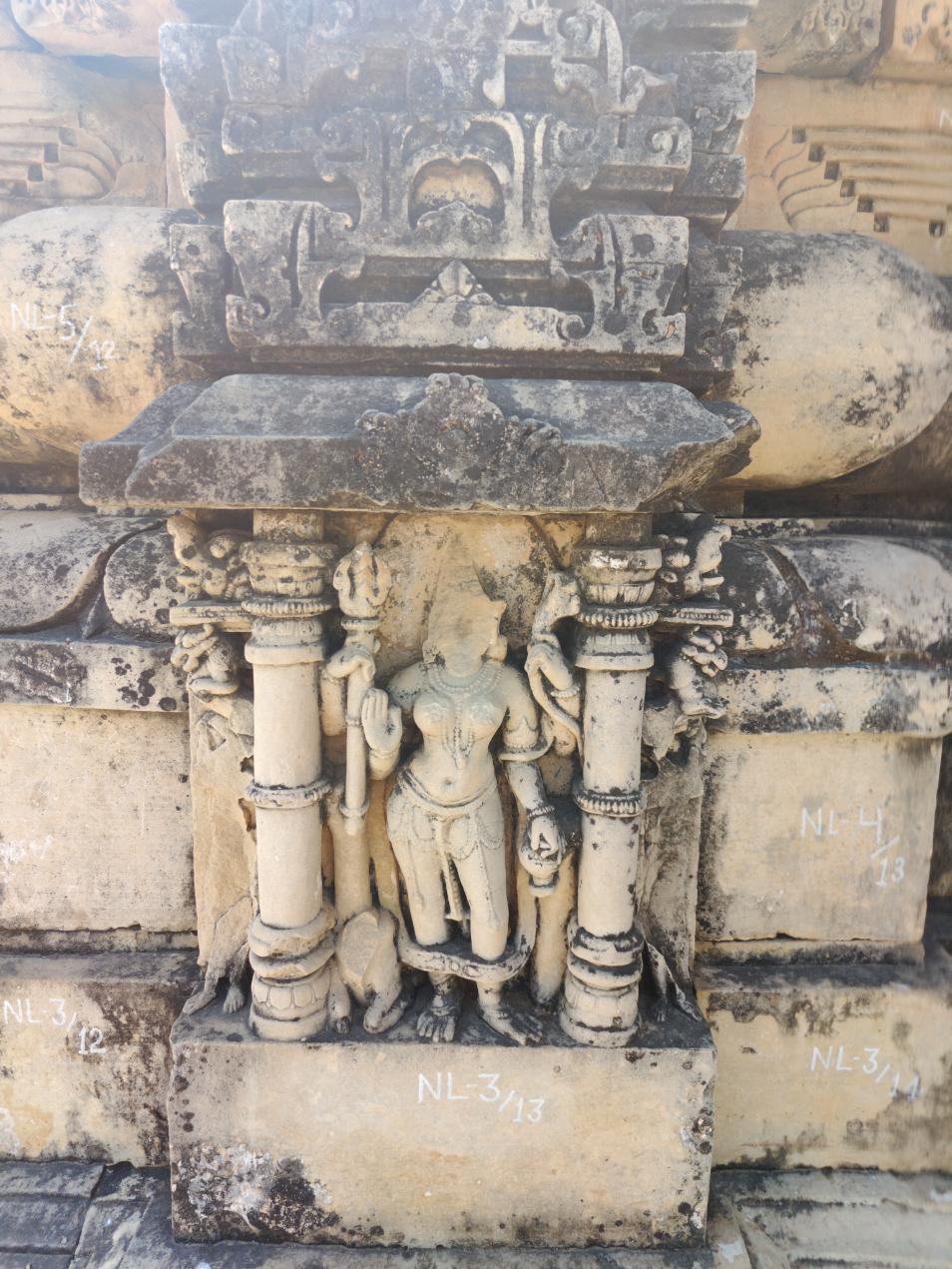
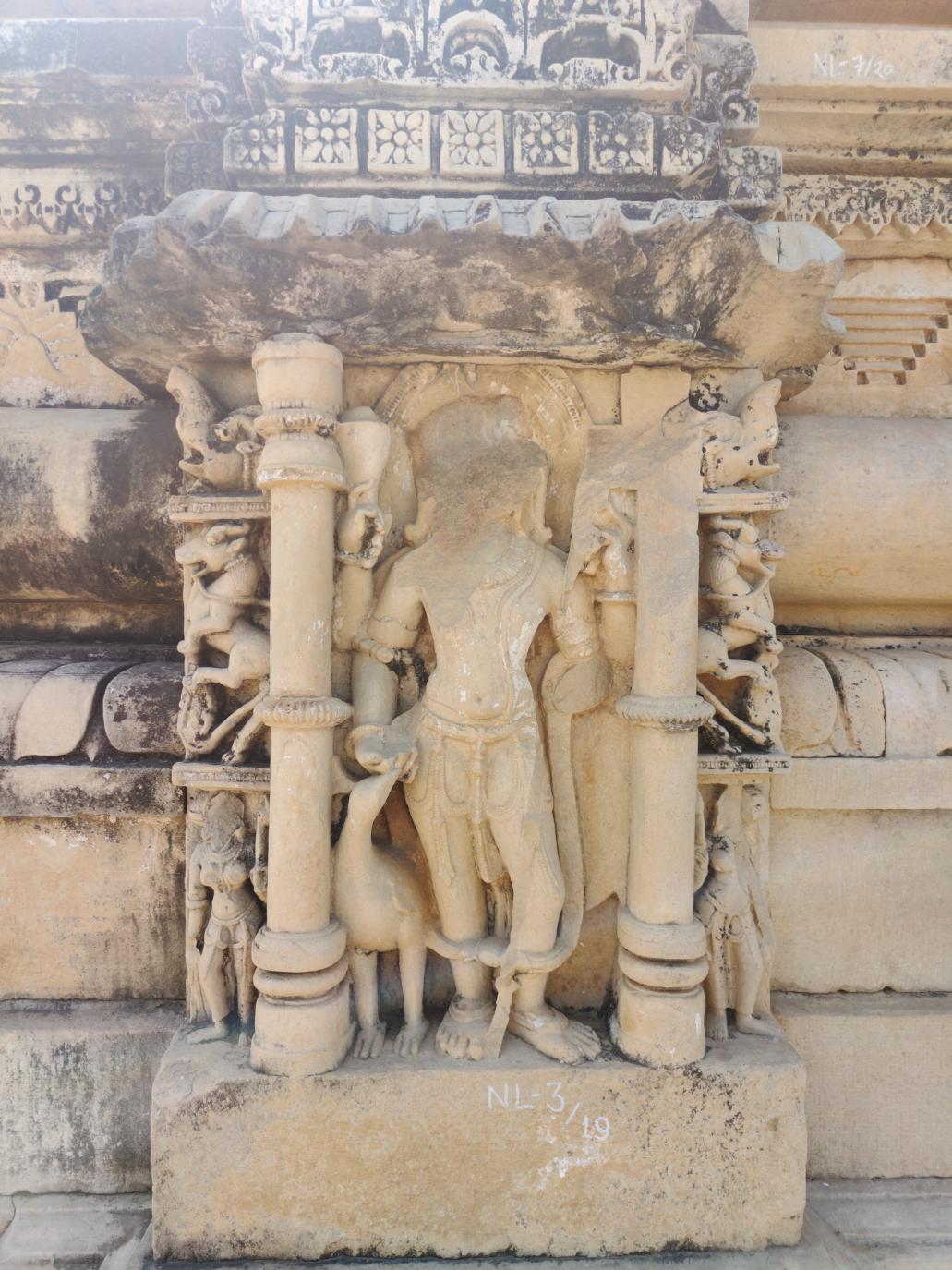
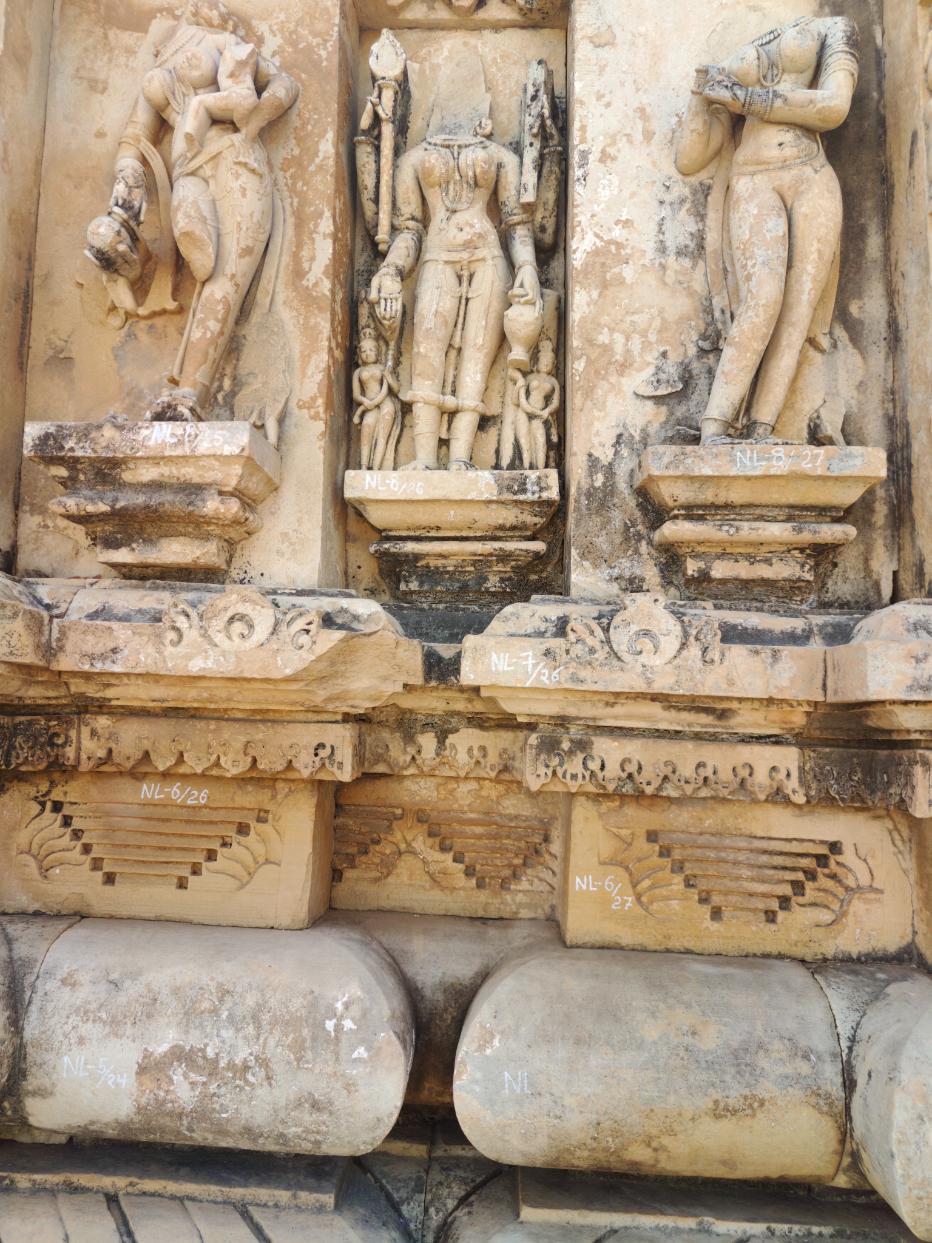
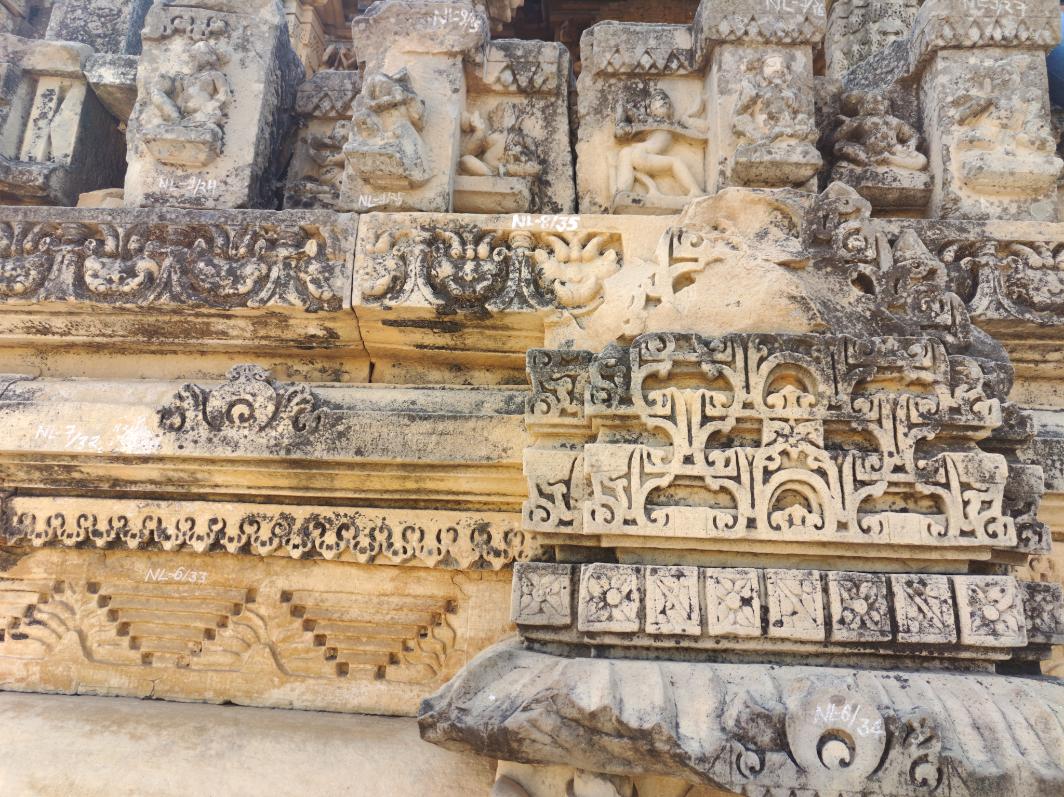
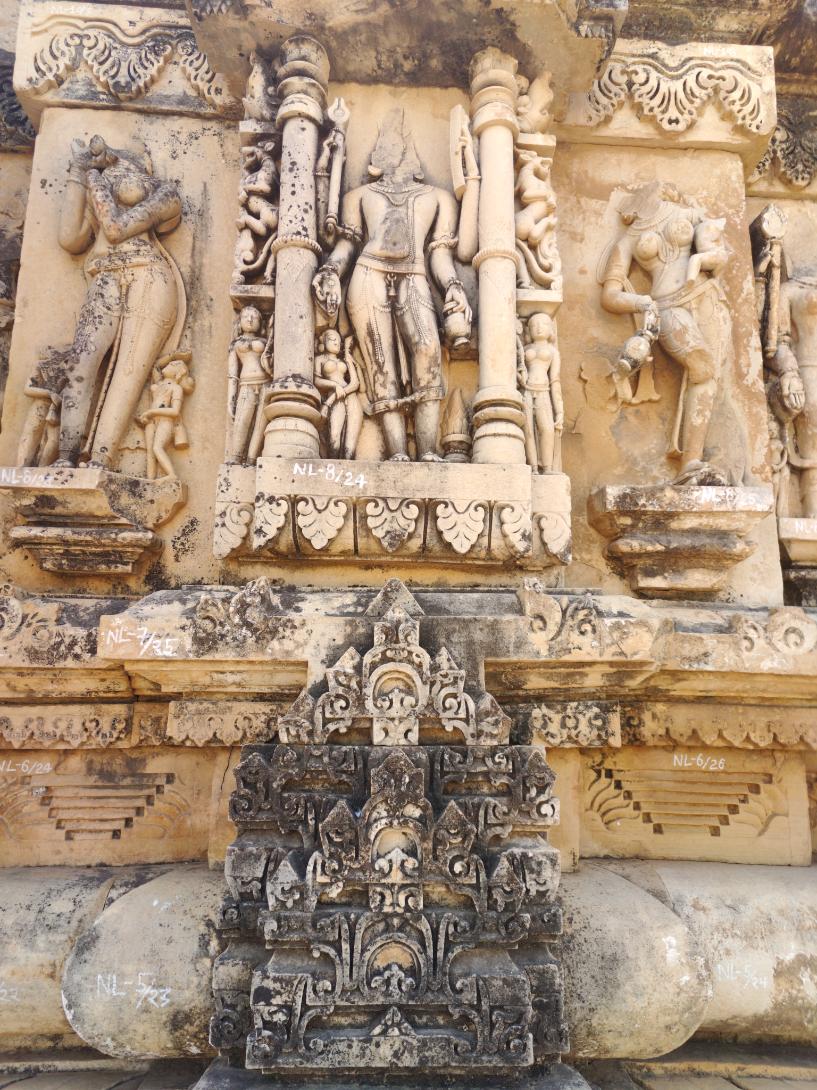
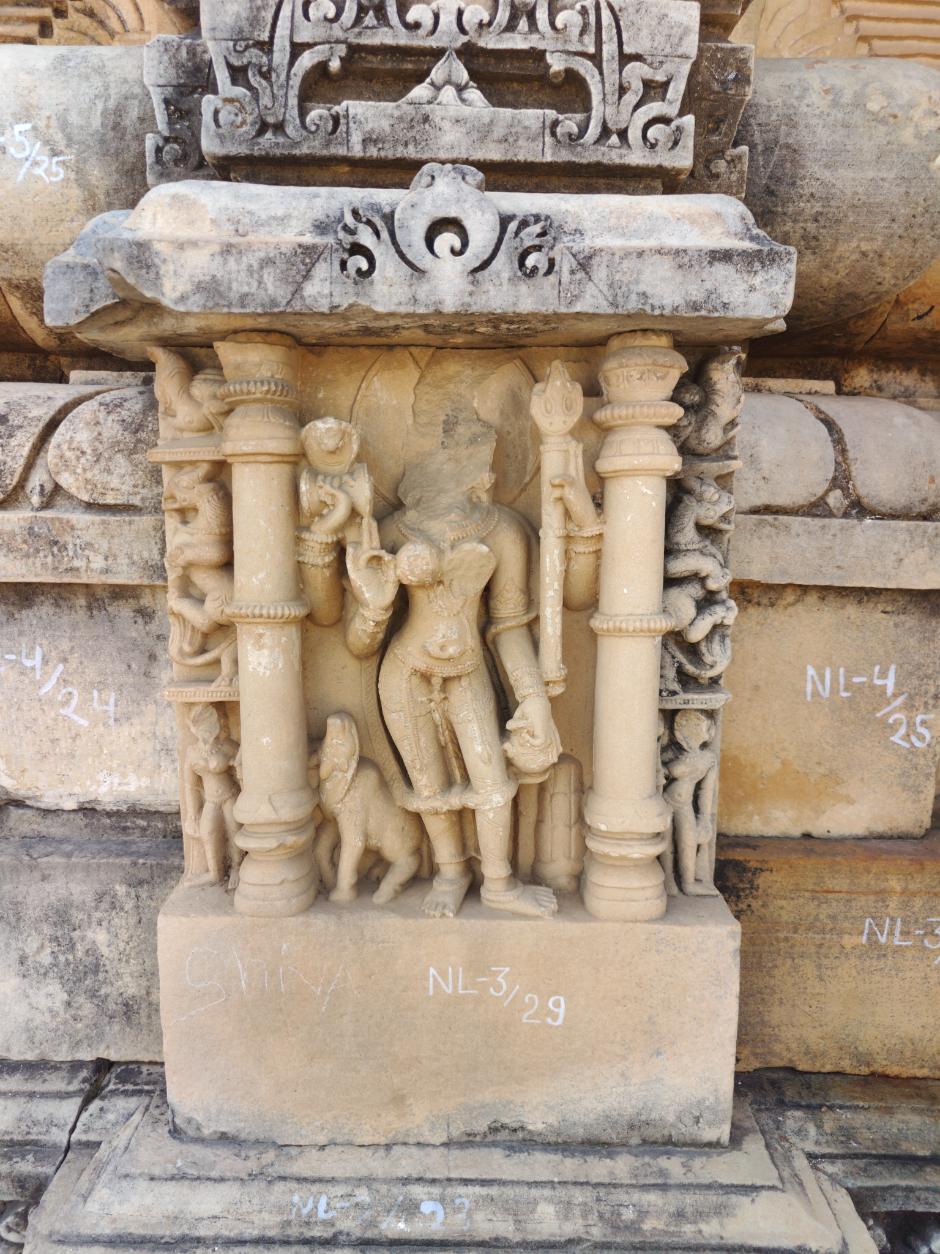
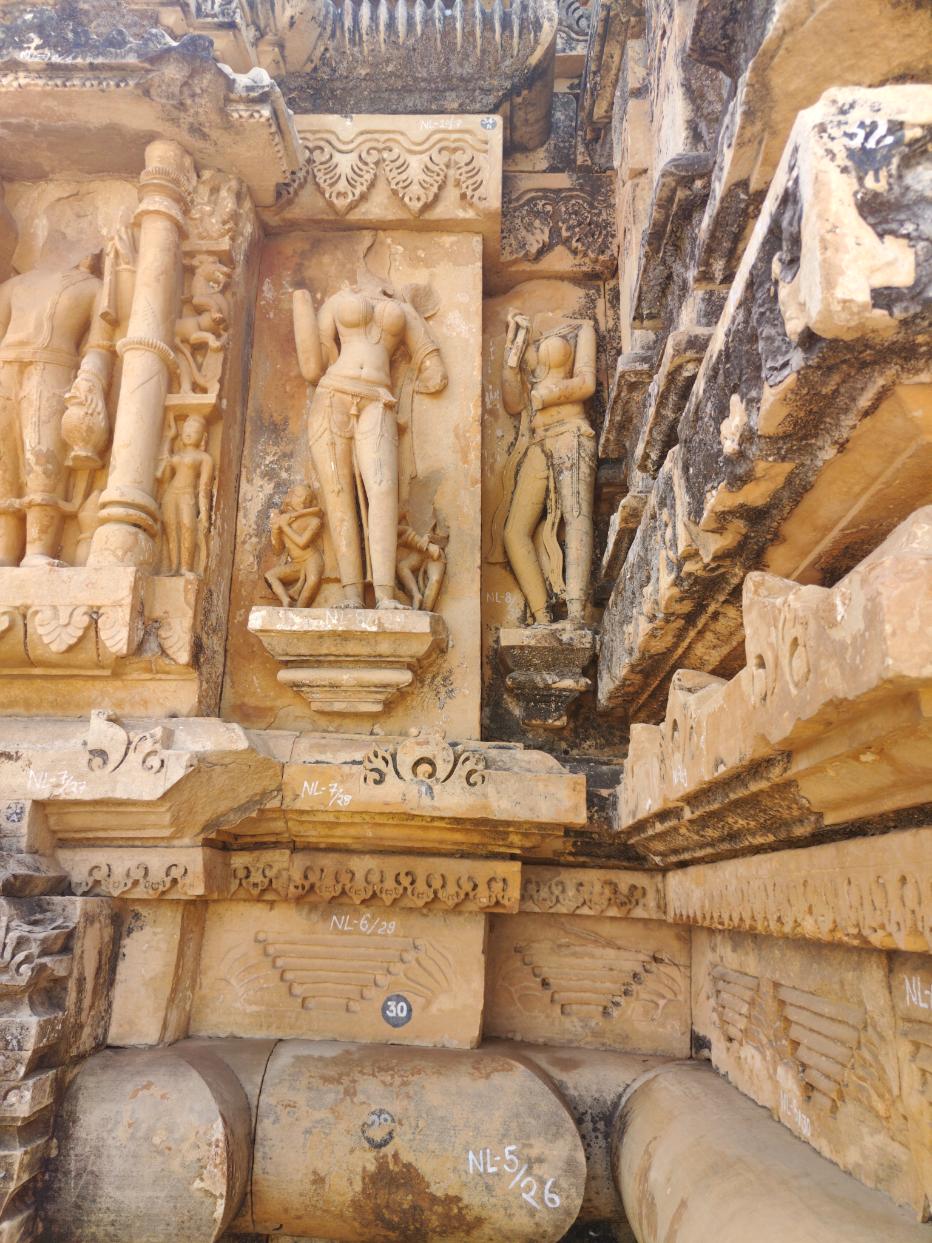
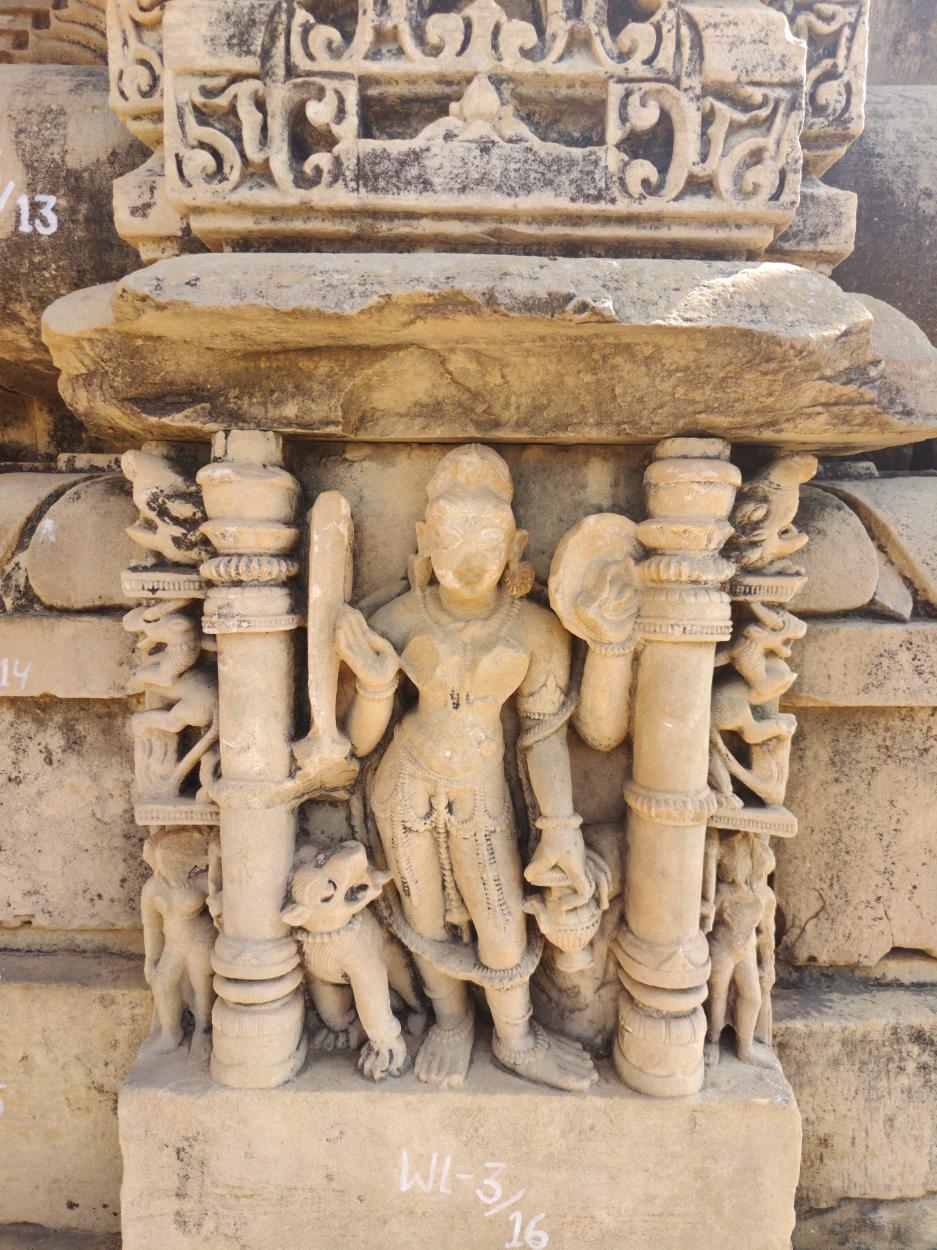
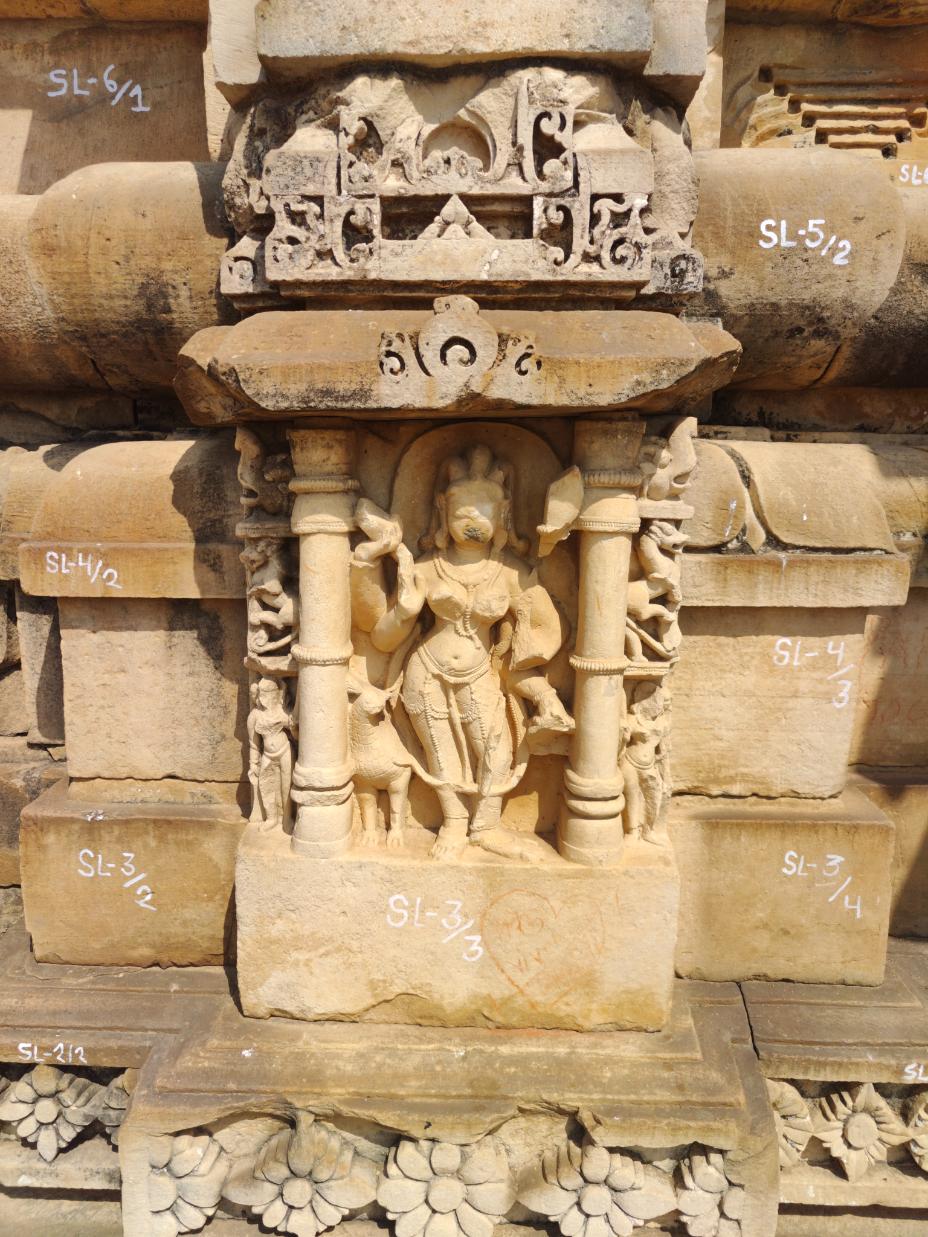
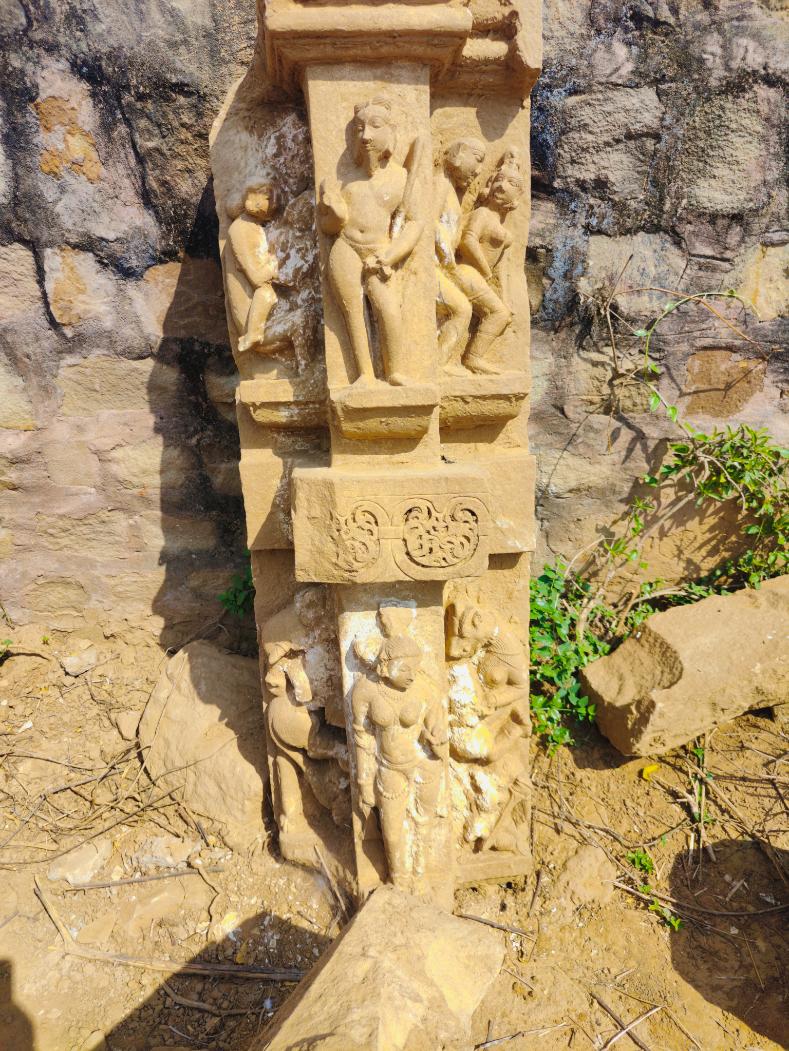
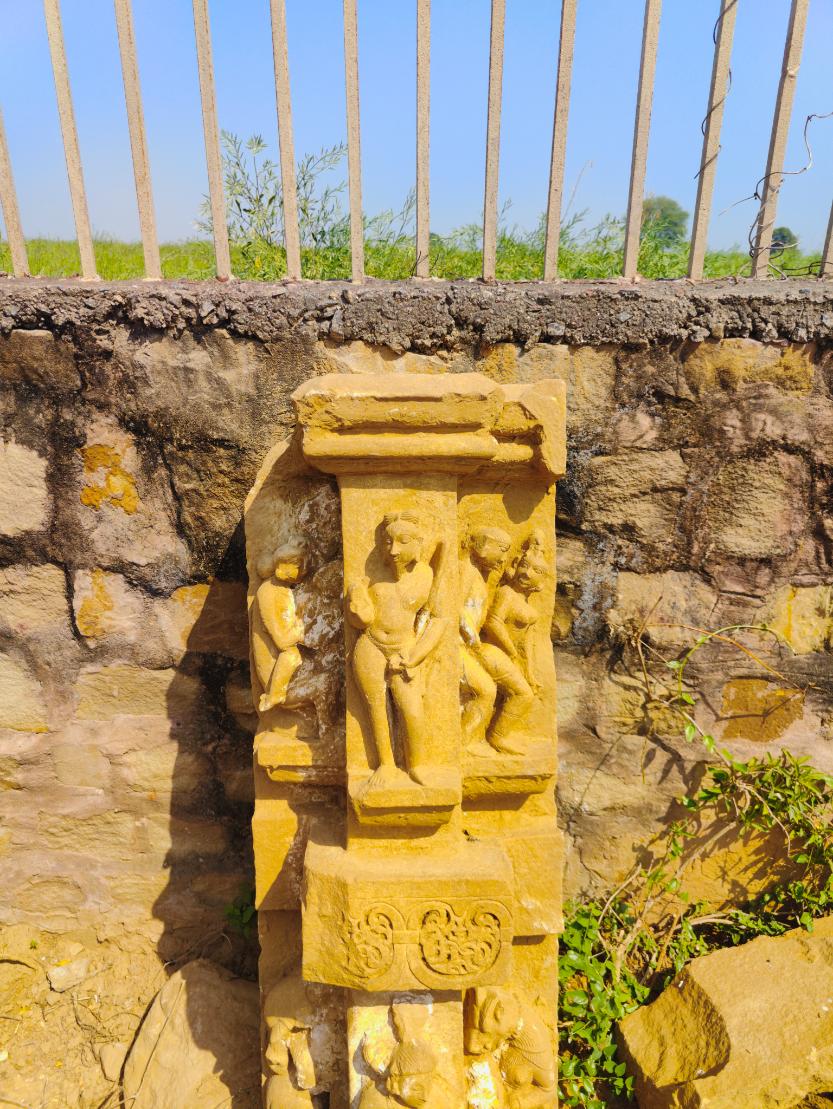
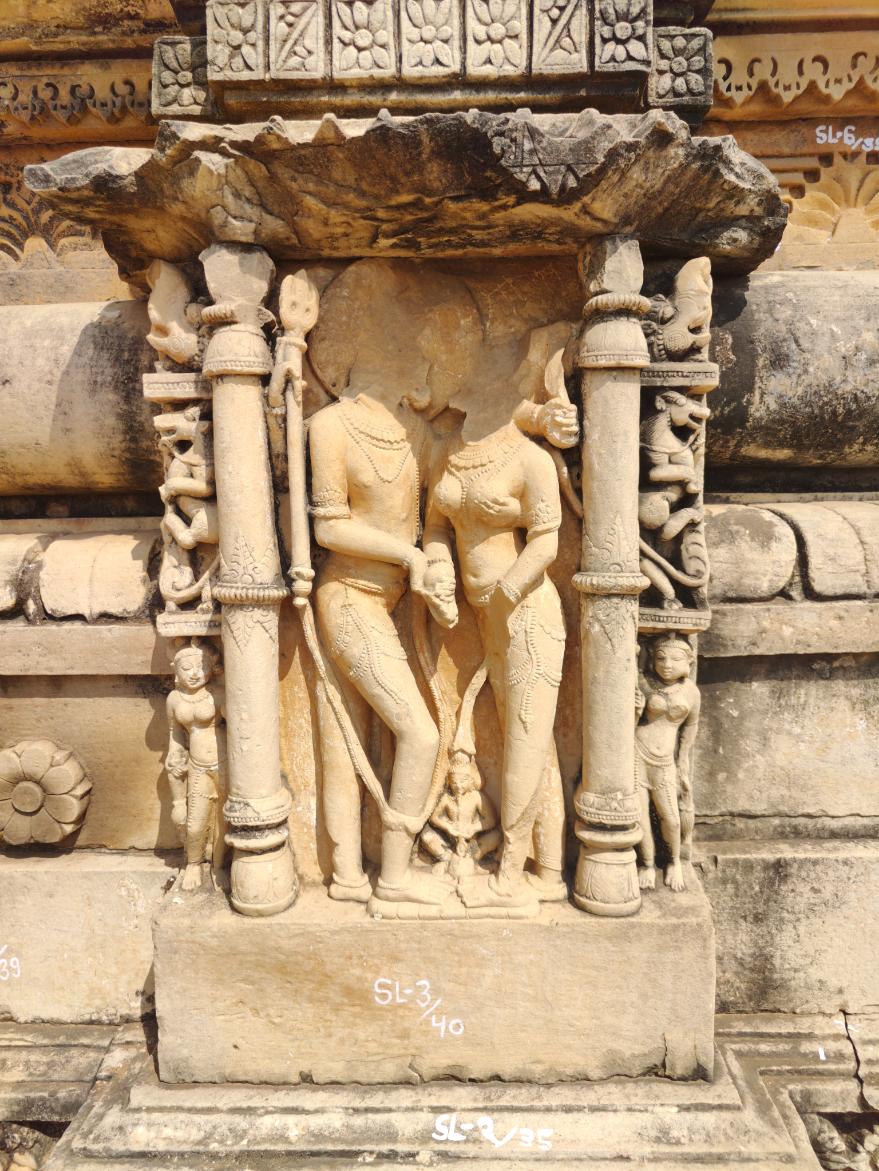
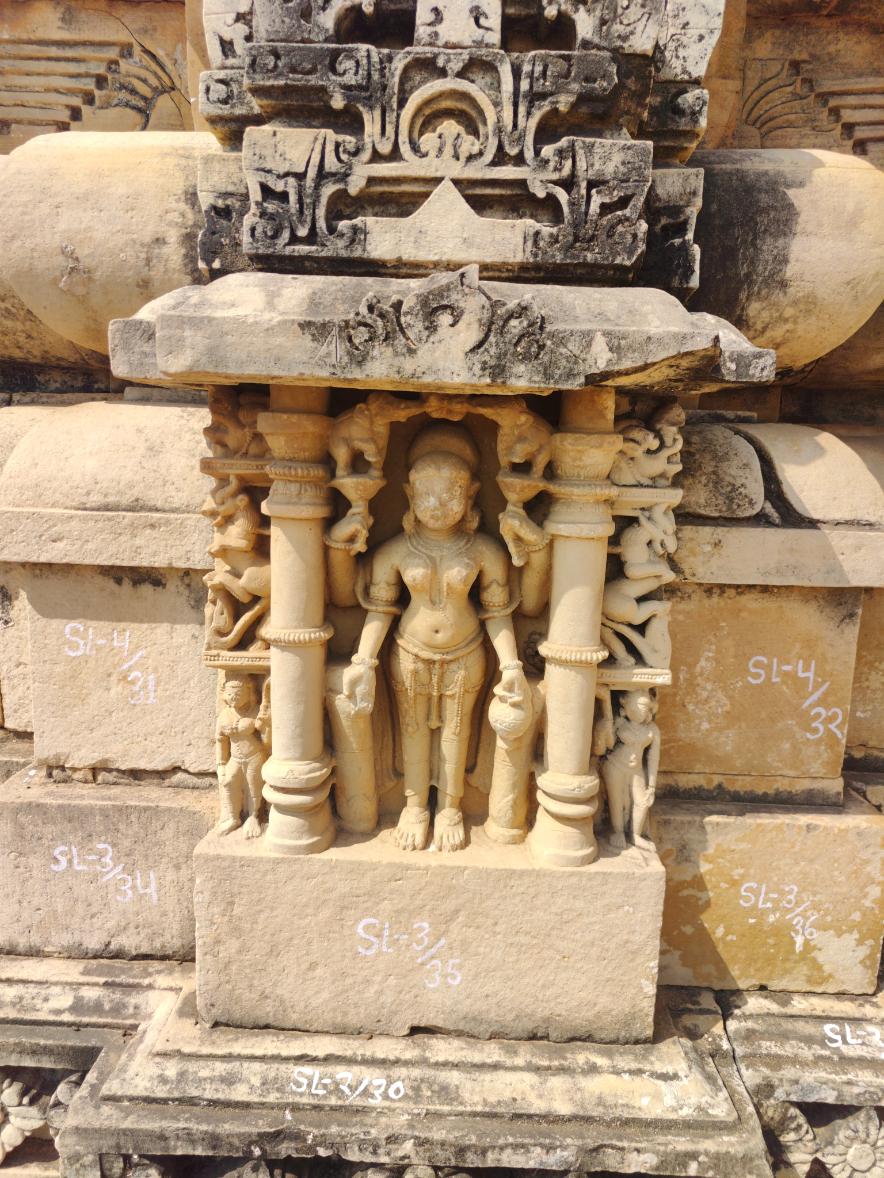
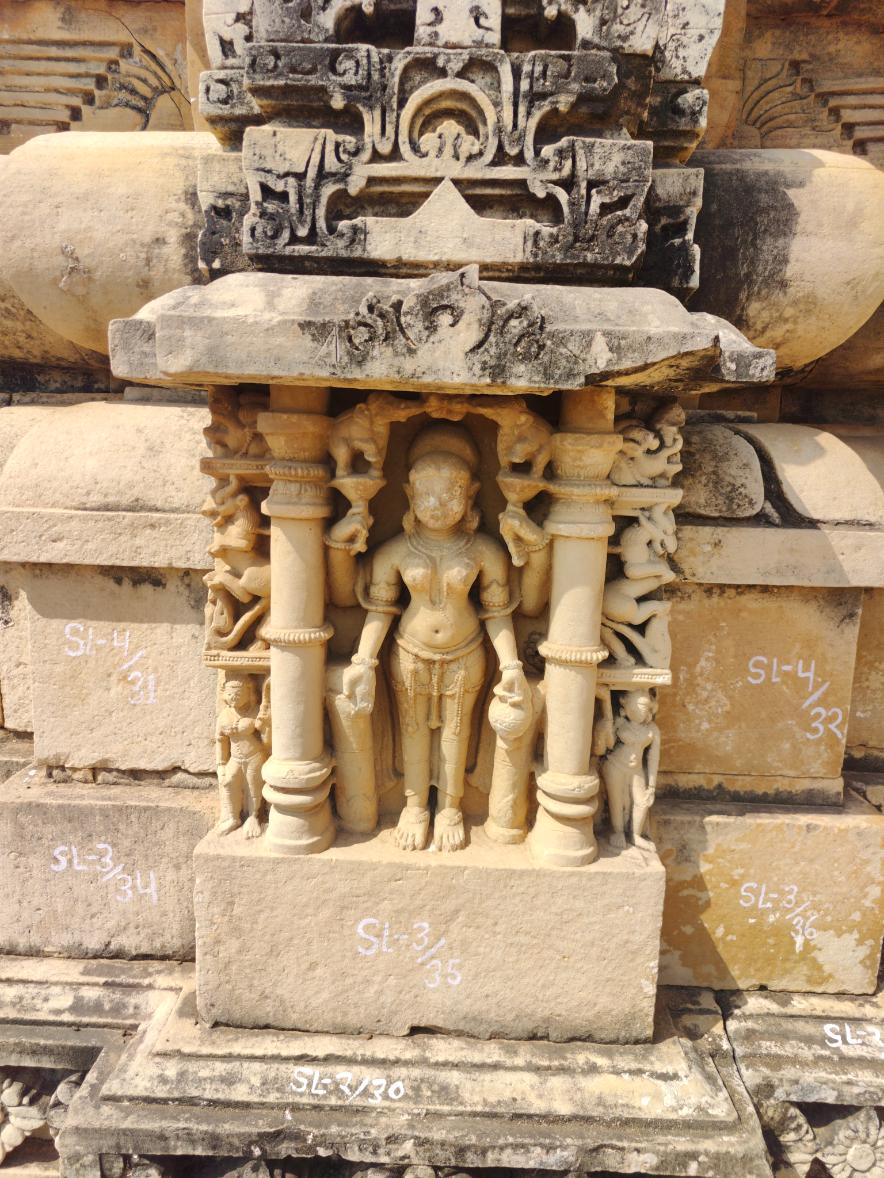
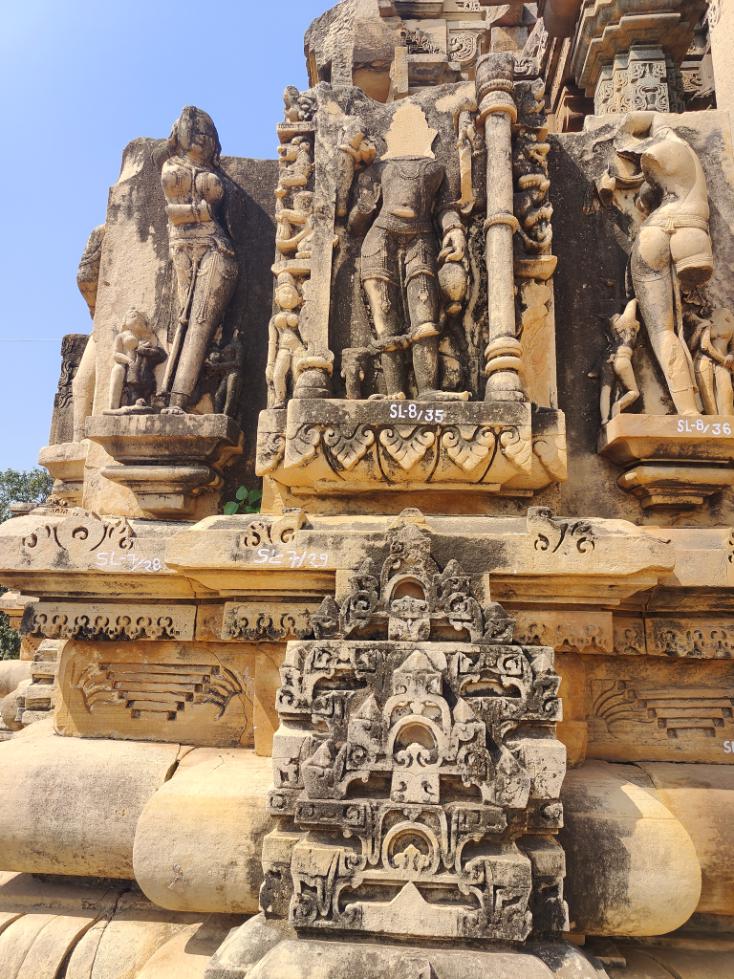
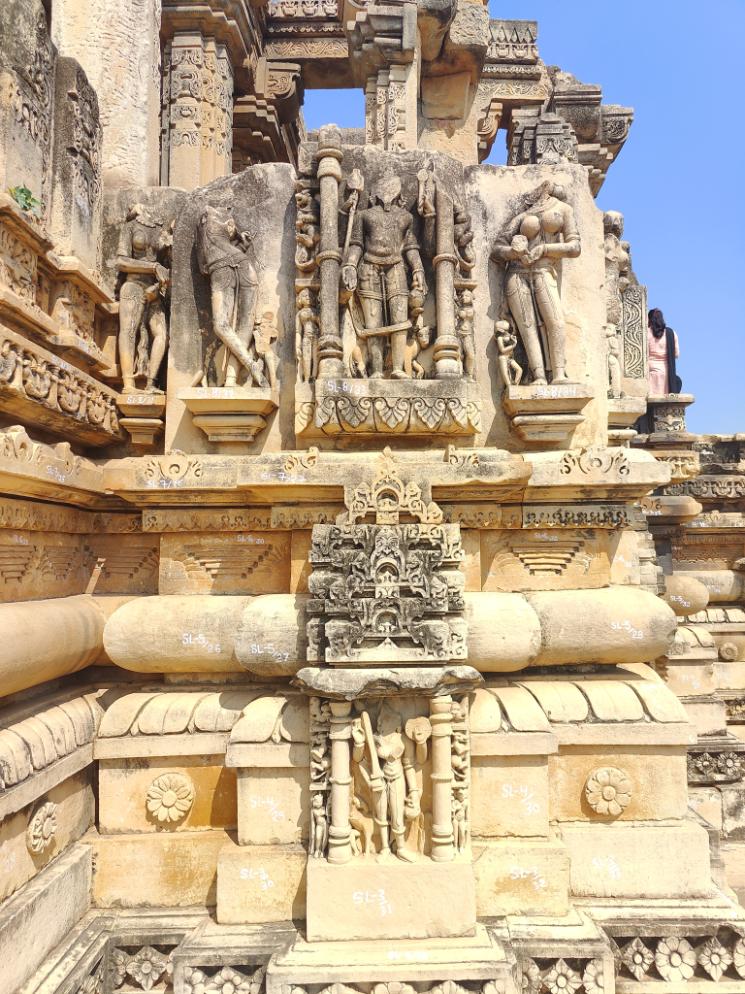
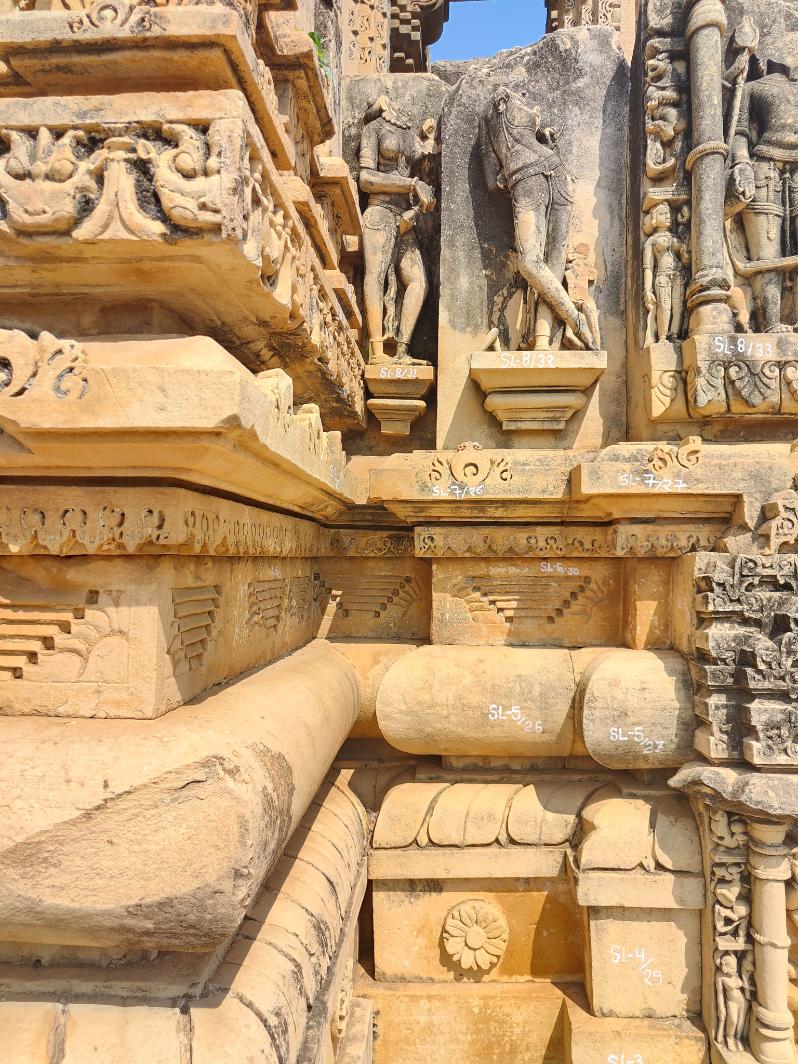
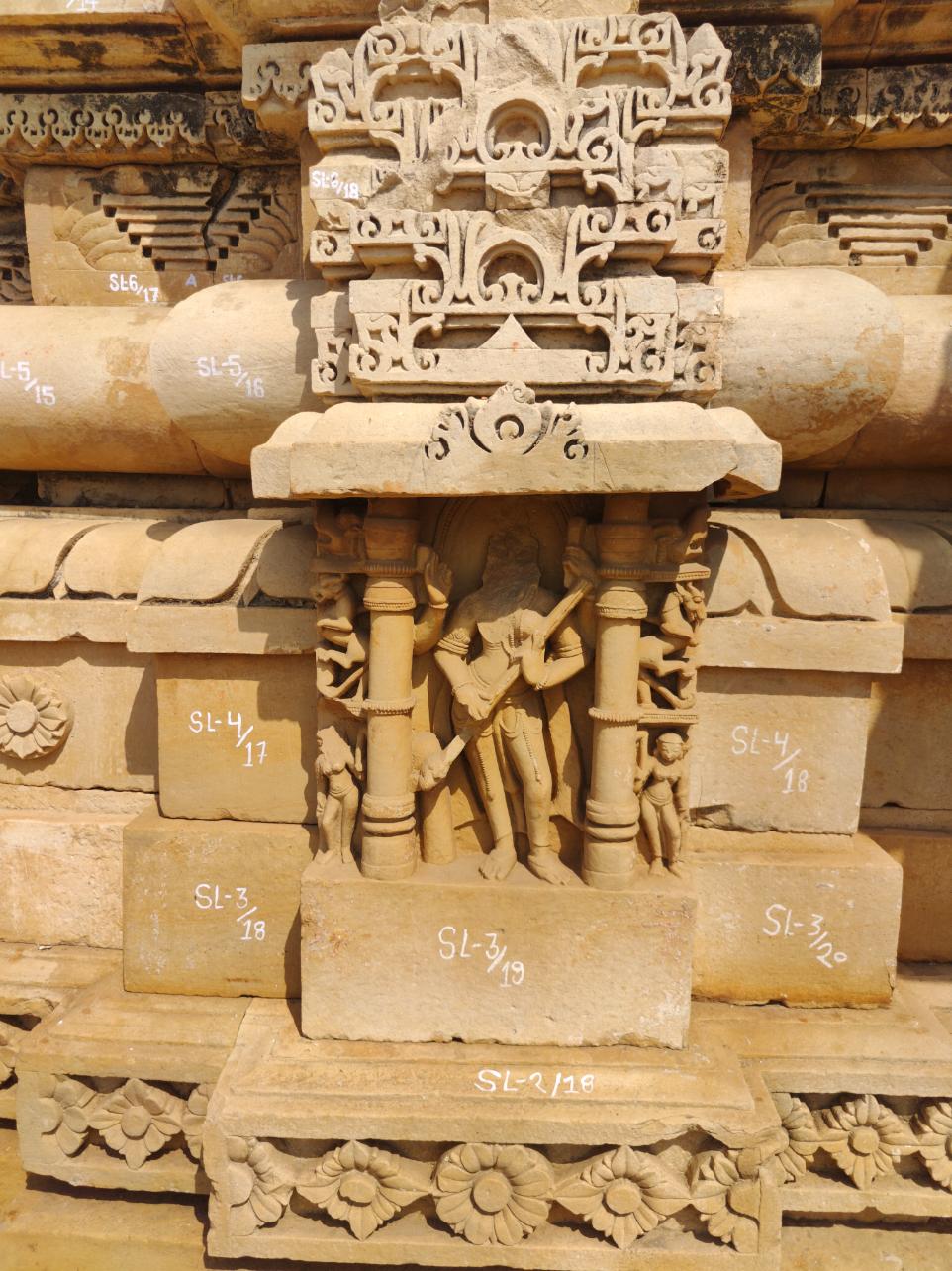
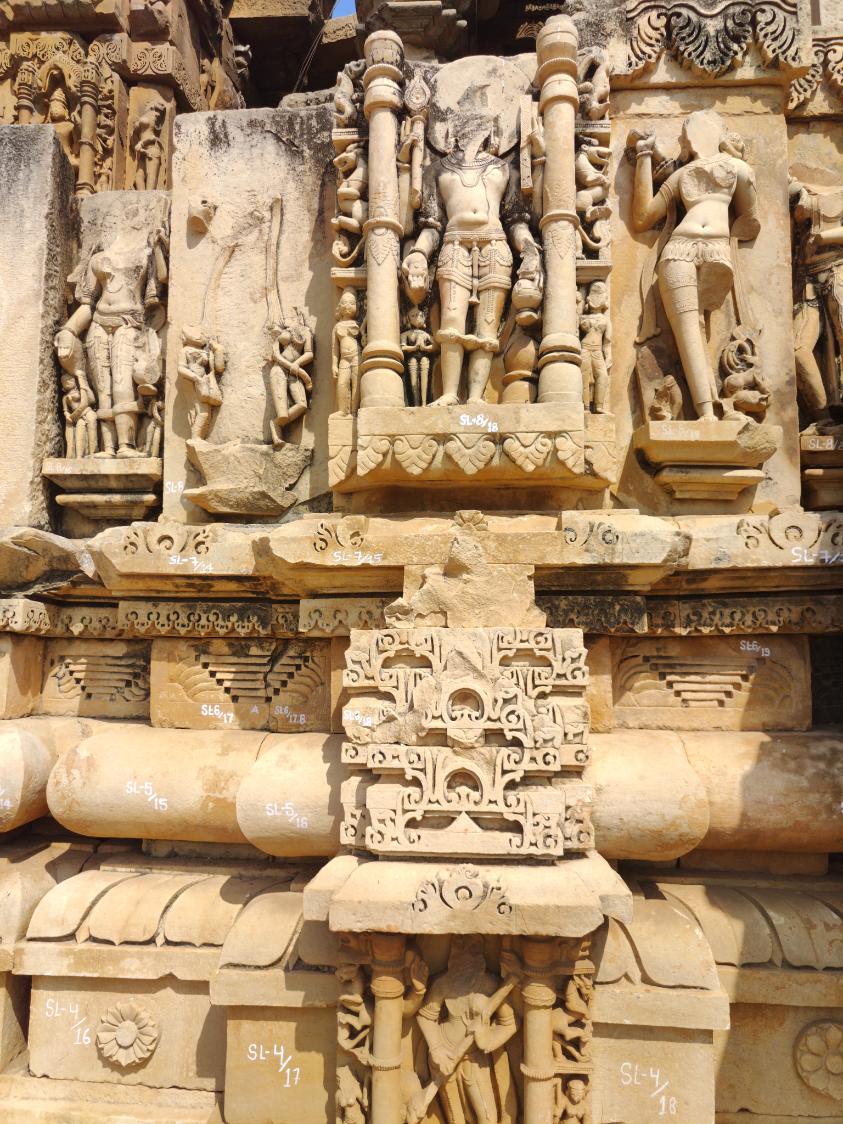
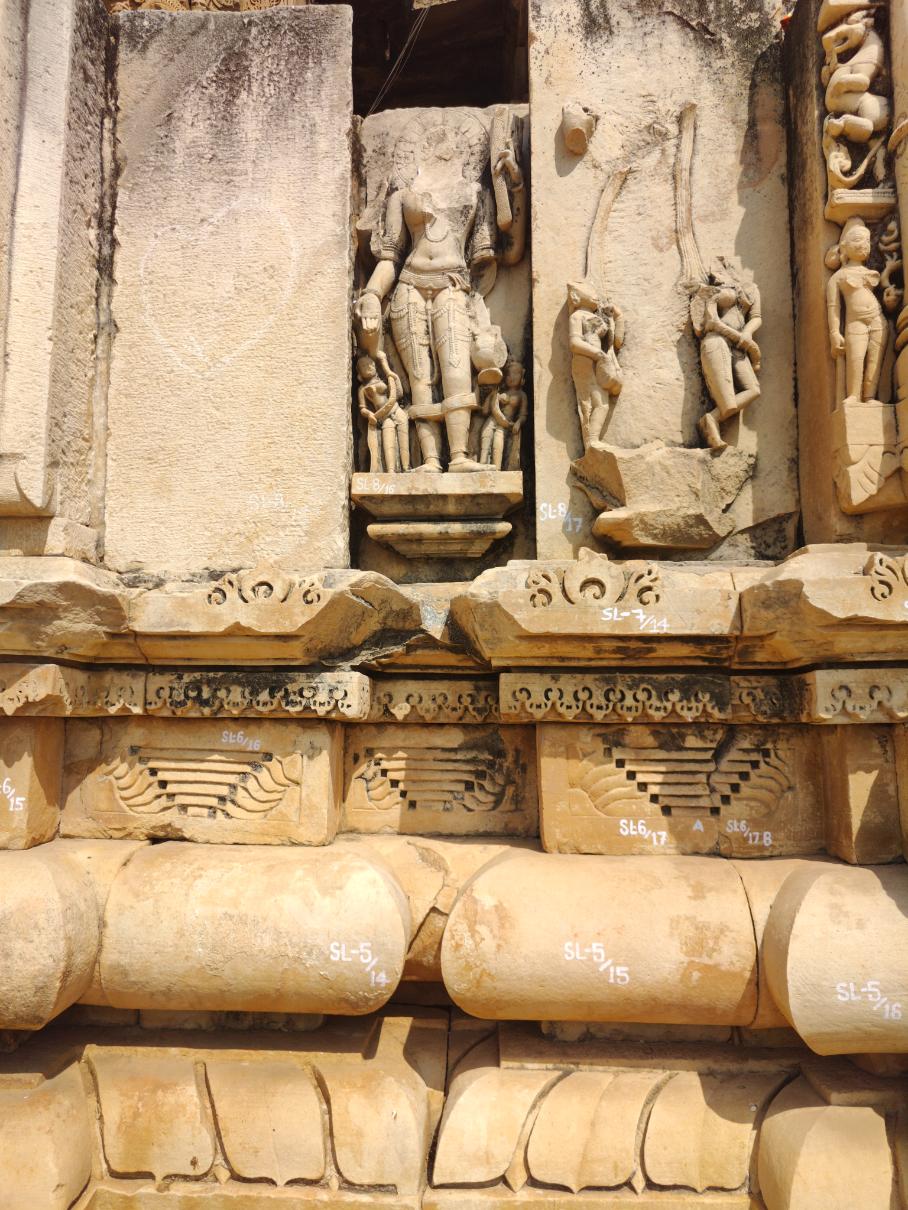
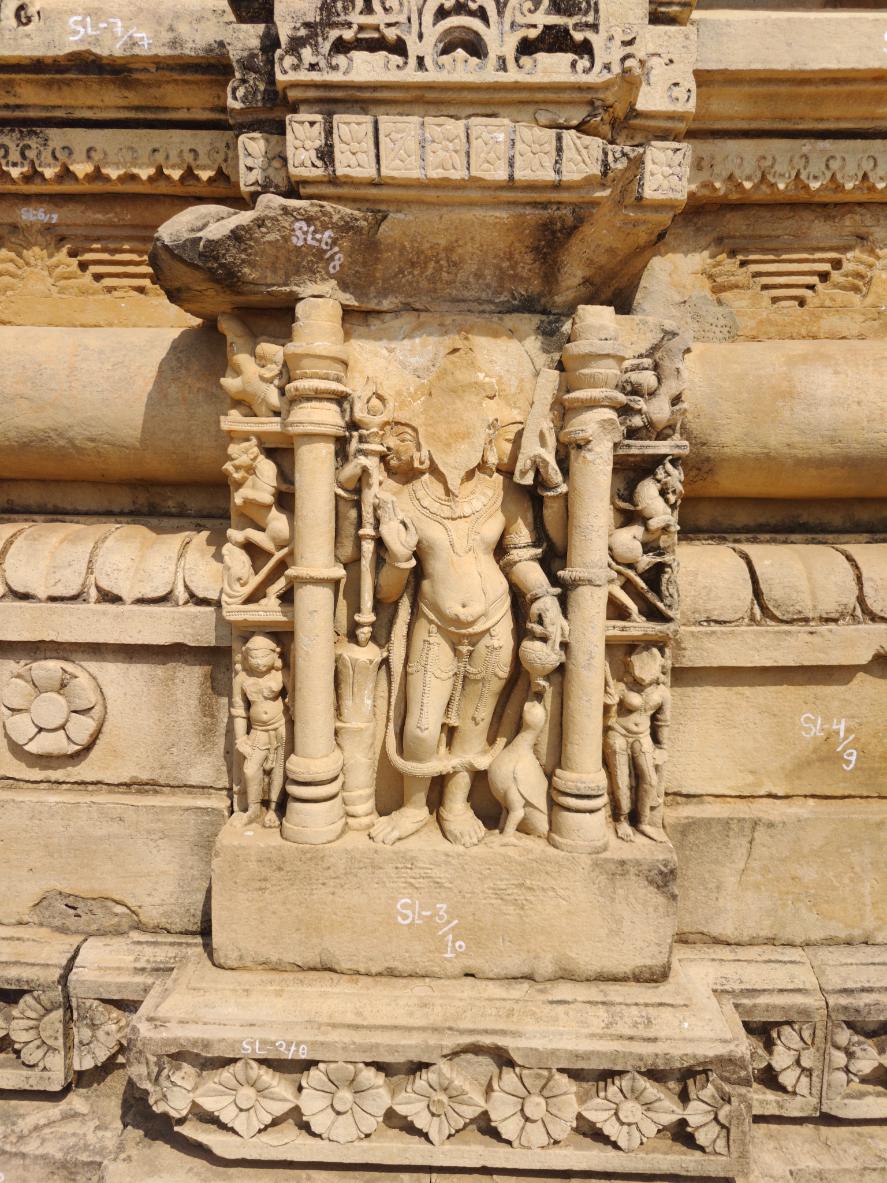
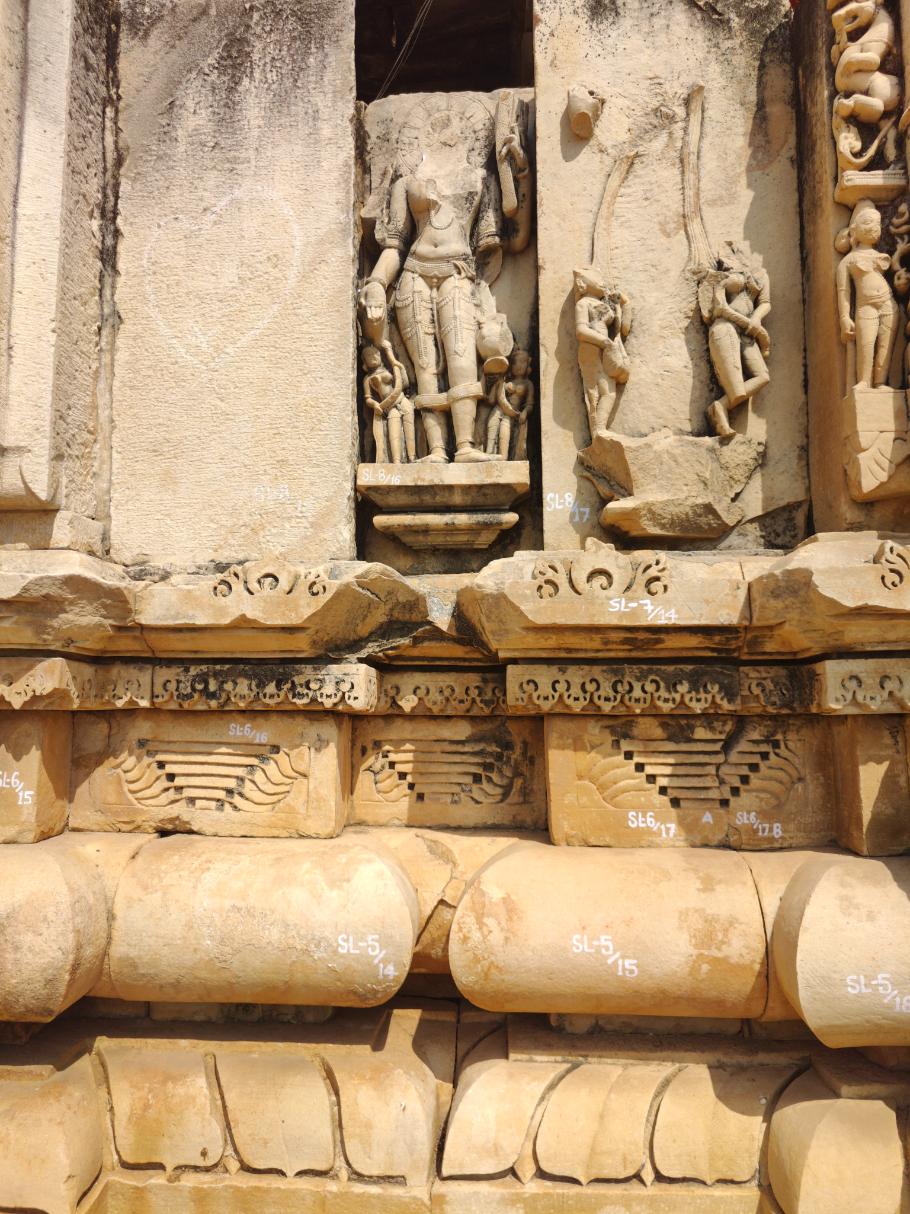
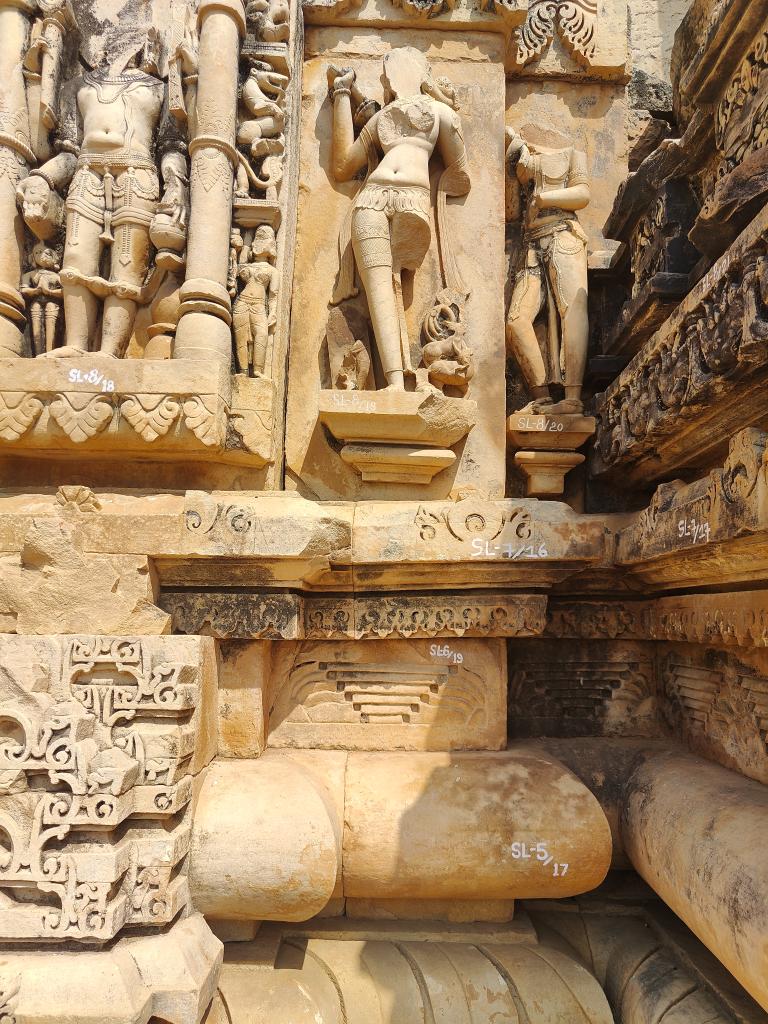
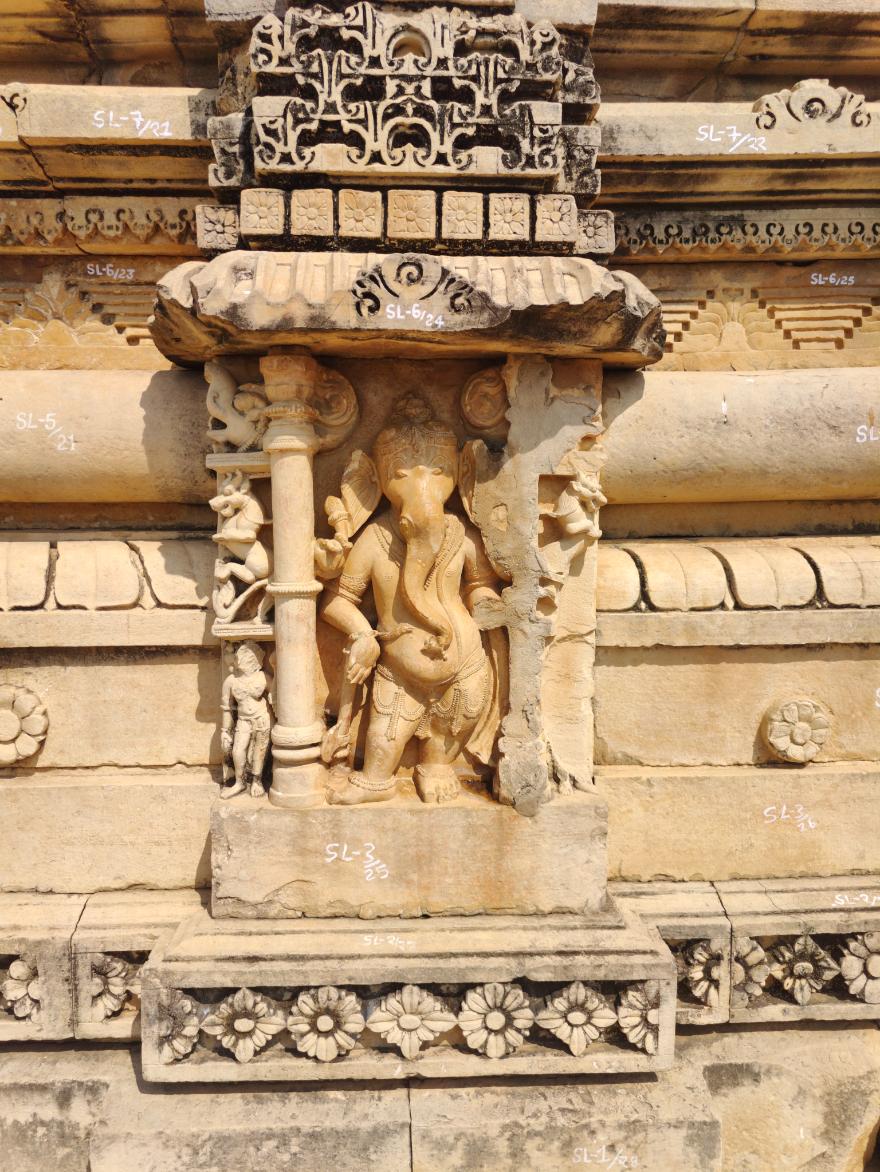
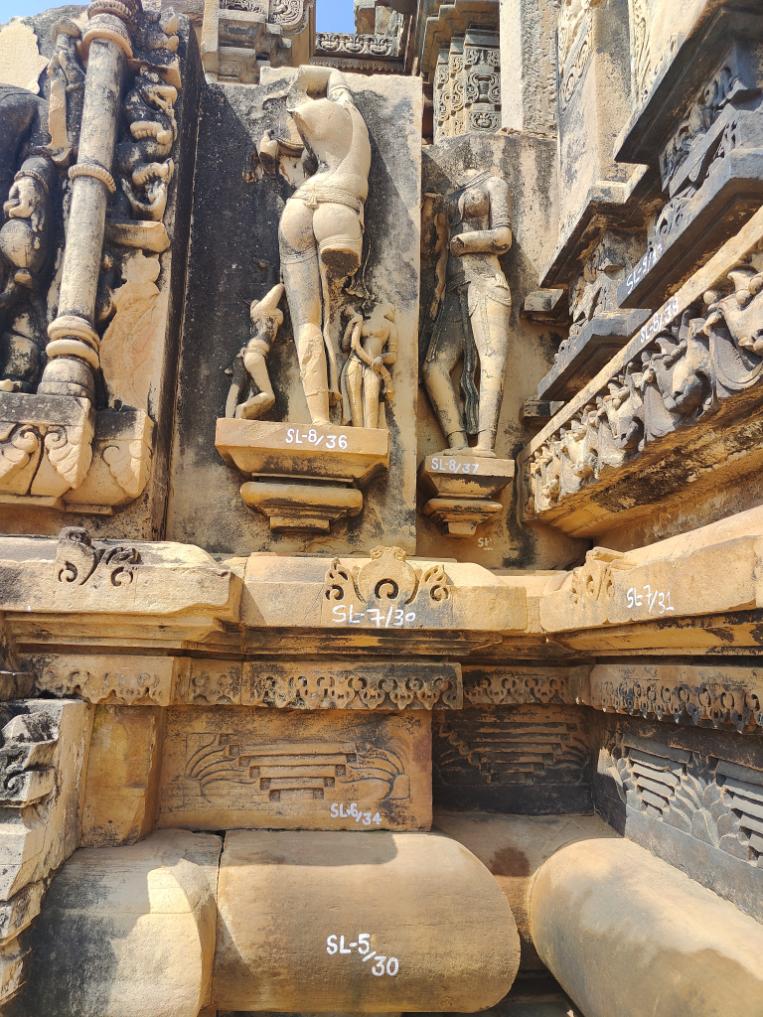
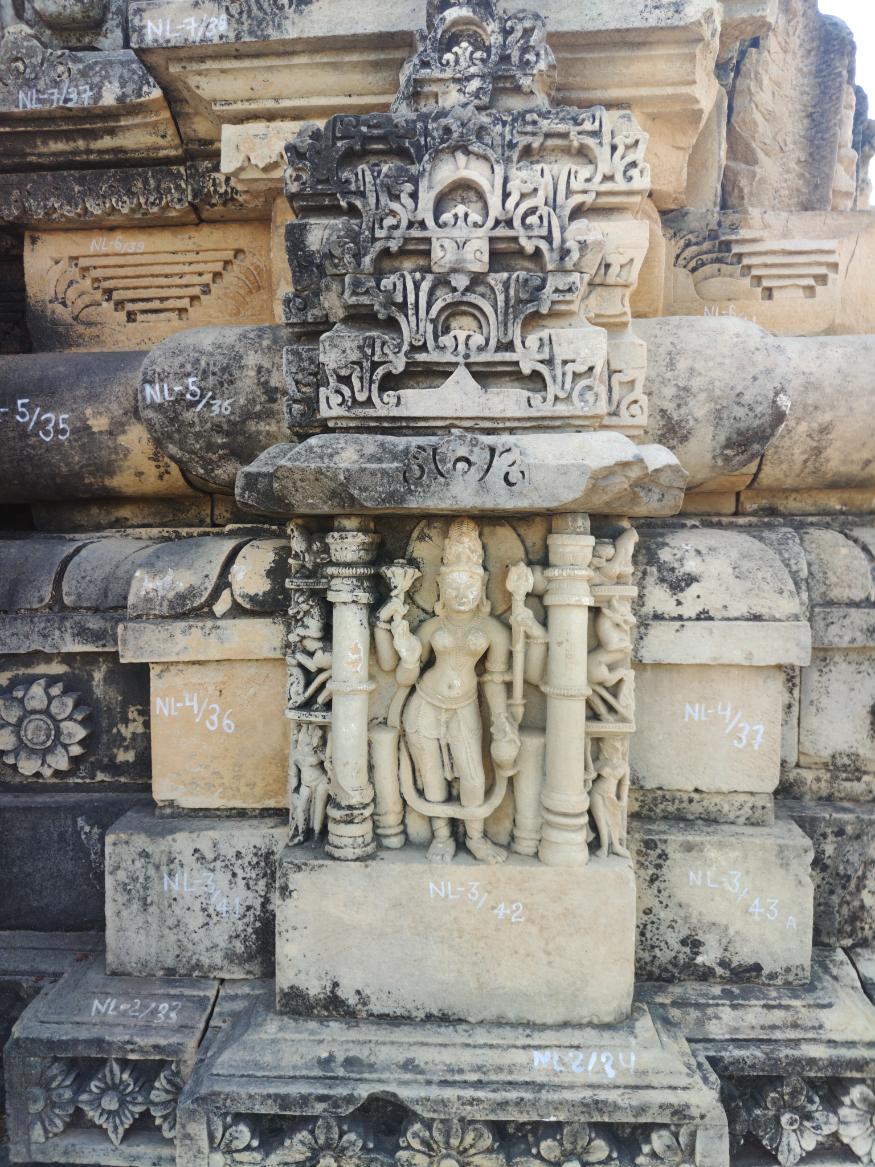
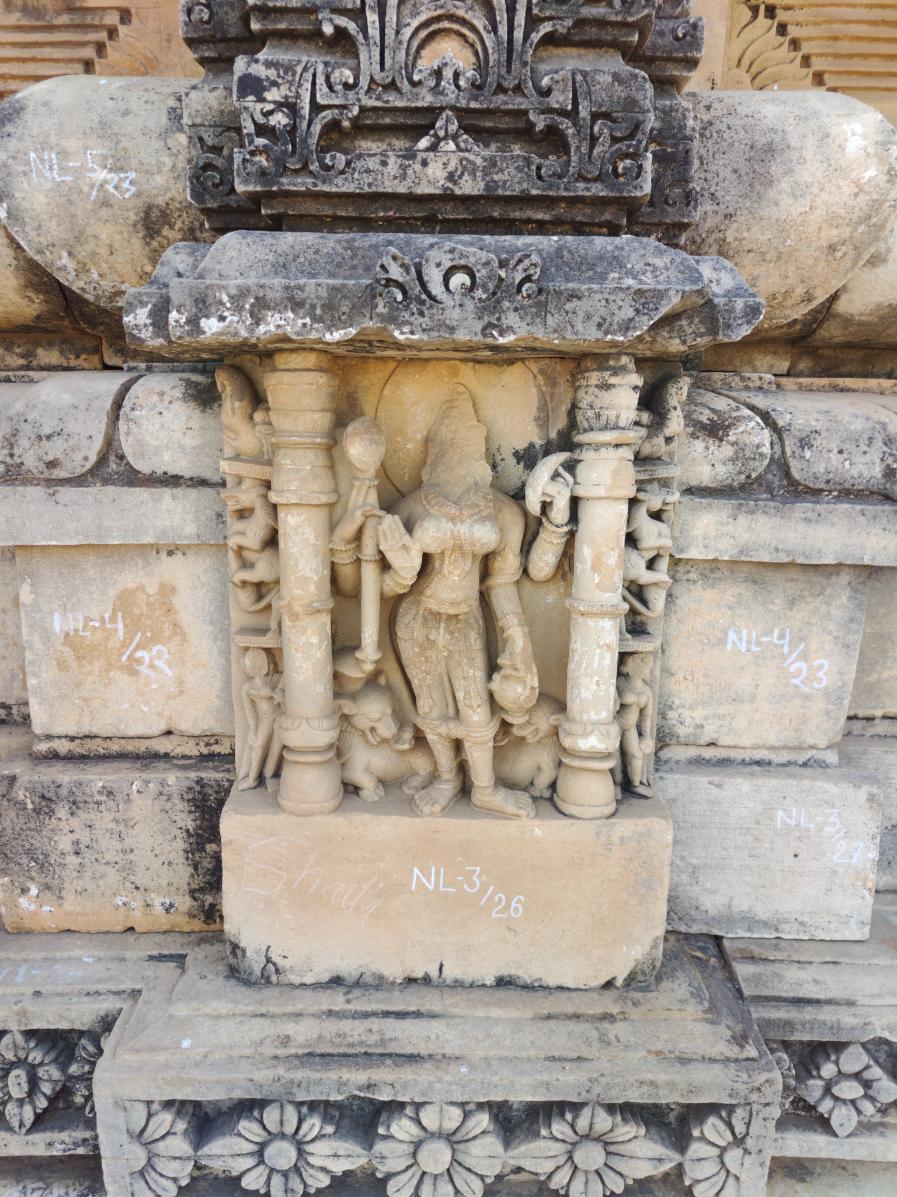
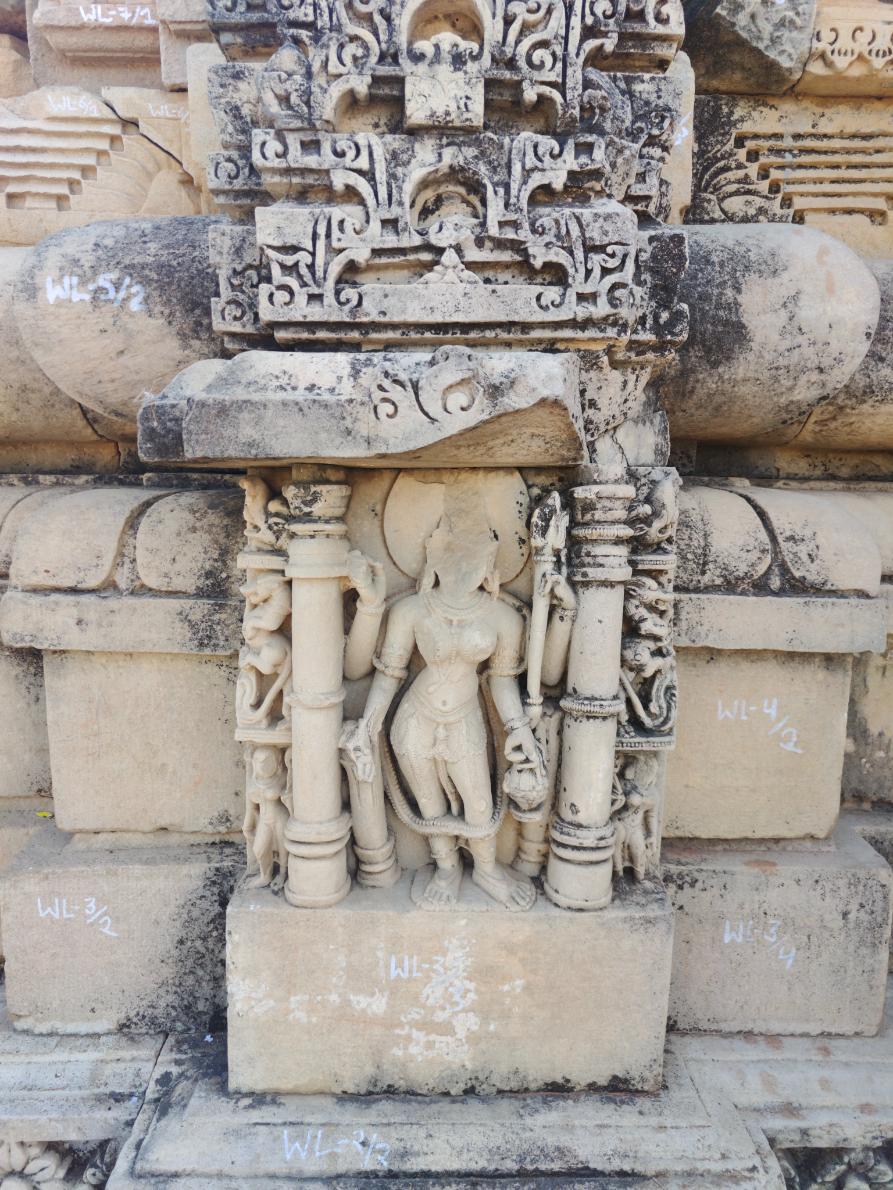
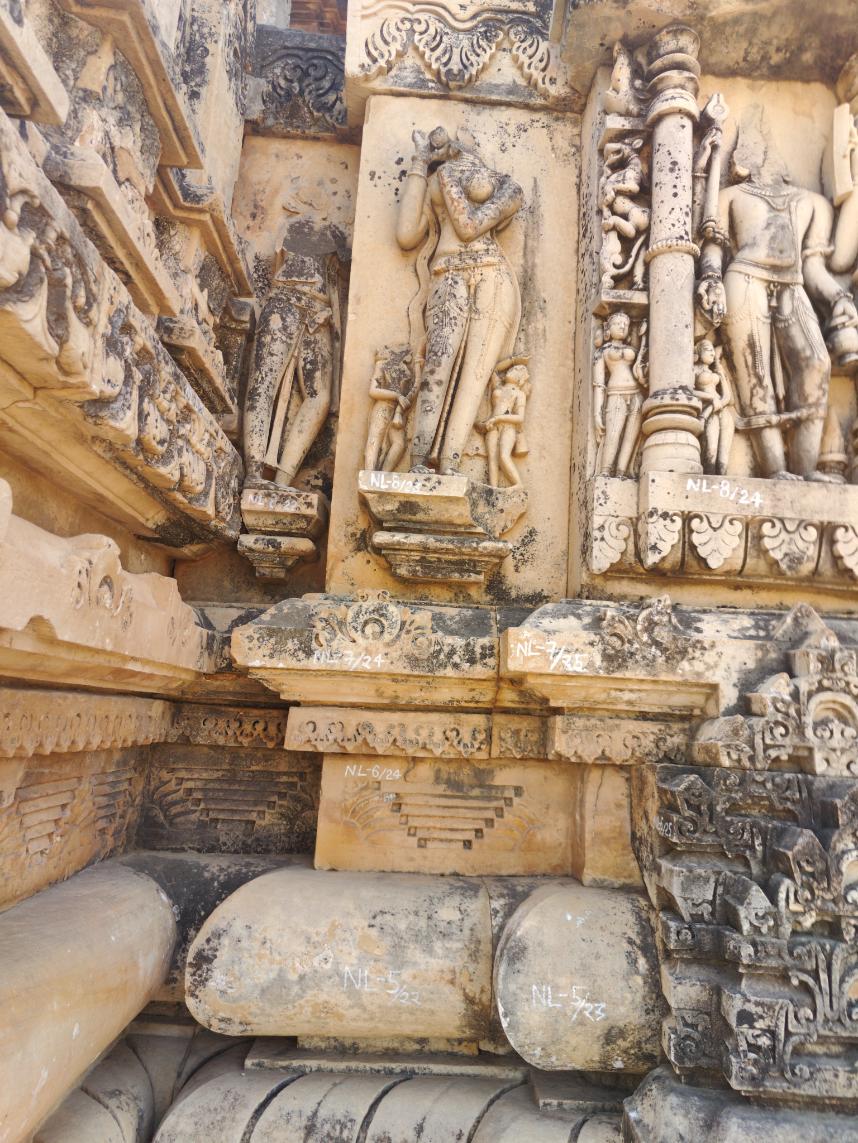
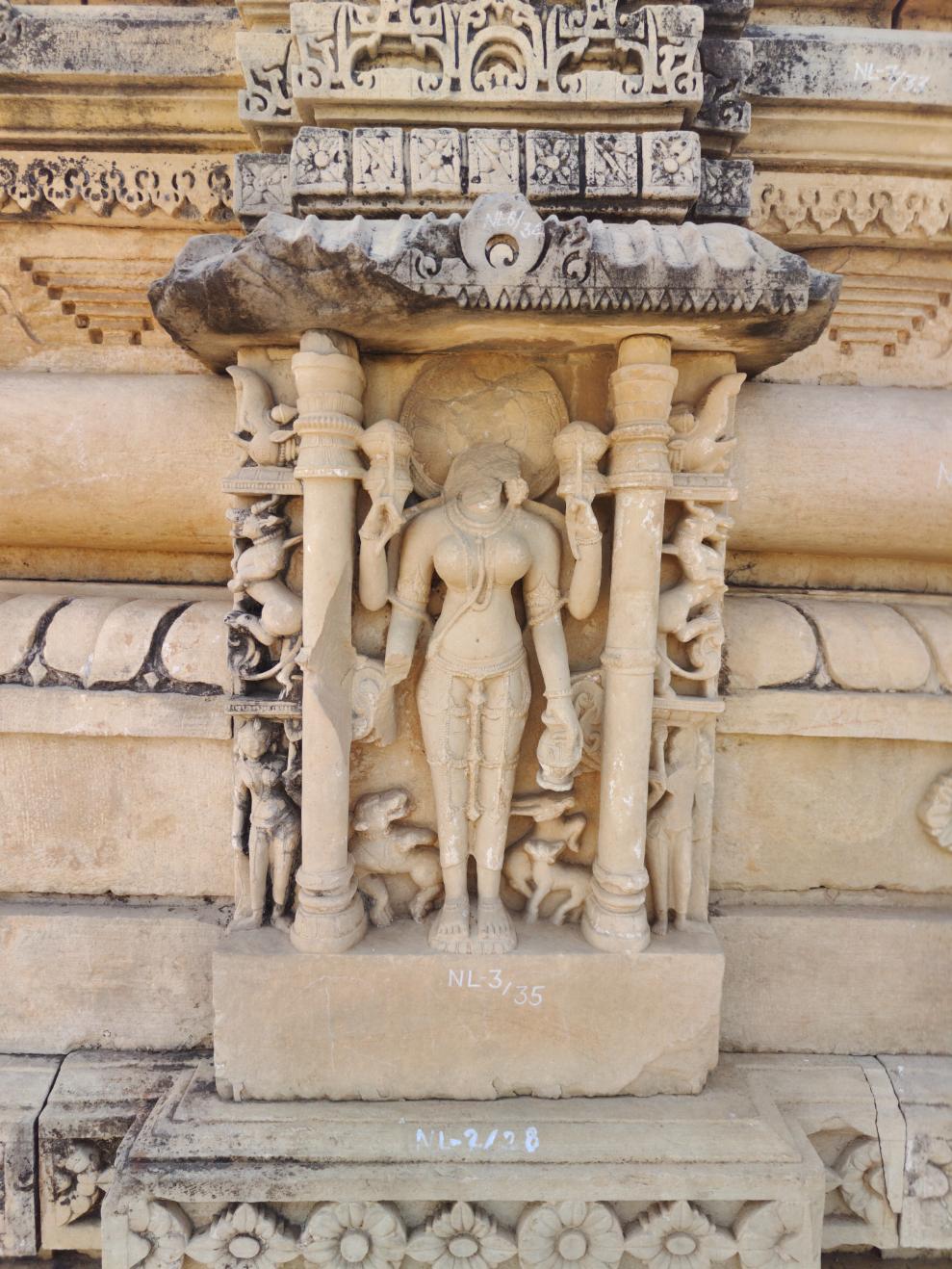
The decorative scheme of Kakanmath, visible on the fragments of balconies and niches that survived the collapse, displays a transitional artistic phase. It bridges the severe, geometric restraint of the late Gurjara-Pratihara style with the explosive, deeply undercut, and sensual ornamentation that would later come to define the Chandela temples of Khajuraho. The doorway of the sanctum sanctorum remains a masterclass in iconography, structured with seven distinct vertical bands (sakhas) containing an intricately carved universe of celestial musicians, river goddesses, and guardians flanking complex couples (mithunas).
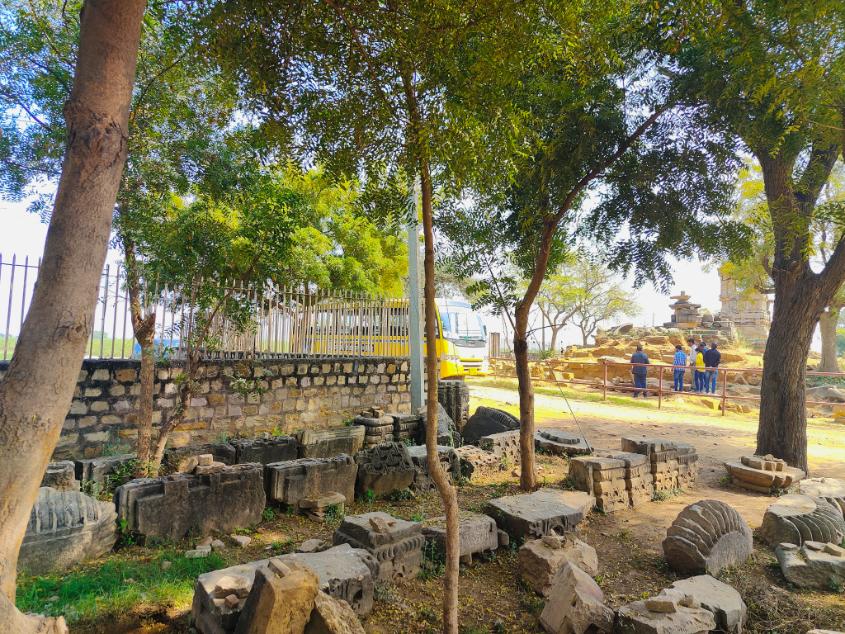
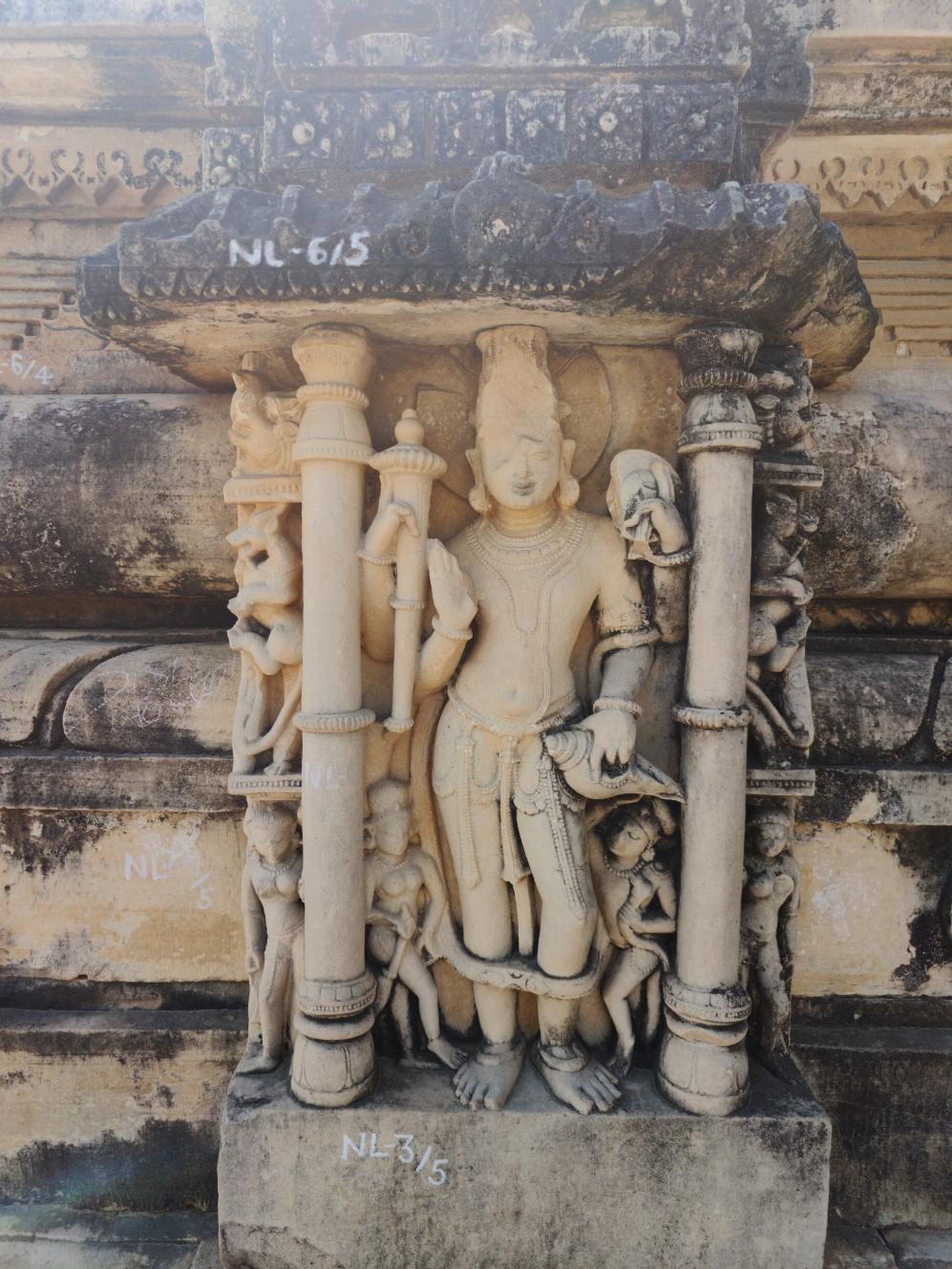
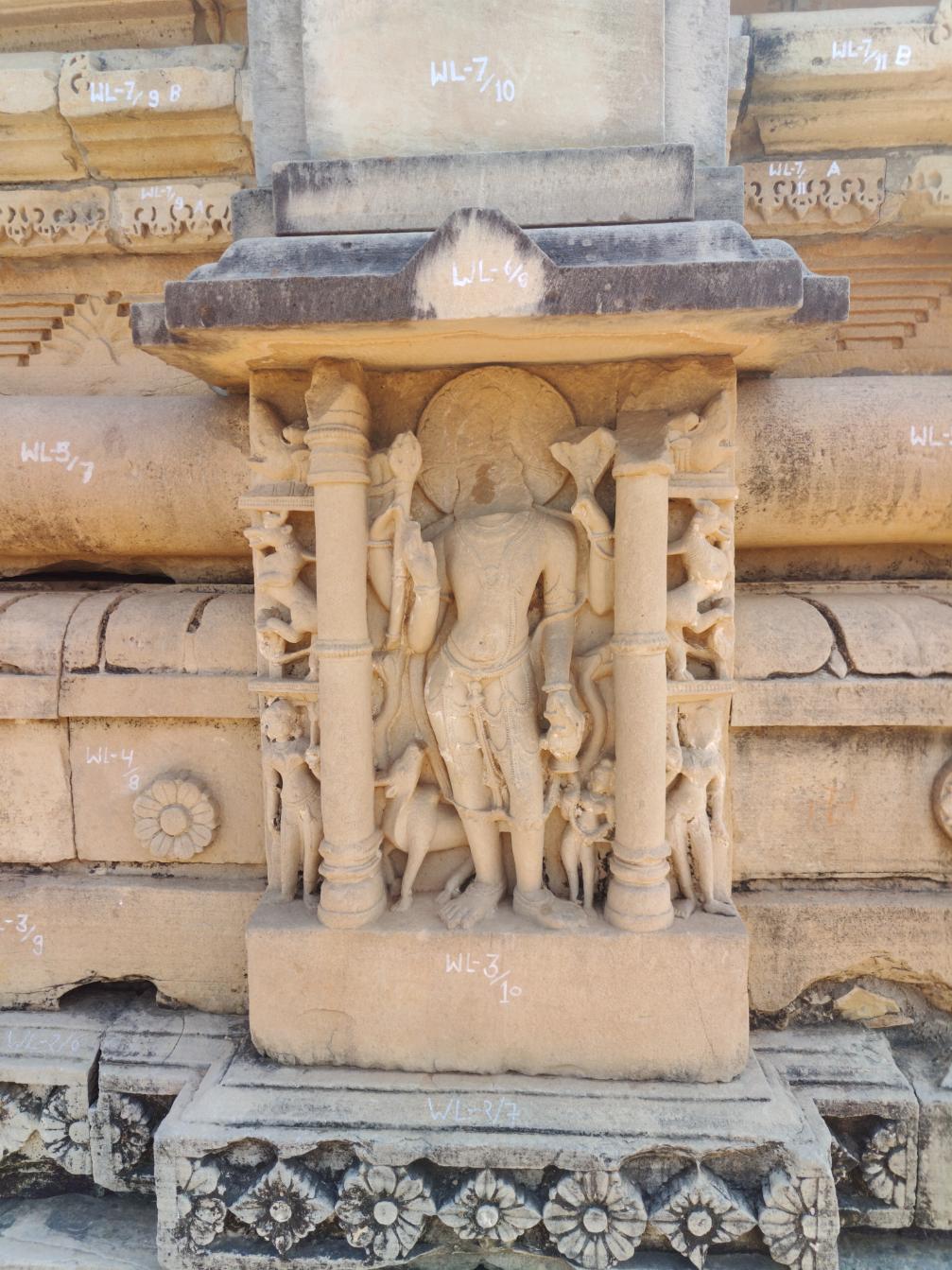
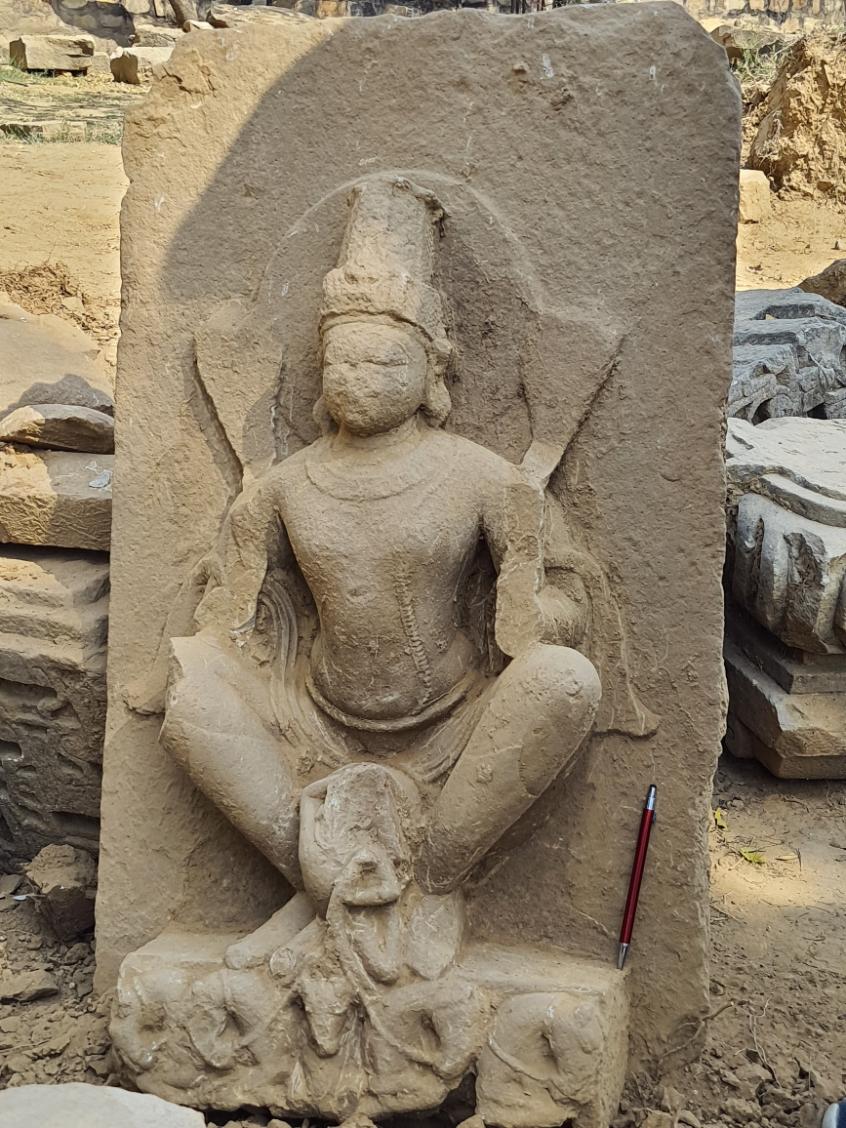
Interestingly, while the temple is unarguably dedicated to Shiva, the surrounding sculptural debris reveals a highly fluid approach to the medieval pantheon. Scattered throughout the compound are complex depictions of Mahavishnu, including a highly irregular, iconographically unique murti where the deity holds both the conch (shankha) and the discus (chakra) awkwardly in a single hand, rather than separating them across two distinct arms. This indicates that while dynastic patronage favored Saivism, the actual artisan guilds working in the Chambal valley maintained a broad, inclusive vocabulary that blurred the strict boundaries between sectarian lines.
The Later Eras: Inscriptions and Institutional Decay
The life of Kakanmath did not end with the decline of the Kachchhapaghata kings. The stones themselves act as a palimpsest, bearing the graffiti and formal records of subsequent centuries. Deep within the central hall, a prominent inscription dated to Vikram Samvat 1497 (circa 1440–1441 CE) records the pilgrimage of a devotee named Dekhana during the reign of Dungara Singh, a prominent Tomara ruler of Gwalior. This brief inscription proves that even when the outer skin of the temple had begun to decay and its operational institutional funding had collapsed, it remained a potent, active site of regional pilgrimage long into the fifteenth century.
The eventual desolation of Sihoniya as a political capital sealed the temple’s fate, exposing it to centuries of environmental weathering and unchecked vandalism. Under Islamic iconoclasm during the sultanate expansions into Central India, many of the primary deities were methodically defaced, their limbs severed to break the ritual purity required for active worship. As the site fell silent, nature took its course, with vegetation wedging between the mortarless joints and pushing the heavy exterior balconies out of alignment until they dropped onto the surrounding fields.
Preservation, Extraction, and Contemporary Legacy
Today, the site falls under the direct, watchful protection of the Archaeological Survey of India (ASI) as a Monument of National Importance. However, the contemporary experience of Kakanmath is fundamentally defined by a historic extraction. To protect the site’s most elite and vulnerable sculptural masterworks from antiquities smugglers and environmental erosion, the ASI systematically hauled the finest pieces away. This includes the monumental, highly stylized stone lions that once guarded the entrance steps, which now stand watch at the entrance of the Archaeological Museum inside Gwalior Fort.
What remains in the quiet, agricultural countryside of Morena is a raw, unpolished, and thoroughly humanized missing link in Indian art history. Stripped of its pristine shell, Kakanmath allows us to look directly into the bare bones of ancient engineering. It stands as a profound testament to a medieval kingdom that, for a brief moment, dared to build a mountain of shifting stone that could outlast its own history, defying gravity through a thousand years of storms, earthquakes, and forgotten dynasties.
REFERENCES
Archaeological Survey of India. Protected Monuments of National Importance: Central Circle, Madhya Pradesh. New Delhi: Government Printing Press.
Meister, Michael W., & Dhaky, M. A. (Eds.). (1988). Encyclopaedia of Indian Temple Architecture: North India — Foundations of North Indian Style. New Delhi: American Institute of Indian Studies.
Willis, Michael. (1997). Inscriptions of Gwalior: Material for the History of Central India. London: Permanent Black. Dehejia, Vidya. (1997). Indian Art and Architecture. London: Thames & Hudson.
Ali, Rahman. (1980). Art & Architecture of the Kalachuris and Kachchhapaghatas of Central India. Delhi: Sundeep Prakashan.
Picture Gallery
The documentation presented here is the result of independent field study conducted by Lokesh Dutt. All rights to this work remain with the author and are published on Trip and Tales under his authorization. Trip and Tales holds no ownership over this content. Trip and Tales sincerely thanks Lokesh Dutt for permitting the publication of his work for the benefit of readers and heritage enthusiasts.