
Whispers of the Yoginis
Tales from the Marble Hills of Bhedaghat
by
Bulbul Agarwal
Introduction
The concept of the divine Yoginis has long existed in Hindu mythology, although their real nature is still to be a mystery. The word ‘Yogini’ is a generic term and can be interpreted in many ways. In various literatures the Yoginis have been associated with different aspects of divinity like them being female ascetics who gained magical powers by performing strict yogic regimens; females practicing various secret practices of cult which include the panch makaras; them being attendants of the divine mother goddesses; them being equivalent to dakinis (she demons) and sakinis, and so on. In some tantric literature, like Kaula-uddisha-tantra, the theory of Yoginis originally being yakshinis, has also been coined. Although in the Puranic texts like Agni Purana, Markandeya Purana, Matsya Purana, Chandi Purana, and others; the Yoginis have been said to origin from the great mother goddesses and are thus semi-divine in nature. In these texts we find the concept of Sapt-Matrikas and Ashta-Matrikas, or 7 divine mothers and the 8 divine mothers respectively, these are the female embodiments of the great male deities. A set of Yoginis originating from a Matrika, embodies a set of her qualities, thus making 8 different sets of Yoginis, having 8 Yoginis each and thus summing up to a circle of 64 Yoginis.
The Yogini temples are found all across India but are mainly concentrated in central states of the country, especially in Uttar Pradesh, Madhya Pradesh, and Odisha. These temples typically feature a circular or rectangular arrangement of Yogini images with an open to air courtyard in the middle, reflecting their ritual significance and cult practices. The Yogini cult rose to prominence in the late 9th century CE, reaching its zenith between the 10th and 13th centuries CE. During this period, it gained substantial support and patronage from regional ruling dynasties, who integrated local cultural and religious elements into the cult’s practices and temple architecture.
One such temple is situated at Bhedaghat, Jabalpur district, Madhya Pradesh. The Chausath Yogini Temple is situated at barely a kilometer from the famous Dhuadhar falls, at the coordinates- 23.1297°N, and 79.8013°E. Due to lack of actual inscriptional evidences regarding the commissioning of the Yogini temple, the historians and scholars have dated the temple with other methods- studying the characters of the inscribed names on the pedestal of the divine yoginis, the iconography of the images, the art and architecture of the temple, and regional history of the place. The results of all the investigations, led to the belief that The Chausath Yogini Temple, or Golaki Math, was commissioned by the Kalachuri King, Yuvraja II during his reign in the 10th Century. Sir Alexander Cunningham, in his travel logs of 1874-75, first mentions this temple. He describes the location and its scenic beauty aptly,
“In the fork between the little Saraswati and the great river (Narmada), the rocks rise into a small hill, which is crowned by a temple, surrounded by a very curious circular cloister of considerable antiquity…………The position of this temple is singularly fine and commanding. Close beneath, on the south, the blue waters of the Narbada seem to sleep, spell bound, under the snow-white walls that shut them in. To the north and west the view is bounded by thickly wooded heights; but on the east the eye looks down on a long reach of the river, stretching away for miles towards Jabalpur.”
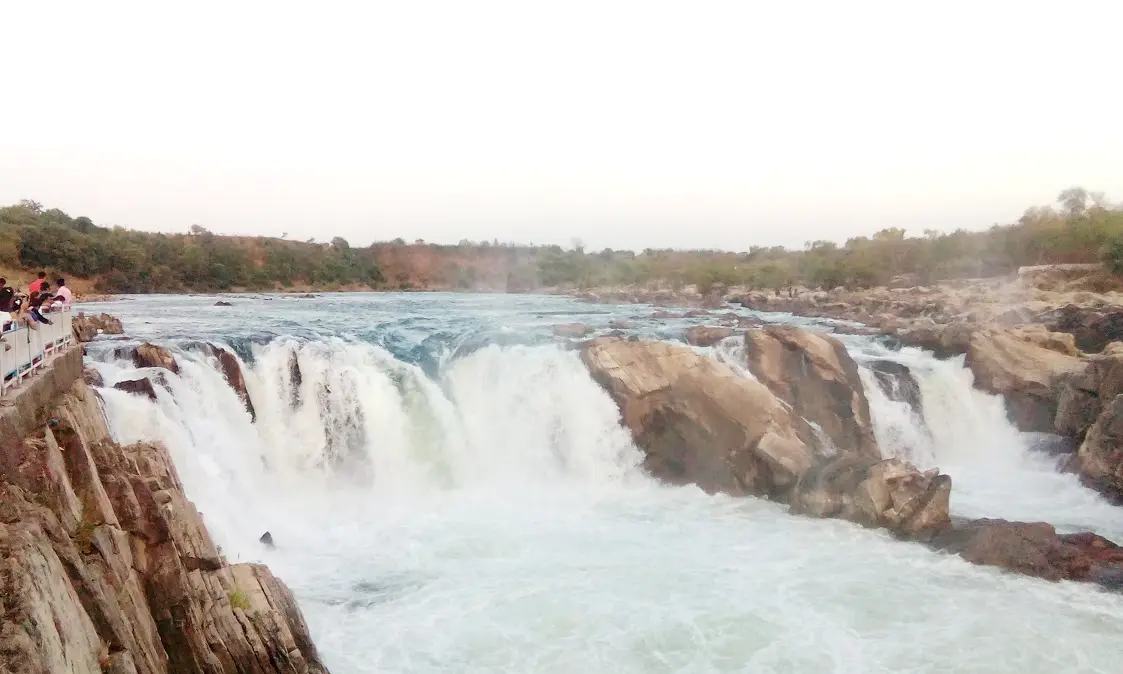
The Chausath Yogini Temple
The humble abode to the divine yoginis is a circular hypaethral temple, featuring a later period Nagar style shrine, dedicated to Gauri-Shankar, in the courtyard. The outer diameter of the temple is 130 feet 9 inches and the inner diameter is 116 feet 2 inche, making it India’s largest Yogini temple. Around the inner periphery of the temple is a cloister of 81 niches divided by a set of 84 pillars. By recording the meticulously carved images in the niches, it was discovered that some more ancient temples or structures must have existed at the location of the present day Chausath Yogini Temple. Out of 81 images, one belongs to Kushana period, 8 belong to post-Gupta period, and the rest belong to Kalachuri period. All the Kalachuri period images have their name inscribed on their pedestal. Each niche is 4 feet 9 inch wide and 5 feet 3.5 inch high. The
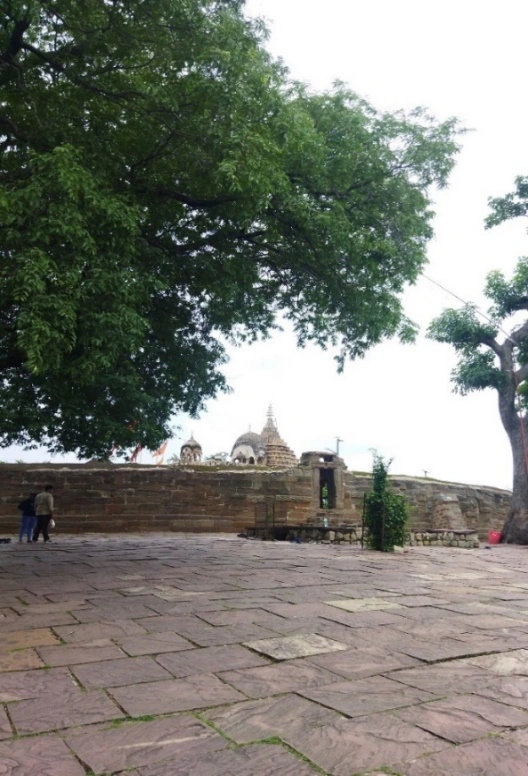
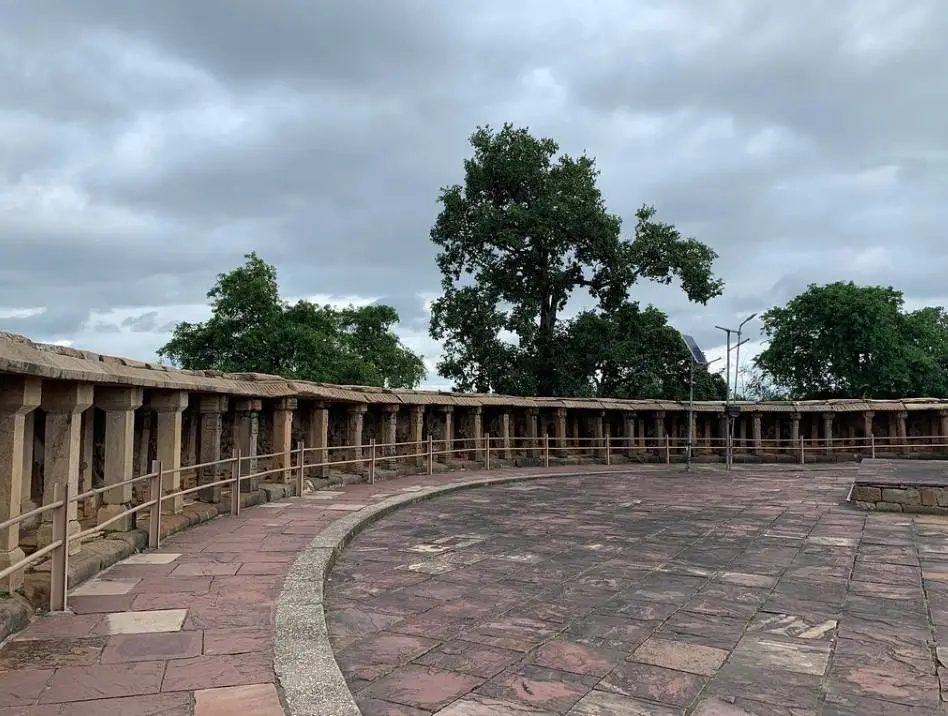
statues are 4 feet 2 inch high and 2 feet 5.5 inch broad, and are placed on 3 feet 5 inch long, 1 foot 8 inch broad, and 1-foot-high pedestals.
The Chausath Yogini Temple boasts two entrances, positioned on its periphery—one facing southeast and the other positioned on the west side of the circular structure. The entrance on the southeast, marked by a staircase, takes precedence as the primary access point. Adjacent to this entrance, a one-foot-high platform housing a clandestine entrance to a passageway dating back to the medieval period. This secret passage, is reputed to lead to the banks of the River Narmada. According to local tales, this clandestine route was utilized by none other than the Gond Queen Durgavati. The queen is said to have employed this covert passageway for discreetly traversing to
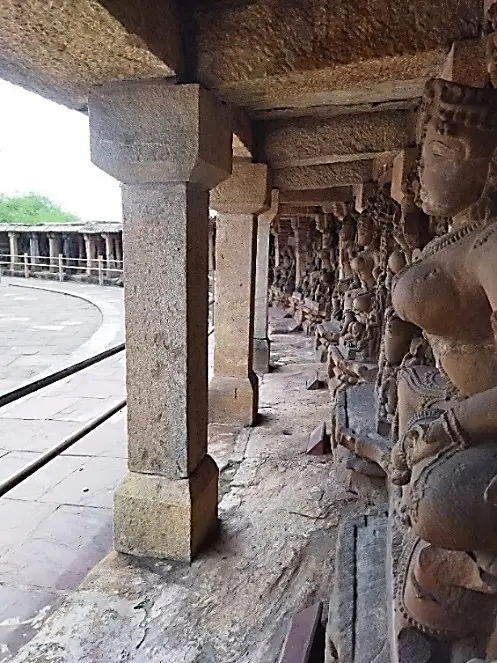
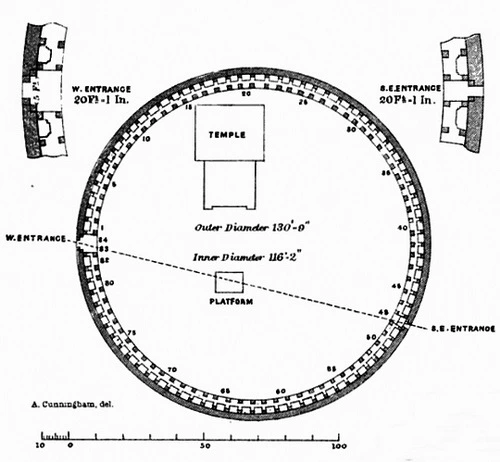
and from the temple. However, it’s noteworthy that the second entrance, once part of this historical narrative, now stands permanently sealed in the present day.
The Gauri Shankar Temple
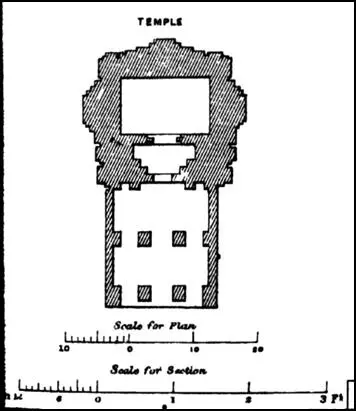
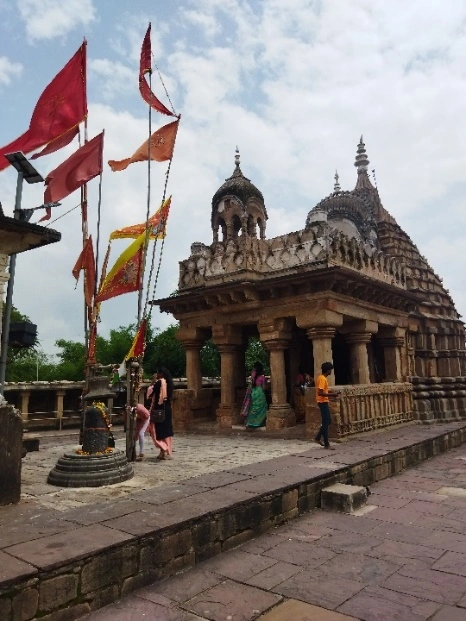
In the centre of the courtyard is a Gauri Shankar temple built in 13th century CE as indicated by the inscription on the right-hand side of the door jamb. The Gauri-Shankar Temple, deviates from the central axis, aligning itself in the northwest corner. Facing south, the temple invites worshippers into its sanctified space comprising an ardhamandapa, garbhagriha, and antarala. The temple, in present day, houses multiple images belonging to Lord Ganesh, Surya, Naag-Nagini, Lakshmi Narayan, and the centre image- Shiva Parvati riding Nandi.
Ascending to its elevated plane, the temple reveals intricate details, including an adishthana (25×22 feet), sapta rath garbhagriha, shikhar, and a shuk nasika adorning the ardhamandapa. At the forefront of the ardhamandapa stand two imposing shivLingas, sculpted from black sandstone, each bearing silent witness to centuries of reverence. One, weathered, manifests as a chaturmukhi ShivaLinga, while the other is adorned with a rectangular Linga.
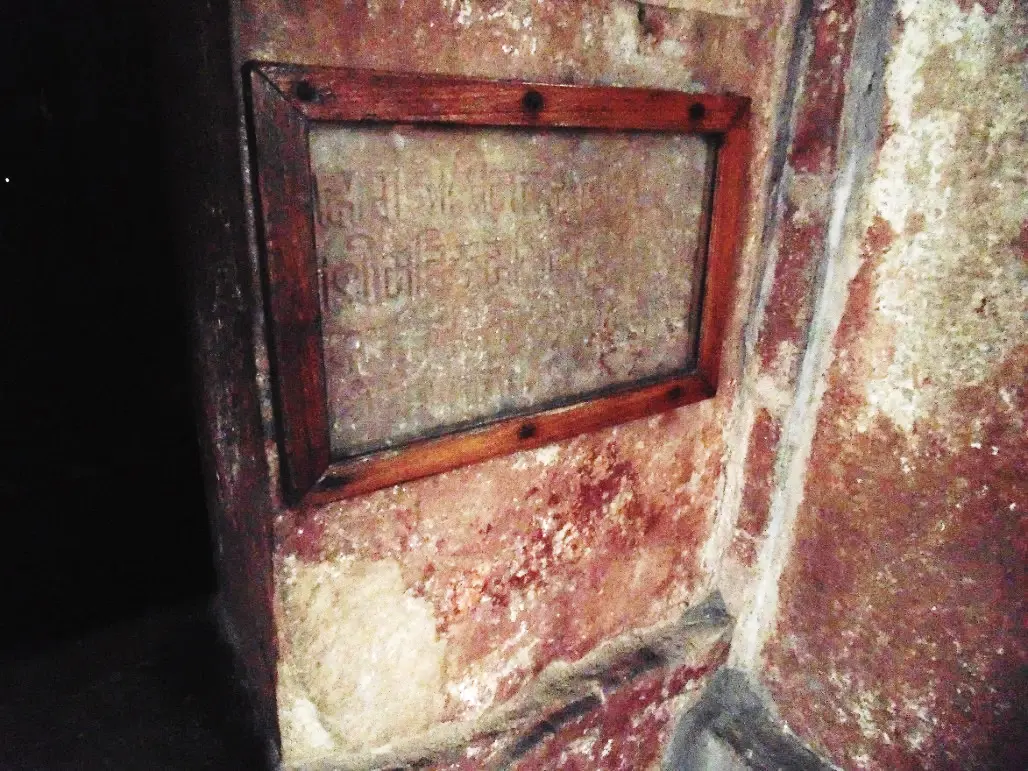
On the right door jamb of the entrance to antarala is an inscription, composed in Sanskrit language and Nagari script. It pays obeyance to God Bhagnakhidra (destroyer of diseases), who is enshrined in the sanctum sanctorum, by the queen Gosaladevi, the mother of the Kalachuri king Vijaysimha, and grandmother of the crowned prince Ajaysimhadeva. This inscription doesn’t have any particular date inscribed on it, but from the genealogy given it can be concluded that it was written around 1200 CE, and thus, the Gauri Shankar Temple must be built 1200CE.
The Chausath Yogini Temple
The Chausath Yogini Temple of Bhedaghat houses more than 81 images within its 81 niches. Spanning from the 1st century CE to the 11th century CE, these images collectively illustrate the temple’s enduring significance across centuries.
The Post Gupta Images were sculpted out of the red sandstone and depict the typical features of the period- transparent drapery clinging to the body and revealing the sensuous silhouettes, round faces, and intricate coiffures.
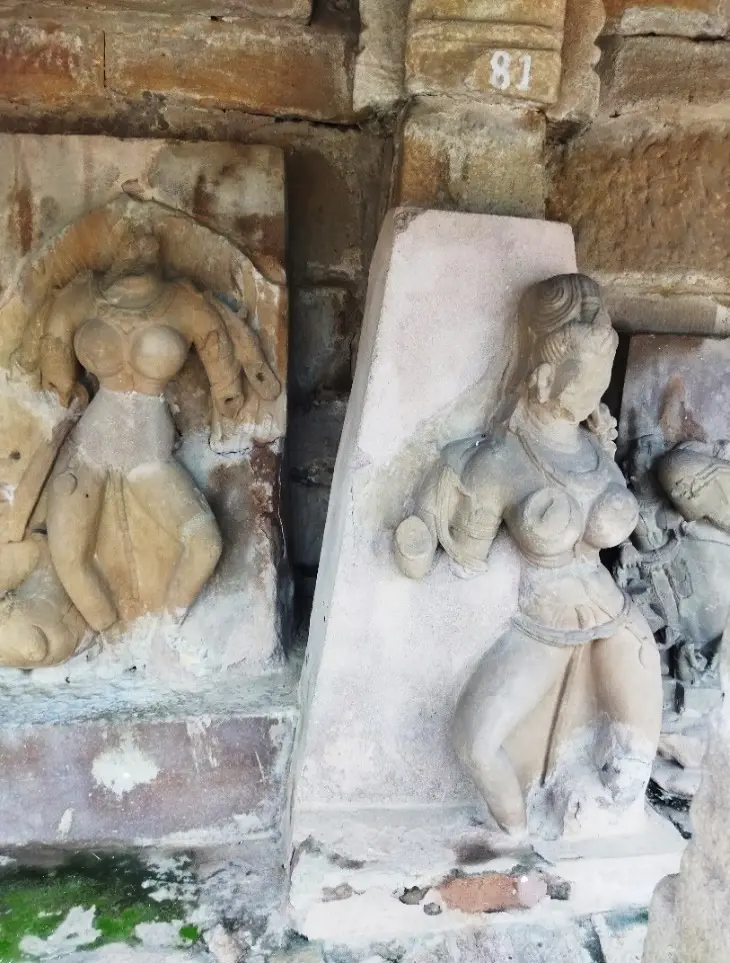
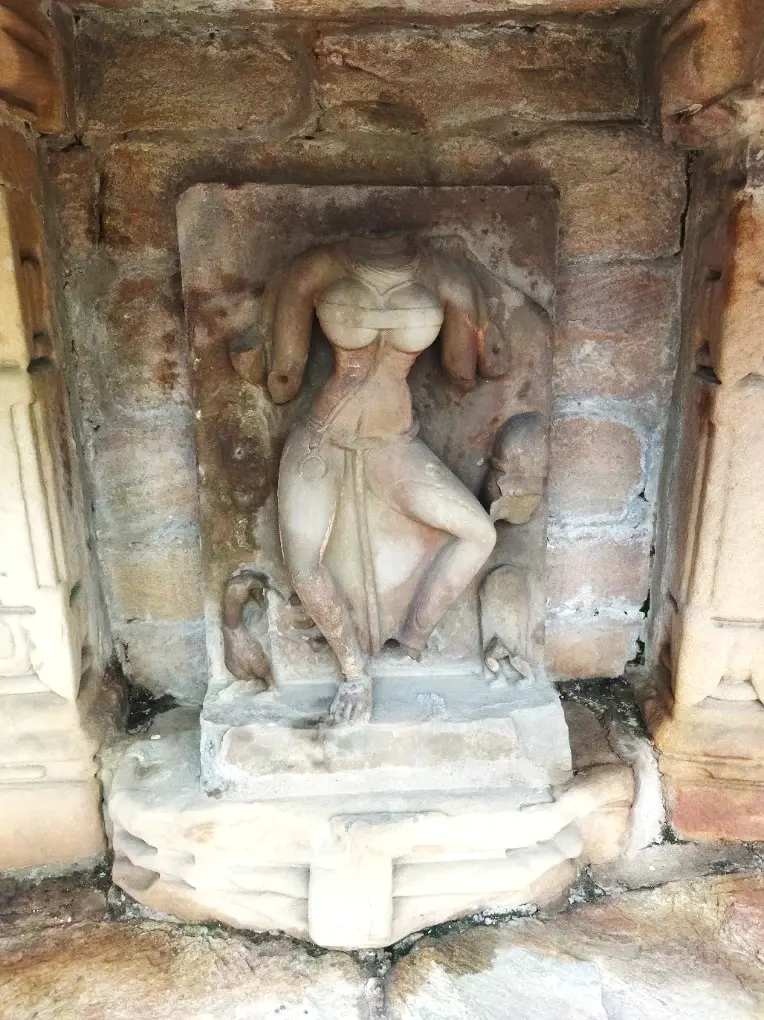
Fig 9 and 10- The Post- Gupta images
The better part of the images belongs to the 10th-11th century CE, i.e. Kalachuri period. These images are life sized and intricately carved with their names engraved on their pedestal. What is interesting to note is that- rarely any of these names, except the ones of Matrikas, cannot be found in any of the list of the yogini names found in the various literary sources. The installment of goddesses such as Mahisasurardini, Ganga, Yamuna, and Narmada under their localized names is also an interesting feature of the temple which showcases the processes of localization, where the goddesses are worshipped in region-specific manifestations as a part of the Yogini Pantheon.
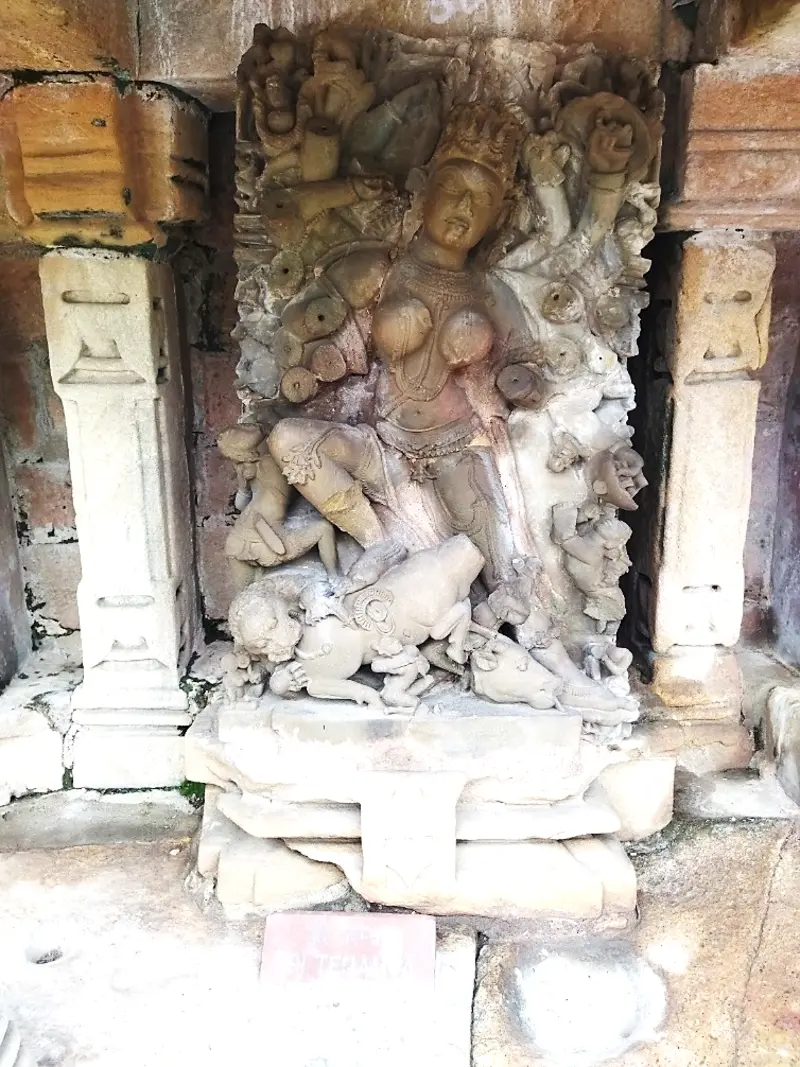
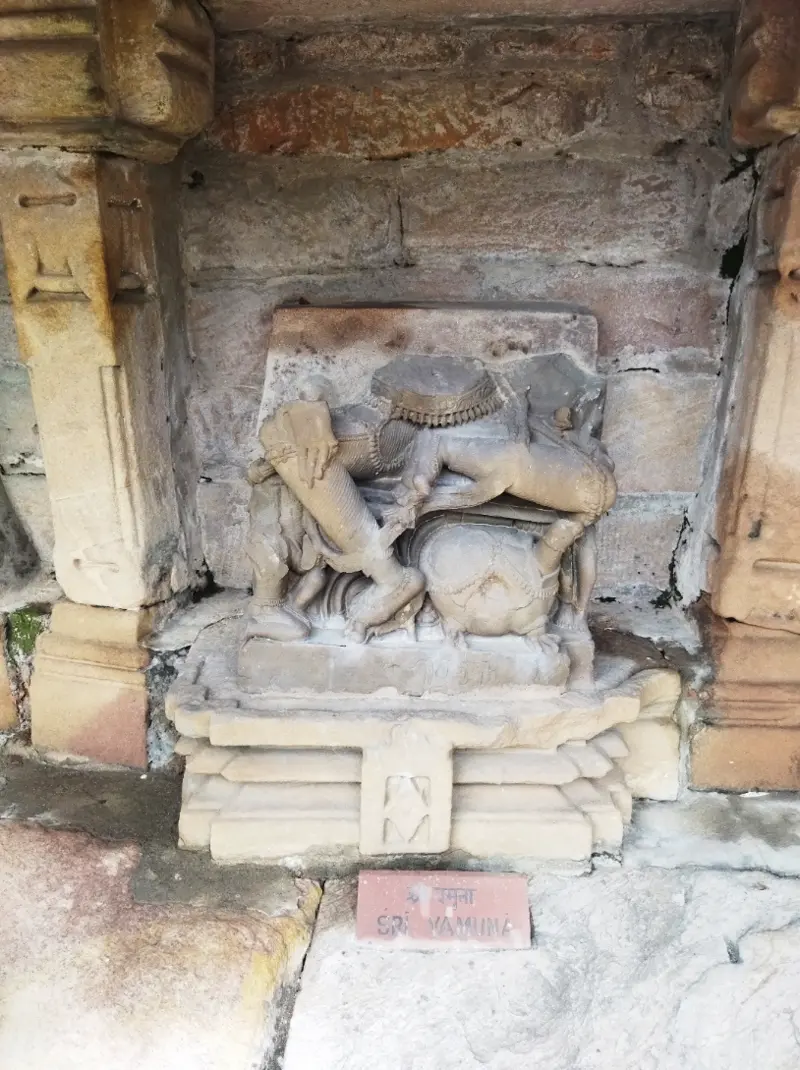
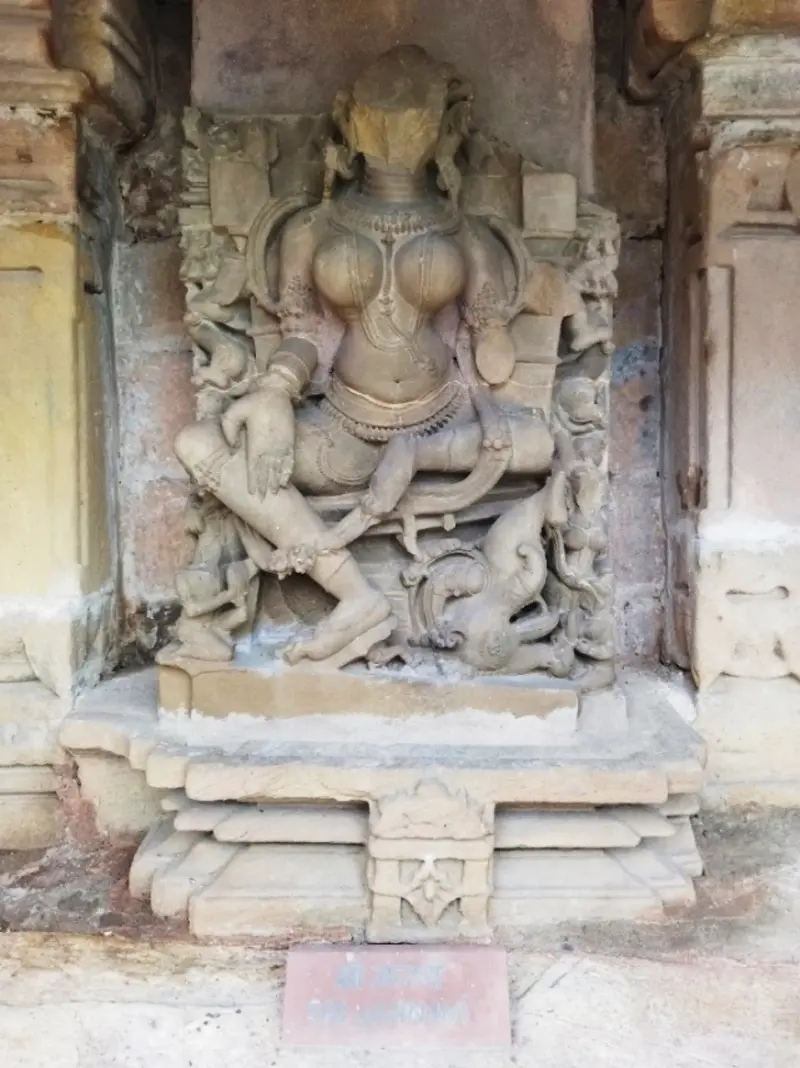
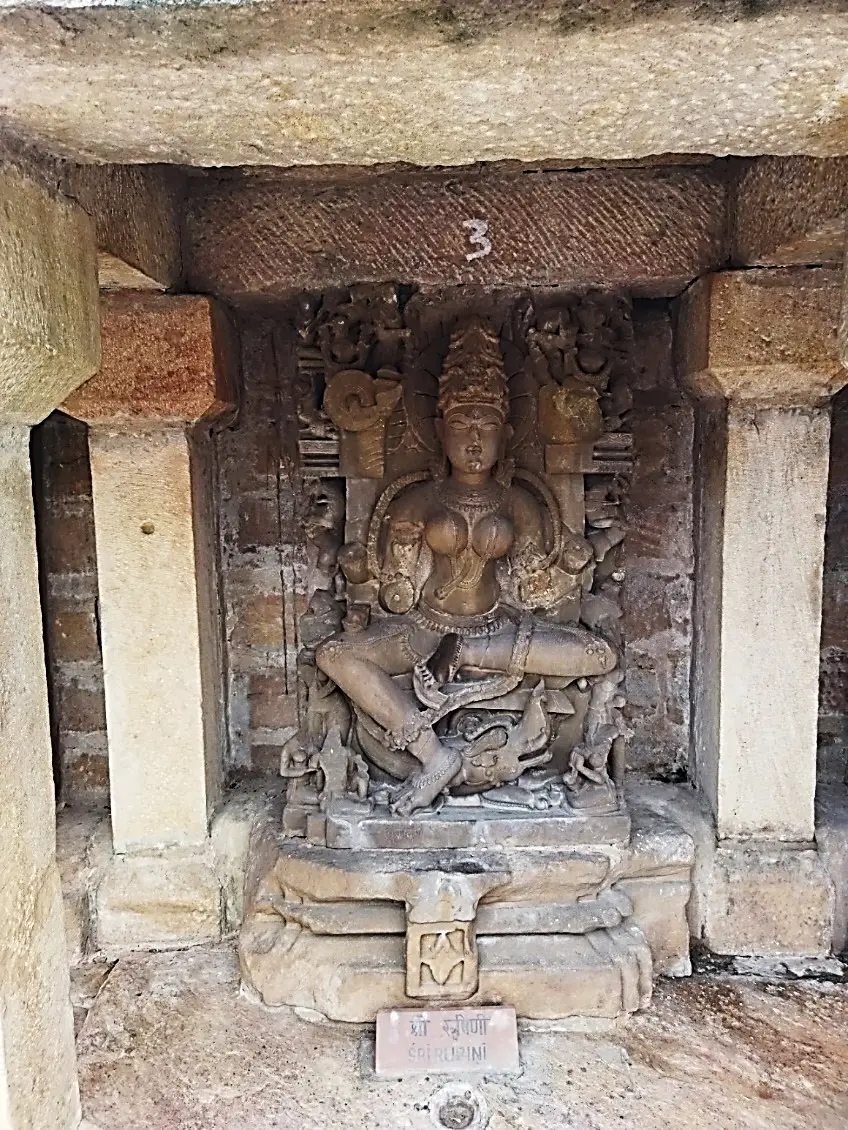
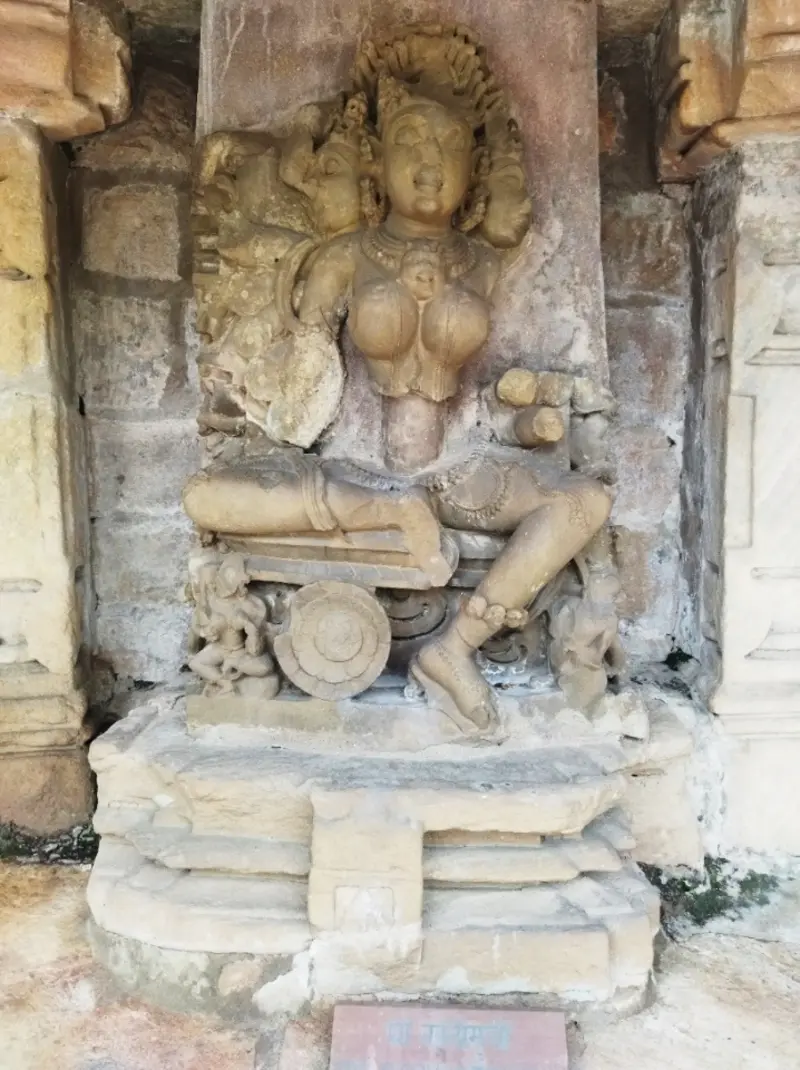
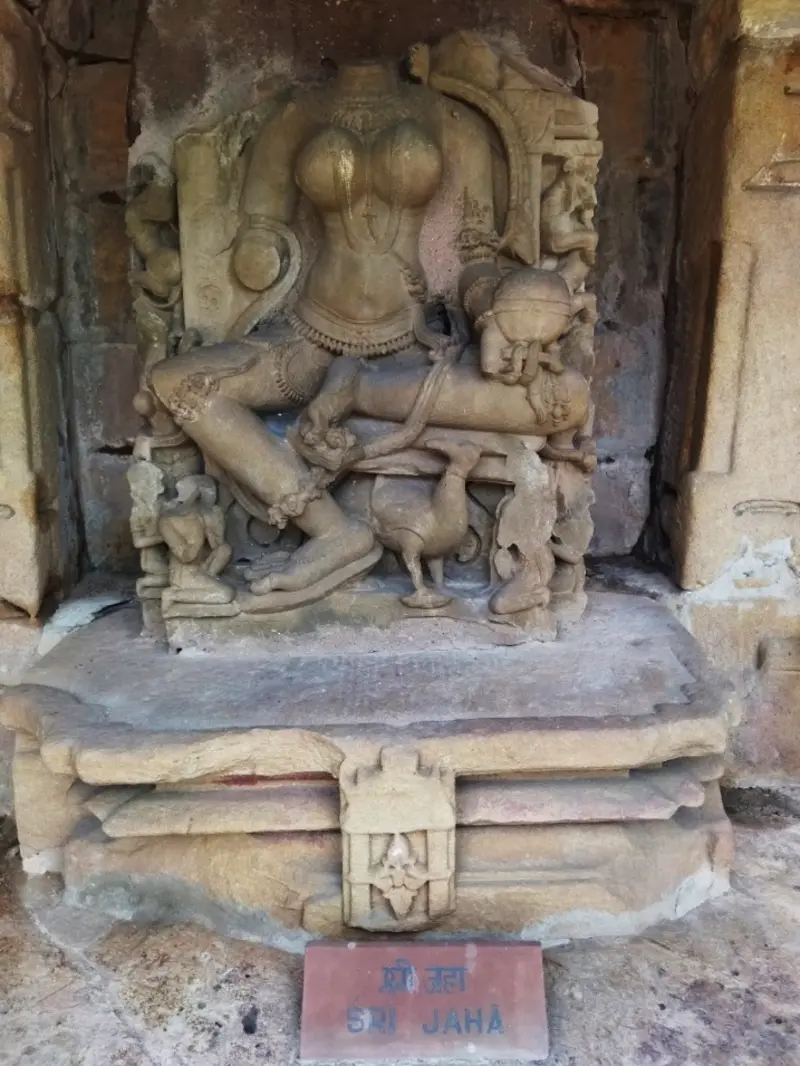
Some of the images, installed in the niches, offer intriguing glimpses into the tantric rituals that likely played a significant role in its history. Among the well-preserved images, those of Sri Sarvottamukhi and Sri Jaha stand out. The image of Sri Sarvottamukhi features a chakra surrounded by lotus petals with the word “hrim” inscribed at its center, a powerful tantric symbol. Similarly, Sri Jaha is depicted holding a pedestaled sphere, further indicating the tantric elements associated with the worship of these deities. These yantras, integral to tantric practices, suggest that the rituals performed at the temple were deeply rooted in the esoteric traditions aimed at invoking and appeasing the Yoginis.
The Myths and Lores
The locals tell the legend of mutilation of the temple by Aurangzeb’s army after which the temple fell into disuse and disrepair. His army mutilated all the Yogini images and the cloister walls but didn’t even touch the Gauri-Shankar Temple. The legend has it that as they neared the temple’s precincts, a vast swarm of bees materialized, descending upon the invaders with an unyielding fury. Inexplicably driven back by this intervention, the army retreated in disarray, leaving the Gauri-Shankar temple untouched by their malevolent hands. The faithful believed that the swarm of bees were a manifestation of lord shiva’s divine grace, which was summoned by the
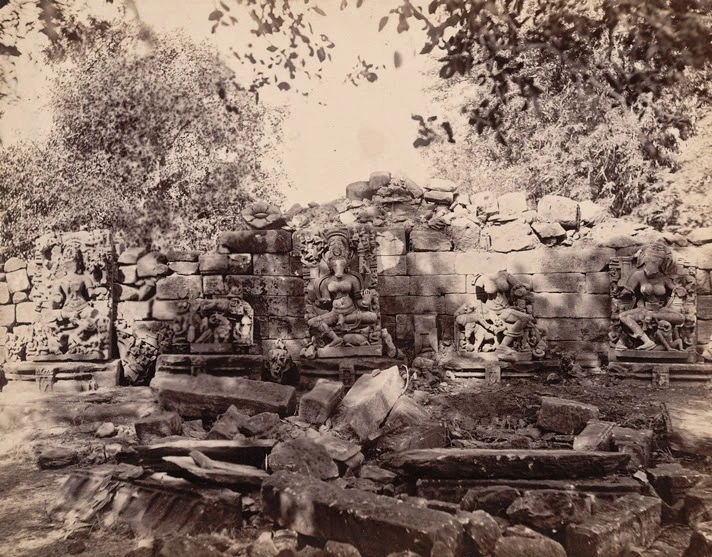
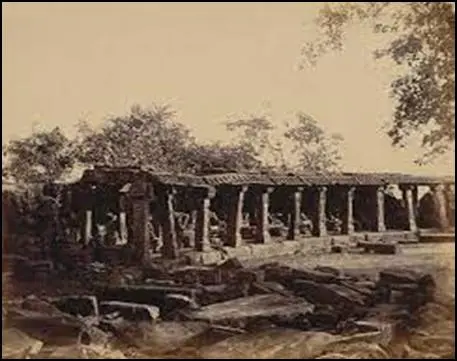
Fig 17,18- Earliest photographs of Chausath Yogini temple of Bhedaghat clicked by James Burgess
prayers of the Yoginis, invoking celestial protection upon the sacred shrine. The temple was abandoned after this providential intervention, until it was found by Sir Alexander Cunningham during his intrepid explorations of central India. The temple was lying in shambles when he first reported it in his annual report of 1874.
In the present day, the families living here for generations share fascinating insights into the myths and practices that continue to thrive in the temple premises. Every winter, in the months of December or January, people from across India gather at the temple to worship the Yoginis, who are revered as their kula devi—the family goddess worshipped for generations. These families unite to perform yagnas, or sacred rituals, in the name of the Yoginis within the temple grounds, and they also conduct animal sacrifices on the banks of the Narmada River below. The beautiful and intricately carved Yoginis inspire awe and reverence among the local sculptors, many of whom have inherited their craft from their ancestors. These sculptors believe that the Yoginis were once living beings who, due to a curse, turned into stone. The head of the Vishwakarma sculptor family, a lineage deeply rooted in the community, proudly recounts how their forebears labored in the construction of the temple. They learned the art of sculpting from the master artisans who created the Yoginis and have passed down this sacred knowledge through the generations. Today, the Vishwakarma family continues to practice this ancient art, preserving the traditions and techniques that have been honed over centuries.
These enduring myths and practices, coupled with the rich heritage of sculpting, create a vibrant cultural painting that connects the past with the present. The temple and its Yoginis remain a living testament to the deep spiritual and artistic traditions of the region, drawing devotees and artisans alike to celebrate and perpetuate their legacy. In the embrace of the ethereal marble hills of Bhedaghat, a series of history unfolds, led by religious beliefs and the ravages of destruction. This sacred landscape beckons to be unearthed, examined, and safeguarded for posterity, ensuring its enduring legacy for generations to come.
References
- Dehejia, Vidya, (1986). Yogini Cult and Temples- A Tantric Tradition, National Museum, Janpath, New Delhi.
- Nagar, Shantilal, (2006). Yogini Shrines and Sakta Pithas: Indian Gods and Goddesses, Vol. 4, Part-1.
- Saurabh, Saxena, (2022). “Bhedaghat – The Secret World of the Yoginis”, Puratattva, puratattva.in
- Cunningham, A, (1879). Report of a Tour in the Central Provinces Made in 1873-74 and 1974-75, Vol.IX, Office of the Superintendent of Government Printing, Calcutta, pg- 60 to 78.
- Sharma, R K (1978). The Temple of Chaunsath Yogini at Bhedaghat. Agam Kala Prakashan. New Delhi
- Markandeya Purana, Devi Mahamatyam
- Agni Purana, Chp 52, and 146
The documentation presented here is the result of independent field study conducted by Bulbul Agarwal. All rights to this work remain with the author and are published on Trip and Tales under her authorization. Trip and Tales holds no ownership over this content.
Trip and Tales sincerely thanks Bulbul Agarwal for permitting the publication of her work for the benefit of readers and heritage enthusiasts.