
Forgotten Temples of Madhya Pradesh
Marvels beyond Mainstream
by
Gaurangi Sharma
The heart of India, Madhya Pradesh is filled with sites that has limitless ethereal perspective. Every lane has welcoming people and with those people come tales of places that have since been lost to the mainstream as well. This recollection is from my last year’s visit to Gwalior, during which I was lucky enough to witness these grand material constructions that symbolise changing political, religious and social attributions interlinked with patronage and perilous urge to build something to be remembered for. While one of them is housed in the complex of Gwalior Fort area, the others are located just a few kilometres away from main city, expressing the exuberance of our ancient engineering and richness, not just in the monetary facet, but art and religious blend.
1) The Sahastra- Bahu Temples
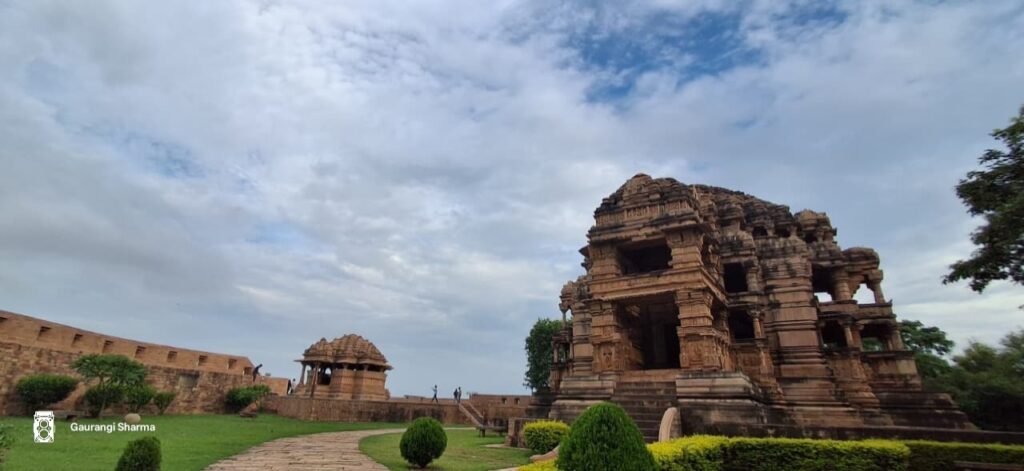
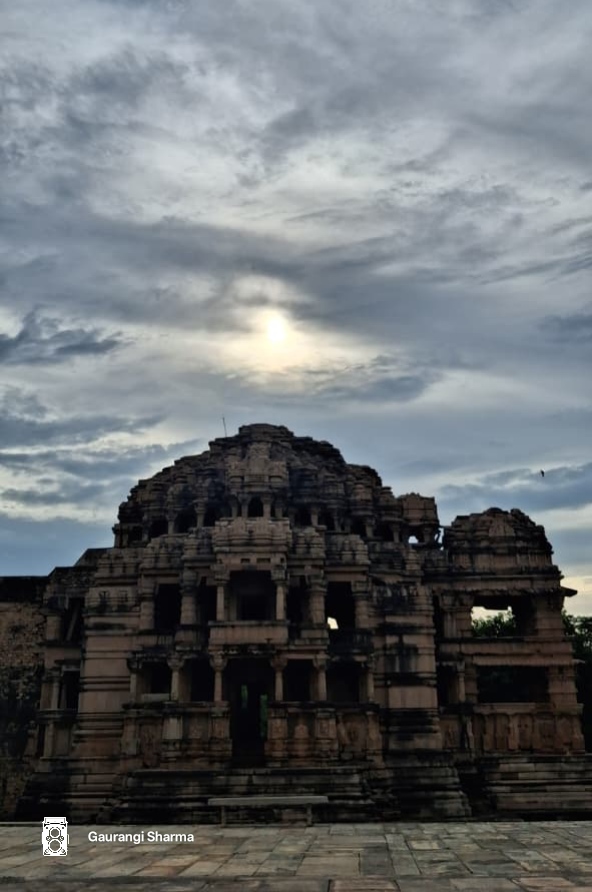
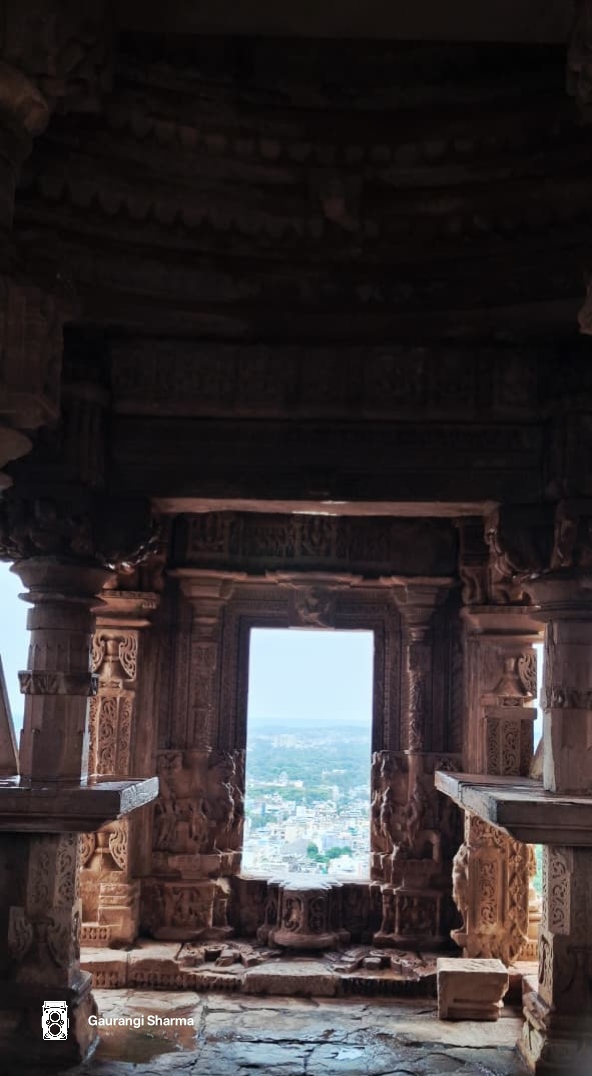
Built in the 11th century, this twin testament is also famously known as the Saas-Bahu Temple. According to the local folklore, it was built by a local Marwari trader, who had built one temple initially, for his wife, but seeing to it, his mother got jealous and the trader had to dedicate one for her as well. Of course, this is a tale which got meddled with societal stories. The temple, archaeologically it is dedicated to King Mahipala, around 1093 CE. This portrayal of the might of the Kachchhapaghata Dynasty of the region is built in Nagara style architecture, dedicated to God Sahastrabahu or ‘the one with thousand arms’. Its intricate stone carvings begin from its elaborate doorway, which houses mythological depiction of the Trifacta of Brahma- Vishnu- Mahesh. It is located in the eastern ground of the fort complex, the larger shrine is primality dedicated to lord Vishnu, while the smaller one dedicated to lord Shiv. Its iconographic features also inculcate the Gond Art, attributed to the Gond tribe of Madhya Pradesh along with mythological tales, flora and fauna, local deities and daily chores of the time. While the main shrine allocation of the temple had collapsed, its ruins still convey its grandeur.
2) Bateshwar Group of Temples
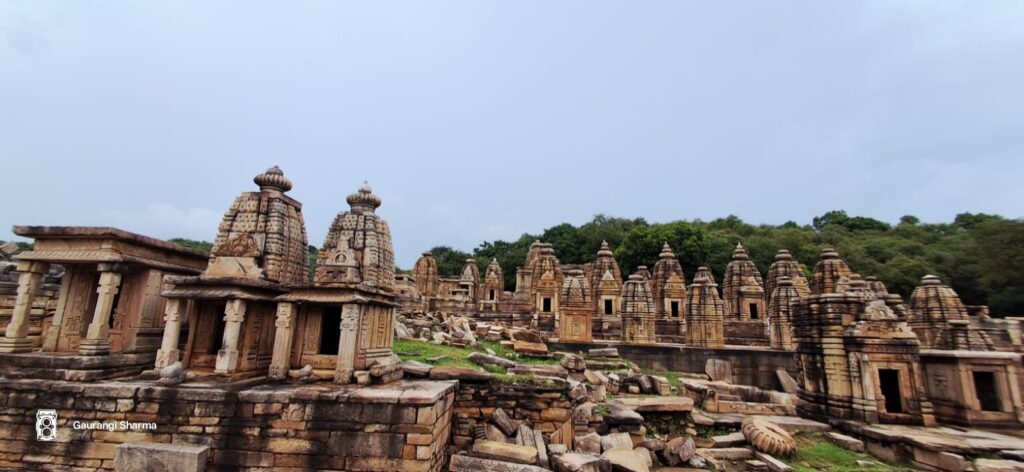
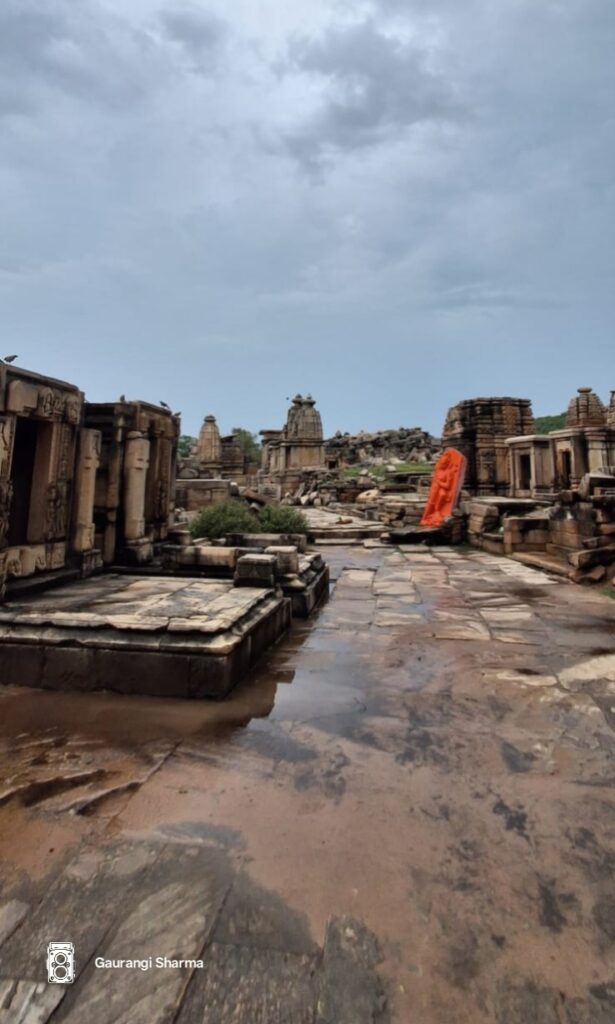
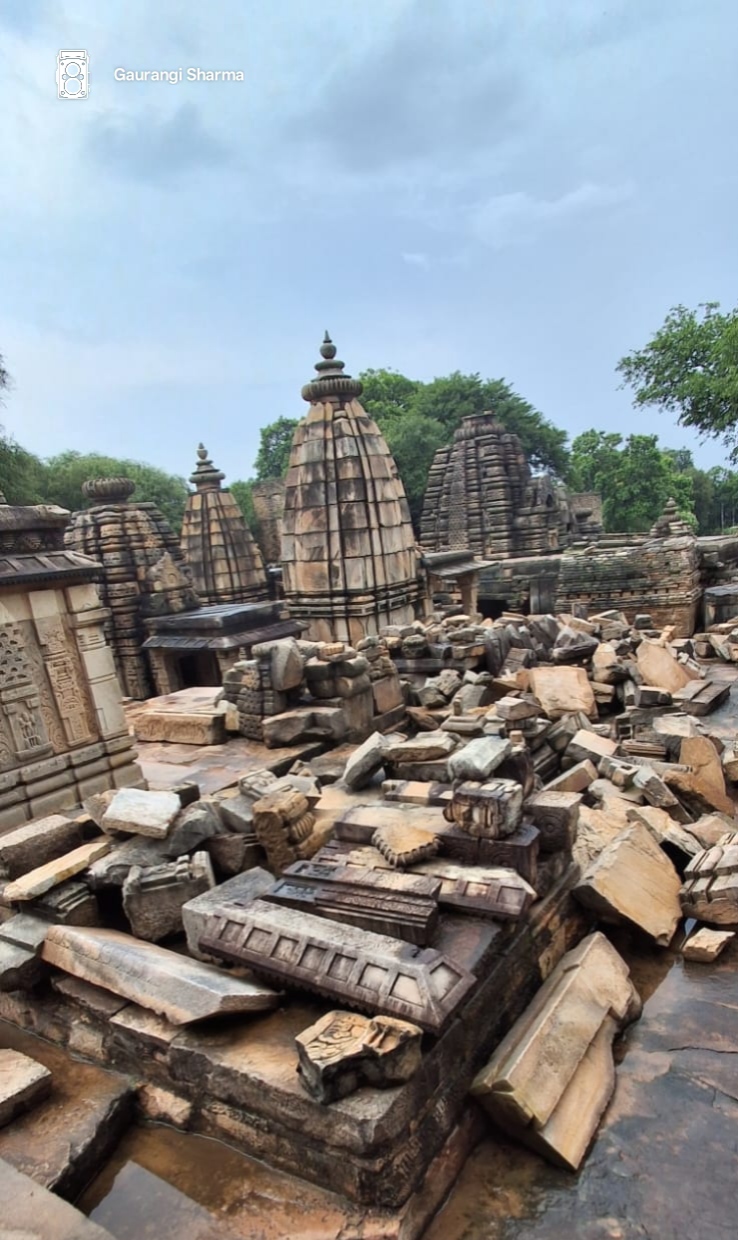
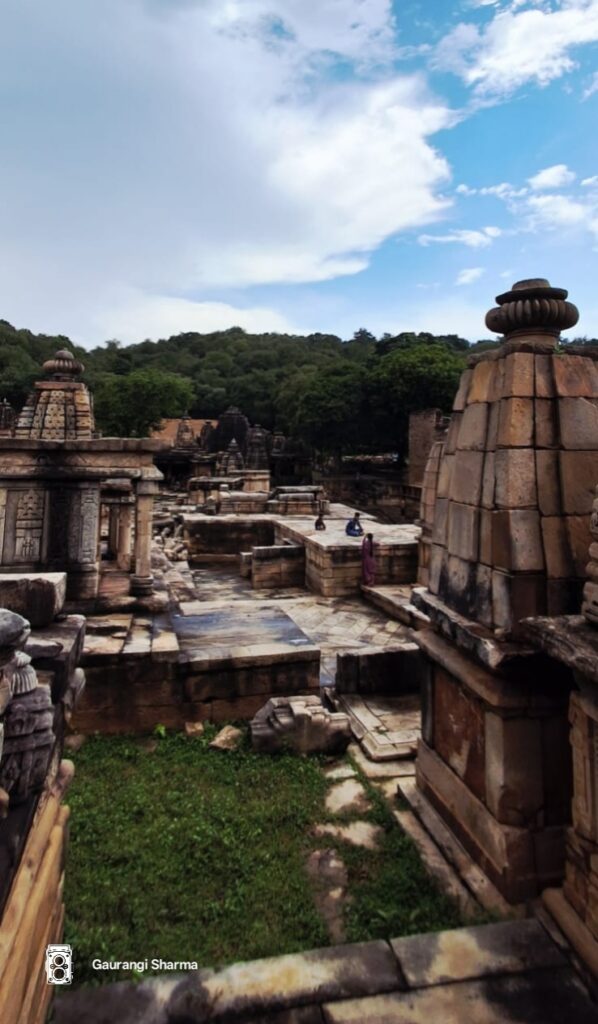
Nearly 200 in number, this group of temples is from late 8th-9th century, built in the village of Morena under the Gurjar- Pratihara dynasty. It was restored under the renowned archaeologist honoured with Padma Shri KK Muhammed with the help of local dacoit Nirbhay Singh Gujjar. Visible even today, this majestic arena had been crumbling for centuries before it was restored to its current state. God Shiv resides here in different sizes of sandstone shrines in the form of Shiva- Linga. We can also see elements of daily lives along with religious presence of Buddhism and Jainism. Covered in amas greenery and sources of fresh water, this site is as beautiful and spiritual as it is an architectural achievement of the past and the salvage archaeologists. It is built in the early Nagara style of the North- Indian form, representing the post- Gupta essence of spire-stone discs in the layout of Mandapas or pillared halls. Its restoration has been hailed as mastery due to the complex jig-saw puzzle curation from thousands of scattered pieces which were swallowed by the dense jungle area surrounding it. This open-air historical site was restored in the early 2000s with rigorous work, however, is still one of the least explored ones.
3) Mitawali
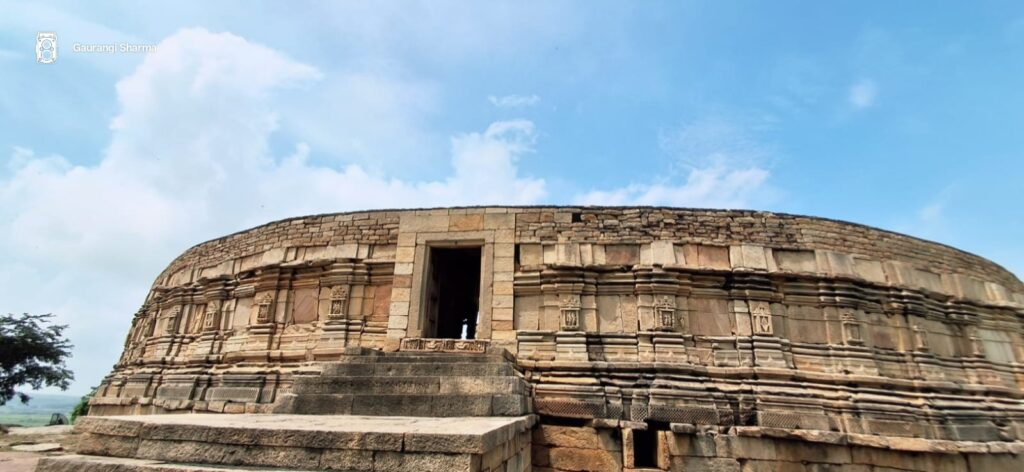
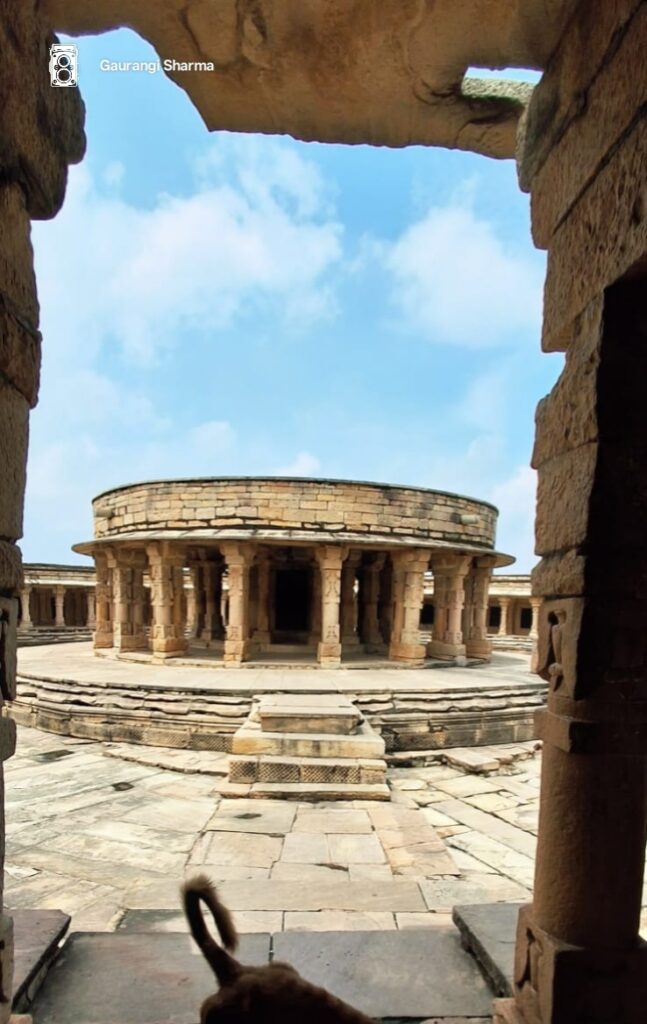
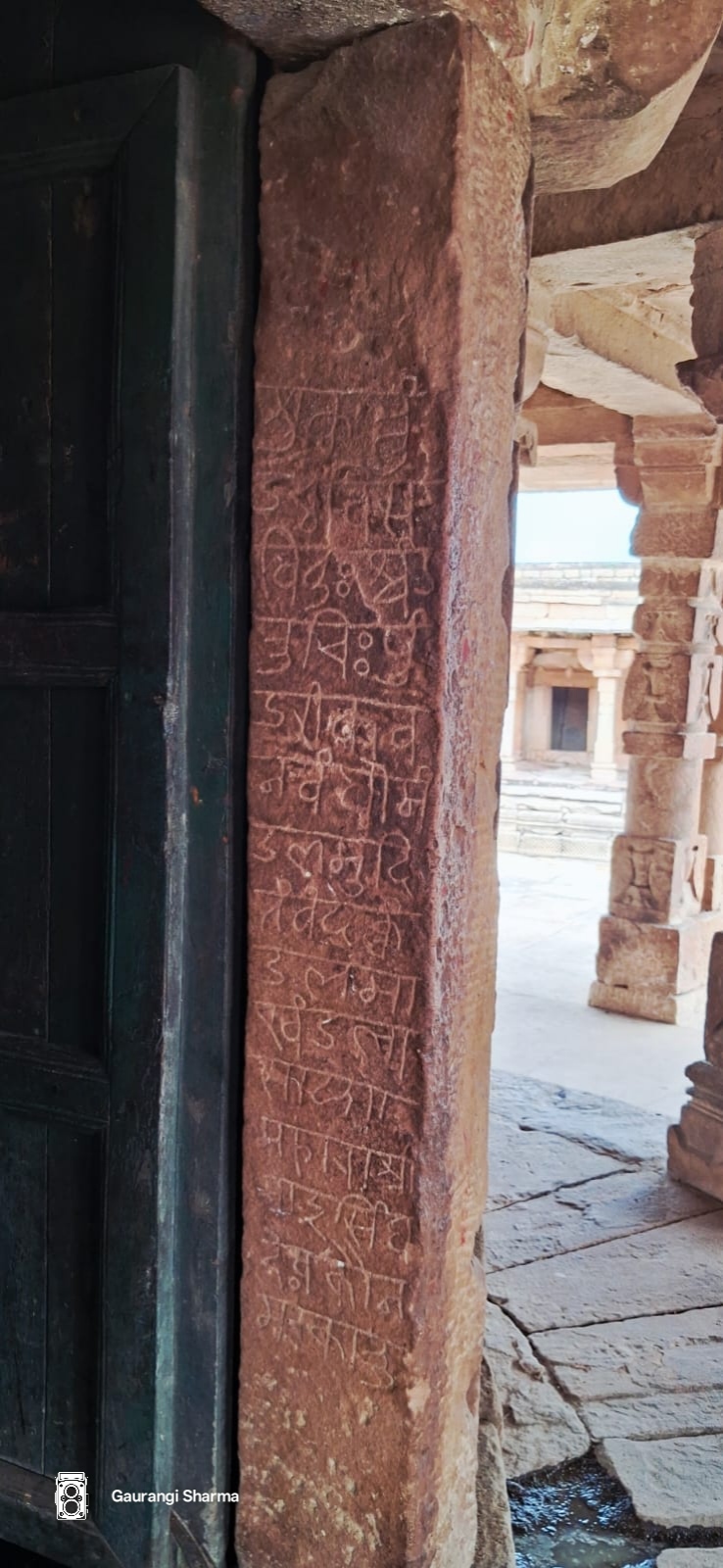
Known by many names, this surreal spectacle of the Chausath Yogini Temple/Ekattarso Mahadev Temple is a large circular shrine built in the 11th century, with inscription dating it back to c. 1323 CE. It is also known to be the inspiration for the for the old Parliament building of the Indian republic. Primarily dedicated to Lord Shiva, in his Lingam form, the temple premises also houses a smaller segment of intricate carving outside the main complex, dedicated to Lord Vishnu. The complex is believed to be an ancient hub of mathematics, astronomy and astrology, being housed atop a 100-foot hill. Locals also believe it to be a centre for worship of the ‘Shakti’ cult and also associate it with powerful resurgence of black magic. Its rare circular design makes it a sight for sore eyes. The primary epigraphical evidence to understand the chronology of this compound is also housed in the main shrine, located in the middle of the pillared structure surrounded by 64 peripheral shrines, which consists of the damaged, fragmented Sanskrit inscription, crediting the construction to the Kachhchhapaghata King Devapala and his royal consort in the Vikram Samvat year 1380, which also posits a major timeline addition of it being carved nearly 250 years later after his actual reign, indicating the idea of major restoration. The architectural perfection the complex is supported by its wise mechanism for rainwater harvesting, into a downpour from the hill, adding to the historical value of the engineering minds of the time.
4) Padavali
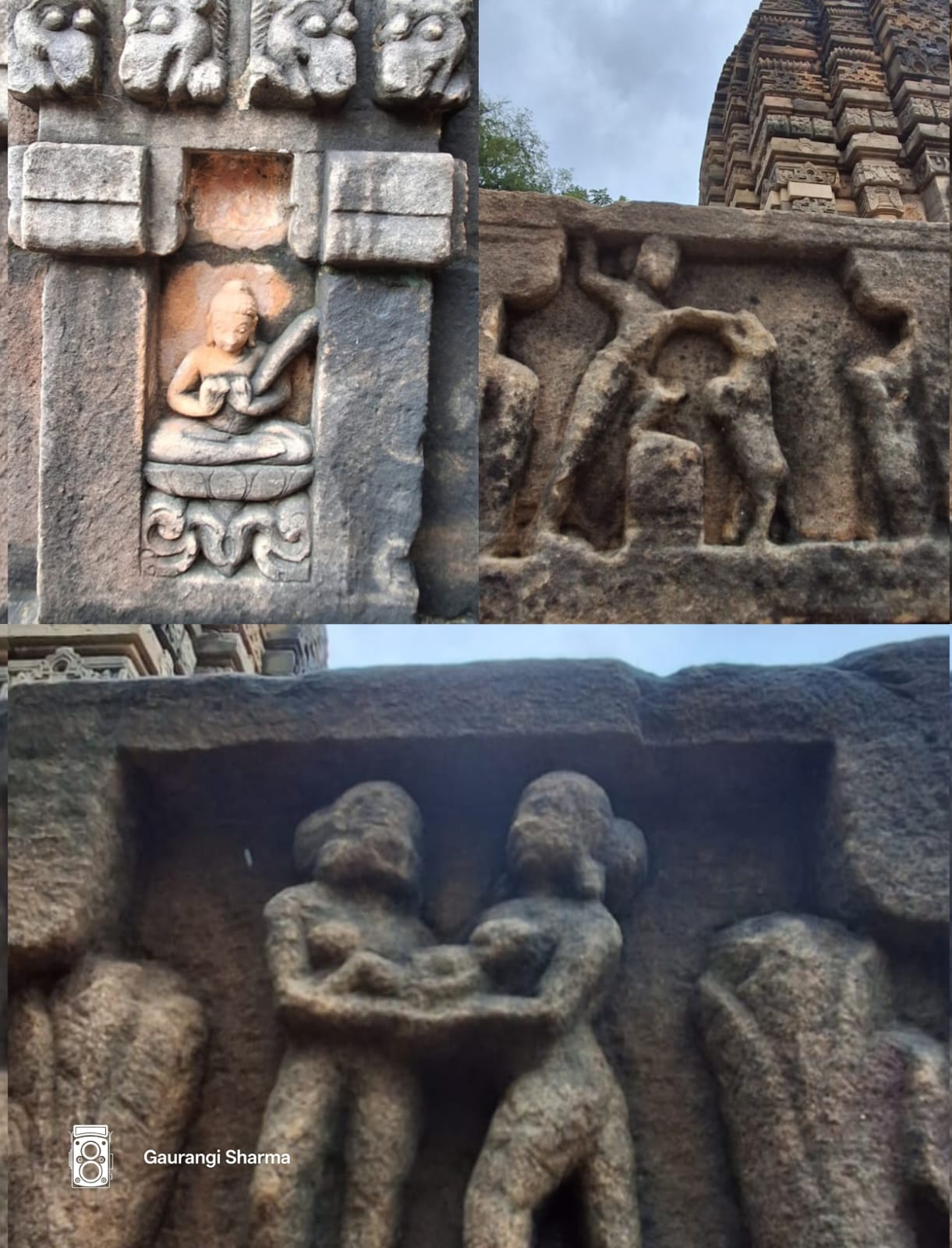
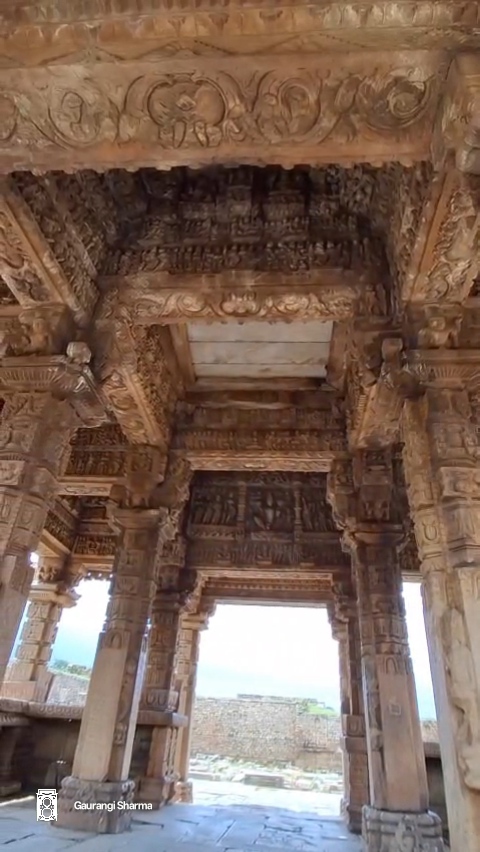
Garhi (Fort) Padavali are ruins of 10th century Shiva temple built as a Kachhapaghata masterpiece inside an 18th century fortress built by the Jat ranas of Gohad. Unfortunately, only its open pillared entrance hall has survived the atrocities of the time. It has been personified as the “Mini Khajuraho” for its unapologetic portrayal of eroticism, ingrained in the cosmic and daily lives of Hinduism. It has depictions ranging from epics such as the battle scenes of the Ramayana and Mahabharat, Trimurti, Goddess Chamunda, Sun God and Majorly Shiva Parvati. The panels are detailed with music, dance and celebration along with the erotic imagery. Located at quite some height, remains of the fortress provide panoramic views of the area, surrounded by greenery. The entrance is supported by a beautiful display of many idols and carvings and on the left-hand side of the entrance is a closed area, filled with the fragmented remains of the ancient structure, of its carvings, idols and depictions, visible from the above located watch tower structures. Its remains are just a glimpse of what an awe-inspiring complex it must have been in the times of its glory.
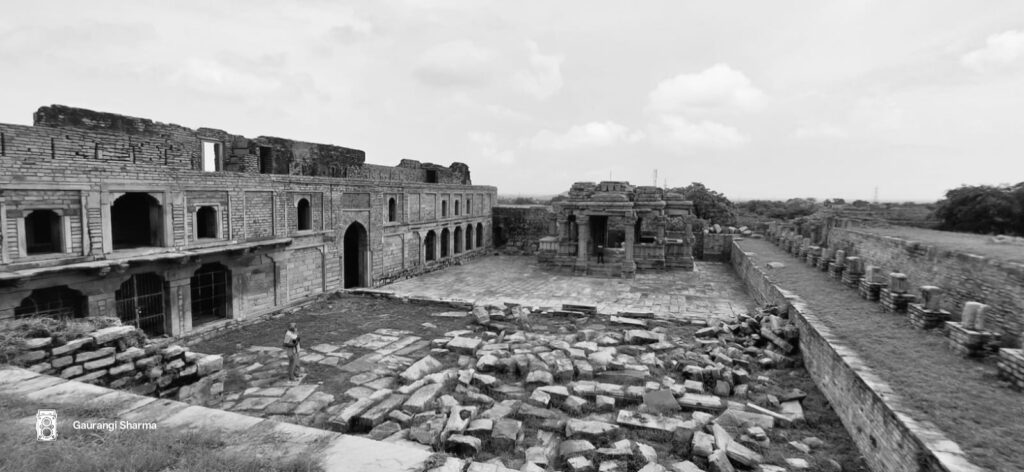
A common recurring theme of these structures is the blade sword of time, through its multiple strikes, ranging though multiple invasions of the medieval times during the expansionist campaigns and tries to destroy the diversity of the subcontinent, presence of such grand structures in major interiors, tumultuous political estrangement during change of diversities, establishment of religious hegemonies, neglected usage among others. The remains of these structures tell a story through each stone, intact or not. Even the establishment of ASI protection of these (Mitawali-Padavali-Bateshwar) is credited to last year. Visiting these places invoke several feelings, of pride by looking at our heritage, of guilt, that we were not able to protect these marvels and of spirited asset to help them get recognised for their true value.
Visiting these, when in Gwalior is a must, not just if you are a history enthusiast. At the same time, it is important to take care of the ecological sensitivity of the area, as these structures are located inside deep green areas, adding to the scenic beauty. These places hold a huge potential for not just heritage tourism, research value and educational programs while boosting the local people and economy.
P.S.: There are many ways to reach here, but hiring a private taxi will be the best option as it is and cost-effective and a time saver. The village area nearby is very easy to explore and hearing their thoughts towards the heritage is a cherry on top!
* The findings of this material are research field based, in addition to the local wording of the area.
The documentation presented here is the result of independent field study conducted by Gaurangi Sharma. All rights to this work remain with the author and are published on Trip and Tales under her authorization. Trip and Tales holds no ownership over this content.
Trip and Tales sincerely thanks Gaurangi Sharma for permitting the publication of her work for the benefit of readers and heritage enthusiasts.