
Descending into Devotion: The Queen's Stepwell at Patan
Rani Ki Vav
by
Neha Bhave
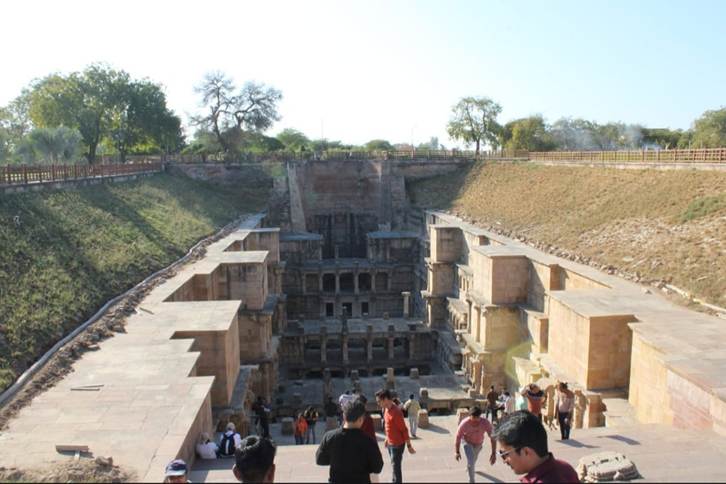
Rani ki Vav or the Queen stepwell at Patan in Gujarat, is among the most accomplished monuments of mediaeval Western Indian architecture, which unit water management, Royal commemoration, and sculptural display in a single structure. Built in the 11th century during the Chaulukya (Solanki) period, the monument is widely attributed to Queen Udayamati, who is said to have commission it in memory of her husband, Bhima1 (Jain-Neubauer, 1981; Mankodi, 1991; UNESCO World Heritage Centre, 2014). Today it is recognized as an engineering achievement as well as a major work of religious and artistic imagination, so significant that UNESCO inscribed it into the world heritage list in 2014 (UNESCO World Heritage Centre, 2014).
1. History
The history of Rani ki Vav must be understood within the broad history of stepwells in western India. In region such as Gujarat and Rajasthan, where rainfall is seasonal and water conservation was essential, stepwells developed as highly specialized architecture forms that provided access to underground water through descending flights of steps. Overtime, these structures became more than just practical utility and evolved into ceremonial and sacred spaces which were supported by elite and royal patronage (Jain-Neubauer, 1981). Rani ki Baap belongs to the most refined stage of this development and is generally dated to the 11th century when the Chaulukyas ruled from their capital at Anahilapataka, which is present-day Patan (Mankodi, 1991; UNESCO World Heritage Centre, 2014).
The monument is traditionally associated with Queen Udayamati and King Bhima 1. Literary testimony, especially the Jain chronicle Prabandha-Chintamani, states that Udayamati built the stepwell after Bhima 1’s death. Although such texts are later than the monument itself, the attribution has been accepted by most scholars because it aligns with the political history of the court and the style of the monument, which correspondence closely to the 11th century Maru-Gurjara architecture (Jain-Neubauer, 1981; Mankodi, 1991). This association gives Rani ki Vav a commemorative dimension, which records it as a public well, as well as a dynastic memorial, transforming hydraulic architecture into an expression of royal devotion and remembrance (Mankodi, 1991).
The later history of the monument is equally impressive. Owing to floods and alluvial deposition from the nearby Saraswati River, the stepwell gradually silted up and became buried for centuries. This burial concealed much of the monument from view leaving only portions, visible above ground. Modern archaeological excavation and conservation by the Archaeological Survey of India in the 1980s revealed the extraordinary state of preservation of its sculptural surfaces, many of which had been protected by the accumulated silt (UNESCO World Heritage Centre, 2014).
2. Location
Rani ki Vav is located at Patan, about 125 km north-west of Ahmedabad, making it one of the most accessible major heritage sites in North Gujarat.
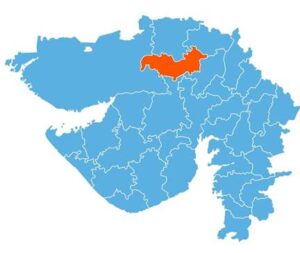
Patan known in earlier sources as Anahilapataka was one of the major political and cultural centres of western India in the early medieval period. The placement of the stepwell, situated it within a royal capital and within the landscape where the control and sacralisation of water held both practical and symbolic importance (UNESCO World Heritage Centre, 2014).
The monument is oriented on an east-west axis with the principal entrance from the east, and the well shaft at the west end. This orientation gives special order to the act of descent, drawing the visitor from the open surface world into an increasingly enclosed and sacred subterranean space. The location near the Saraswati River is also significant in symbolic terms, since rivers in Indian religious thought are not simply physical watercourses, but sacred presences associated with purification, fertility and pilgrimage (Jain-Neubauer, 1981).
3. Significance
The significance of Rani ki Vav lies in the way it integrates several functions and meanings at once. At the most basic level, it was a structure for collecting and accessing water, which was a response to the environmental realities of Gujarat. Yet it’s designed far exceeds utility. UNESCO has described it as an “inverted temple”, a phrase that captures its distinctive conceptual logic. Instead of rising upward like a temple, the monument descends downward in successive levels towards the water, which becomes the sacred focus of the whole composition (UNESCO World Heritage Centre, 2014).
With the traditional attribution to Queen Udayamati accepted by most scholars, the stepwell stands as a rare and important example of a large-scale public monument commissioned by a queen in medieval India. It demonstrates how female patronage could shape public and sacred spaces. The emphasis on feminine imagery within the iconography, hence may not be accidental, because it resonates with the identity of the patron and with the wider associations of women, fertility, and water (Mankodi, 1991; Rao, 2006).
The monument is also significant in art-historical terms because it preserves one of the most elaborate cultural designs known from a stepwell. It documents, the full maturity of the Maru-Gurjara style, showing how technique and motifs familiar from temple architecture can be adapted to a below-ground environment. For this reason, Rani ki Vav is one of the key monuments for understanding the cultural world of 11th century Gujarat (Jain-Neubauer, 1981; UNESCO World Heritage Centre, 2014).
4. Architecture
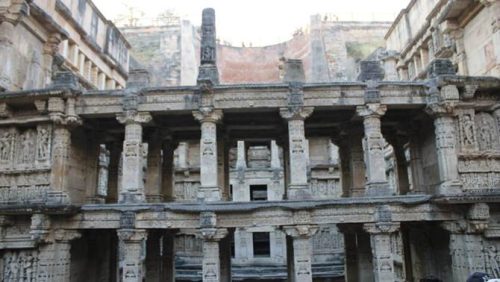
Rani ki Vav is a long, multi-storeyed stepwell of the Nanda type, a form in which stepped corridor leads to a well shaft through a sequence of pillar pavilions. The structure is approximately 64 to 65 m long, around 20 m wide, and roughly 27 m deep, making it one of the largest and most ambitious surviving stepwells in India (UNESCO World Heritage Centre, 2014). It descends through seven levels, with flights of steps broken by landing and framed by increasingly complex architectural members as one goes westward.
One of the most remarkable features of the design is the graduated sequence of pavilions. These become taller and more elaborate towards the well, creating a deliberate rhythm of descent and intensification. The stepwell culminates in a large circular well shaft, approximately 10 m in diameter and about 30 m deep with richly articulated masonry and structural elements that help resist the pressure of surrounding soil (UNESCO World Heritage Centre, 2014; Mankodi, 1991). The design demonstrates technical sophistication since the monument had to manage stability, drainage and long-term access to water in an alluvial environment.
The architectural language of Rani ki Vav is closely aligned with Maru-Gurjara temple architecture. Its pillars, wall faces, mouldings, and miniature superstructures, show the same preference for precise, carving, rhythmic projection and residence, and dense ornamental treatment that characterises 11th century western Indian temples (Jain-Neubauer, 1981; Mankodi, 1991). The monuments, longitudinal axis, deep terrace descent and focus on the well itself, create a very different spatial experience, one shaped by movement, depth, shadow, and changing temperature.
5. Iconography
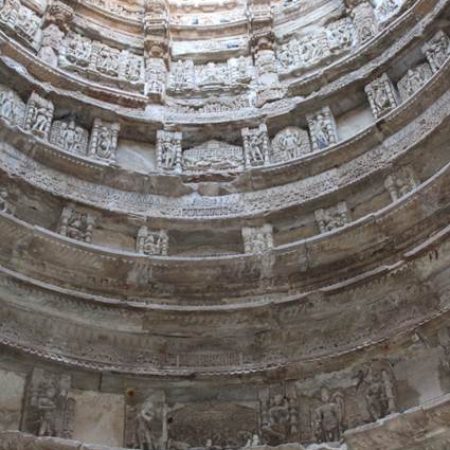
The sculptural align pornographic depictions of Rani ki Vav are extraordinarily rich. UNESCO estimates more than 500 principal sculptures and over 1000 minor figures, distributed across walls, pillars, and plasters along the seven levels of the stairway, and the well shaft (UNESCO World Heritage Centre, 2014). The imagery is predominantly Brahmanical with a mark emphasis on Vishnu and is various forms, but also accommodate Shaiva, Shakti and other deities as well as a large corpus of female figures and secular motifs (Mankodi, 1991).
5.1 Vishnu and the Divine Pantheon
Add the core of the iconographic depictions stands Vishnu, particularly in his Daśāvatāra (Ten Incarnations), with panels depicting Varaha, Narasimha, Vamana, Rama, Krishna (Varāha, Narasiṃha, Vāmana, Rāma, Kṛṣṇa) and other forms, often framed within elaborate architectural niches (Mankodi, 1991).
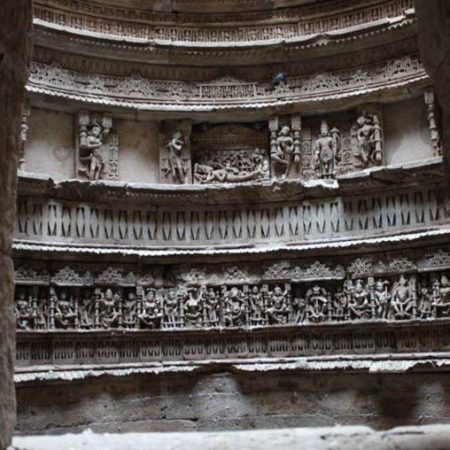
A central and especially important image is that of Śeṣaśāyī Vishnu, the day reclining on the serpent Śeṣa, located at or near the water level of the well shaft (Mankodi, 1991; UNESCO World Heritage Centre, 2014). This single, focal panel strongly linked the physical water of the stepwell with the Cosmic Ocean, presenting the stored water as a sacred, life-sustaining depth associated with Vishnu’s cosmic sleep and the rhythms of creation and preservation (Ra0, 2006; Mankodi, 1991).
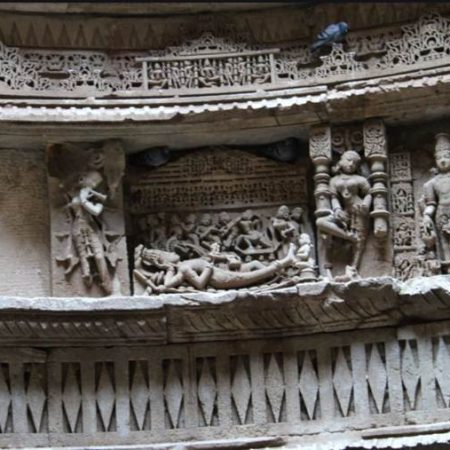
Alongside Vishnu, iconography of Brahmā, Shiva, Ganesha, Kubera, Bhairava, Hayagriva and composite forms such as Ardhanārīśvara, together with goddesses like Lakṣmi, Pārvati, Sarasvati, Cāmuṇḍā and Mahīṣāsuramardinī also appears (Mankodi, 1991). The Saptamātṛkās (seven mother goddesses) occupy a prominent position, underlining the protective and maternal dimension of divine power, while the Aṣṭadikpālas (eight directional guardians) mark out cosmic space along the cardinal and intercardinal points of the architecture (Rao, 2006; Mankodi, 1991).
5.2 Female Figures, Fertility and Water
A particularly distinctive feature of Rani ki Vav is the large number of female figures, such as apsarās, surasundarīs and nāyikās, card on the pillars, spandrel and wall panels (Rao, 2006). These celestial women are depicted in a variety of graceful, often playful poses like adjusting jewellery, tying ankles, gazing into mirrors, standing in tribhaṅga or interacting with animals such as monkeys and birds (Rao, 2006). Some are also depicted holding objects closely associated with water and fertility, including water pots and fish, while others are shown with scorpion or small creatures, introducing hints of danger or erotic tension (Rao, 2006; Mankodi, 1991).
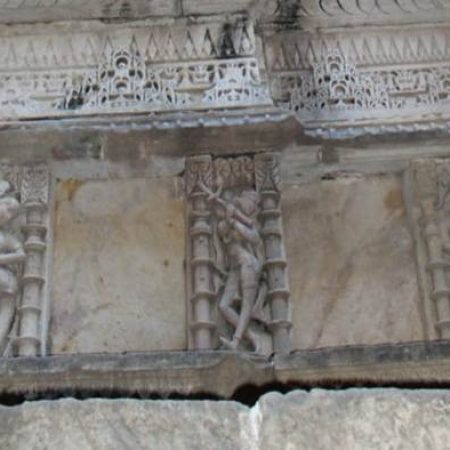
In Indian Temple, art, such female figures embody auspiciousness and fertility, and in the setting of a stepwell, they enhance the association between women, water and generative power (Jain-Neubauer, 1981). The prominence of these images in the monument commissioned by a queen has led callers to suggest that feminine agency and patronage are inscribed into the very fabric of the structure (Rao, 2006; Mankodi, 1991).
5.3 Serpents, River Goddesses, and Aquatic Symbolism
Servant imagery is also important. Nāgakanyās (serpent maidens) and Nāgas appear in several panels, sometimes with coiled snakes, fish and skull-cups overflowing with water or aquatic creatures (Rao, 2006). In Hindu cosmology, nāgas inhabit, subterranean waters and guard treasures, making them particularly apt for a stepwell that taps into the water table (Jain-Neubauer, 1981). At lower floors, rows of seated river goddesses with water sprouts or lotuses indicate that the well’s waters were conceived as the confluence of multiple sacred rivers, including the Saraswati, on whose former bank the monument stands (Rao, 2006).
6. Conclusion
Rani ki Vav is far more than a monumental stepwell. It is a carefully conceived work in which history, environment, kingship, devotional, and artistic imagination, converge. Built in the 11th century Patan under Chaulukya patronage and traditionally associated with Queen Udayamati, it embodies the mature development of the stepwell tradition in Gujarat (Jain-Neubauer, 1981; Mankodi, 1991). Its architecture turns descent into ritual, its sculptures turn a hydraulic structure into a sacred narrative space, and its preservation allows modern viewers an unusually vivid encounter with the visual culture of medieval western India (UNESCO World Heritage Centre, 2014).
For these reasons, Rani ki Vav remains one of the most important monuments in South Asian art and architectural history. Its significance lies in the way it reveals how water architecture in India could be invested with memory, theology and extraordinary aesthetic richness. As a monument once dedicated to water, royalty and divinity, it remains a masterpiece of medieval Indian civilisation.
References
- Jain-Neubauer, J. (1981)The Stepwells of Gujarat: In Art-Historical Perspective. New Delhi: Abhinav Publications. Available on Internet Archive. ISBN 0-391-02284-9
- Mankodi, K.L. (1991)The Queen’s Stepwell at Patan. Bombay: Franco-Indian Research Pvt. Ltd. ISBN 819001840X
- Rao, R. (2006)Therapeutics in Indian Sculptures: Rani ki Vav. New Delhi: Aryan Books International. ISBN 817305312X / 9788173053122
UNESCO World Heritage Centre (2014) Rani-ki-Vav (the Queen’s Stepwell) at Patan, Gujarat. Available at: https://whc.unesco.org/en/list/922
The documentation presented here is the result of independent field study conducted by Neha Bhave. All rights to this work remain with the author and are published on Trip and Tales under her authorization. Trip and Tales holds no ownership over this content.
Trip and Tales sincerely thanks Neha Bhave for permitting the publication of her work for the benefit of readers and heritage enthusiasts.