
Spiritual Refuge
Hijron Ka Khanqah
by
Preeti Kumari
HIJRON KA KHANQAH, MEHRAULI, SOUTH DELHI
”سماع آثار بسیاری بر دارد، ولی تمام مردم مناسب خودش نمیباشد“
“Sama has many effects on one, but all people are not suitable for sama.”
Source: Fawaid al-Fuad(translation)
A PRELIMINARY HISTORICAL AND STRUCTUAL NOTE
The khanqah(or Sufi hospice) has been centre to the spiritual, social and cultural development of India .The term khanqah is a combination of two words that is “Khanna” means gathering and “Qah” means place, it is a Persian term, which roots can be traced back to the Arabic word, which means a place of gathering. It serves as a place for spiritual retreat, meditation, debates, discussion centres where people from all walk of life’s interchanges their ideas and views and a place for communal worship.
Coming to “Hijras” or “Eunuchs”, a third-gender community whose roots can be traced to South Asian Cultures, having a long and crucial history in our society till today. If we see their position in society then they were seen as people with special spiritual power and are capable of giving blessings at births and weddings or invoking curses if disrespected. Because of this they were seen as respected individuals but on the other hand as feared also, welcomed in rituals yet kept at a distance in everyday life.
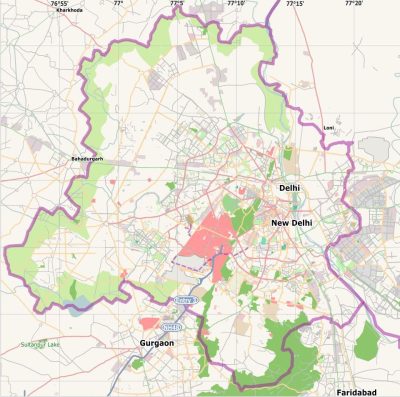
Another important site is South Delhi as most prominent sites of Sufi saints (see the Map) like Nizamuddin Auliya , we have Mehrauli which houses Archaeological park having a number of tombs of Medieval era and Gumbad’s, on other side we have Lodhi period tombs of Jamali Kamali, Quali Khan’s tomb and Gumbad’s including Bara Gumbad complex, Shish Gumbad built late in 15th century and Sikandar Lodi’s tomb along with many other monuments. Quwwat-ul-Islam mosque constructed by Qutb-ud-din Aibak in order to celebrate the Islamic conquest of Indiaii and Qutub Minar was responsible for changing the landscape of the city. Amongst all these historical as well as contemporary spiritual sites, there exist one site that is not explored much that is Hijron ka khanqah located at Mehrauli in South Delhi. This Khanqah is popularly known amongst locals as Dargah but a few of the locals call this Khanqah as Eunuch’s khanqah and period of this place dates back to 15th century(As per local accounts).
The site is presented as a pre-Mughal as well as a post-Lodhi complex as well. In the medieval Sultanate period, Eunuchs were one of the key players; they were not marginalized people but important personalities who occupied positions of high status socially, politically and spiritually. They were important office holders, guarded the Harem and had special closeness with their kings because they were loyal subjects. Besides the religious activities, Khanqahs have played a key role in advancing literary, musical and artistic pursuits. Many of the Khanqahs had libraries, and scholars used to transcribe and preserve manuscripts. The musical tradition of Qawwali was nurtured and thrived through the Khanqahs. As the colonial rule was established in India, the role of Khanqahs also changed. The modern period witnessed a new trend where some of the Khanqahs have included aspects like digital media and interfaith dialogues into their activities.
LOCATION AND ACCESS
Hijron Ka Khanqah is situated at Mehrauli, South Delhi in the historical locality of Mehrauli that is located close to the famous Qutb Minar and the Mehrauli Archaeological Complex. The monument lies inside the narrow streets of old Mehrauli village and is situated inside Chatta Wali Gali (ward number 6). This structure dates back to the 15th century and is an example of the Lodi dynasty Sufi Khanqah and burial ground related to the transgender community of Delhi.
This monument lies in the heart of Mehrauli town in the interior lanes that give the monument an air of secrecy and sanctity due to the difficulty in finding its location. Historically, this monument was used as a spiritual center for hijras/eunuchs of the Delhi Sultanate and later of Mughals.
The monument is approachable by passing through the market place of Mehrauli through the narrow lanes starting from the main road. The nearest metro station is Delhi Metro Yellow
Line’s Qutub Minar Metro Station from where rickshaws can be obtained till Mehrauli village from where one would have to walk along the lanes for reaching the monument.
The structure is entered through a small iron or grilled gate opening into a courtyard filled with whitewashed tombs and a small mosque wall on the western side. Access to the inner tomb areas is sometimes restricted, especially on ordinary days, because the site is still maintained by members of the hijra community associated with Turkman Gate in Old Delhi. During religious occasions such as Muharram and Shab-e-Baraat, the site becomes more publicly active and accessible.
HISTORICAL REFRENCES
The Chishti order of the Sufi movement was of great importance in shaping the social, cultural and religious fabric of the sub continent during a period when the Islamic political power was rising in the Delhi Sultanate rule. This mystical tradition began with the arrival of Khawaja Moinuddin Chishti at Ajmer in the late 12th century and made its unique identity by laying stress on basic elements such as the love for God (ishq-e haqiqi), service to mankind(khidmat-e-khalq), and complete trust in God (tawakkul) without seeking any political backing to maintain spiritual independence. The work done by the Chishti saints Qutubuddin Bakhtiyar Kaki, Baba Farid and Nizamuddin Auliya to spread the order in northern India resulted in setting up of the khanqahs which were hospices where caste, class and religion were transcended through the activities of langar (public kitchen) and Sama (music). It is to be noted that in a stratified society where there are always conflicts between different segments, the Chishti doctrine laid stress on piety, compassion, humility and equality before God.
The medieval period in the history of India saw a number of important transformations in the social and religious spheres.
The point raised by some scholars is that if Ajmer is the Mecca of Islam in Hindustan, it would not be wrong to say that Delhi became its Medina during the 13th and 14th centuries. It is interesting to note that amongst the first five Chishtis, namely, Khwaja Moinuddin Chishti in Ajmer, Qutubuddin Bakhtiyar kaki in Delhi, Nizamudin Auliya Dargah and Nasiruddin Chirag-e-Delhi, three lived in Delhi and their burial places helped make the city into a holy one (Aquil, Raziuddin 2007). However, if we look at Sufi literature, it served as a valuable source of knowledge on people’s lives and conditions. Specifically, Malfuzat (consisting of conversations between the Sufi Saint, written down by his followers) and Tazkiras (consisting of biographies of the Saints of Sufism)
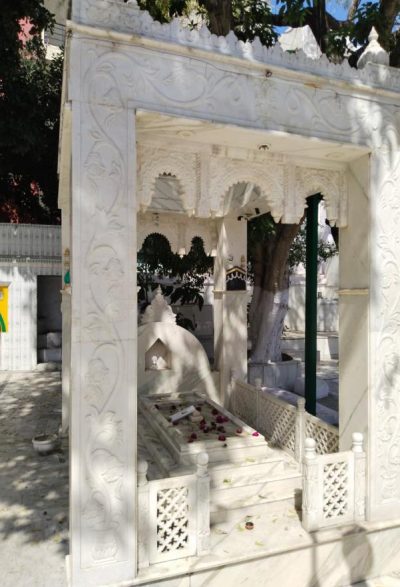
Interpretation based on Oral narratives: It is said that Qutubuddin Bakhtiyar kaki used to fondly call one of the Khawaja Sara “Aapa”. The saint offered this place as their burial ground that later on come to known as Hijron ka khanqah. This is the prominent grave where she is buried.
Architectural studies regarding Sufi monuments, especially those in medieval India, have concentrated on those khanqahs, dargahs, and shrines that were established by the religious and political elite. In terms of the conquest of Turkish rule in Delhi, for instance, it must be remembered that they established a new Islamic tradition there. The Qutub Minar, in connection with the congregational mosque, came to be identified as the victory tower (vijaysthambha). When it comes to the Qutub Minar complex, it includes a mosque, the tomb of Sultan Shams-us-din Iltutmish, and the Imam Zamin, which was built by Sultan Ala-ud Din Khalji. This played an important role in the architectural legacy of the Delhi Sultanate.ii Another important monument of the 15th century, known as Hijron ka khanqah or Eunuchs’ khanqah of Mehrauli, serves as a sacred burial place for the Hijras.
FIELD-WORK ANALYSIS
The fieldwork carried out at the Hijron ka khanqah(Coordinates: 28°31′19″N 77°10′43″E) uncovers a spatial configuration deeply rooted in the historical processes of South Asian Sufism, as well as a site from which marginalized gender identities are performed. The idea of the production of space (1991), proposed by Henri Lefebvre, states that these spaces are more than just physical, but constantly shaped through social activity and rich in lived experience.
Institutions such as khanqahs have played an integral part in ensuring the propagation of the teachings of Sufism in India. Since the medieval times, such institutions gradually came to play an instrumental role in ensuring that the mission of acting as a center for spiritual learning, interaction, and mutual assistance was realized. Khanqahs were established in India as a result of the presence of Sufi holy men who created hospices where they trained their disciples and offered refuge to those seeking enlightenment. Gradually, khanqahs became Institutions that catered to the socio-religious needs of communities.
Within this khanqah, there is a collection of 49 whitewashed graves which symbolize the spiritual heart of the structure. The communal aspect associated with these burials has relevance to the historical research on Sufi organizations, for example, the research done by Richard M. Eaton in his book entitled “The Rise of Islam and the Bengal Frontier” (1993). The author investigated the development of Islam and the role of the Khanqah not only as a religious site but also as an institution with multiple roles such as being a spiritual sanctuary, an area of social cohesion, and economic redistribution. This burial site differs from grave markers due to its lineage-oriented concept which is founded on the guru-chela relationship in hijra society.
The burials here have thus been referred to as “living necropolis” in light of the fact that even after death, the deceased participate in the social activities of the community through devotion. One of the rituals conducted in a khanqah includes the act of devotion through prayers offered at the graves of saints. In most cases, the graves of saints serve as a major component in the spatial planning of the khanqah. First, prayers are offered by devotees at the graves that are considered important in the khanqah. Thereafter, other graves from the surrounding cemetery or neighborhoods of the khanqah are visited sequentially. The sequence of the visits to these graves is a reflection of the spiritual significance that lies behind certain saints that had barakah in them.
Among the most common ritual practices performed at khanqahs is the offering of a Chadar at the tomb of a saint. The Chadar, often decorated with Quranic verses or sacred inscriptions, is placed over the grave as a mark of reverence and devotion. This act symbolizes respect for the saint and recognition of the saint’s spiritual authority. Devotees often accompany this offering with the recitation of prayers, including Surah al-Fatiha and other Quranic passages, while invoking blessings upon the Prophet Muhammad. These rituals are considered expressions of love and respect for the saint and are believed to strengthen the spiritual bond between the devotee and the sacred figure buried within the shrine.
Prayer and remembrance also form an essential component of ritual activity within the khanqah. Many visitors perform Namaz during their visit, either within the prayer spaces of the khanqah or near the tomb itself. In addition to formal prayer, devotees often engage in forms of remembrance such as reciting Darood or silently invoking God.
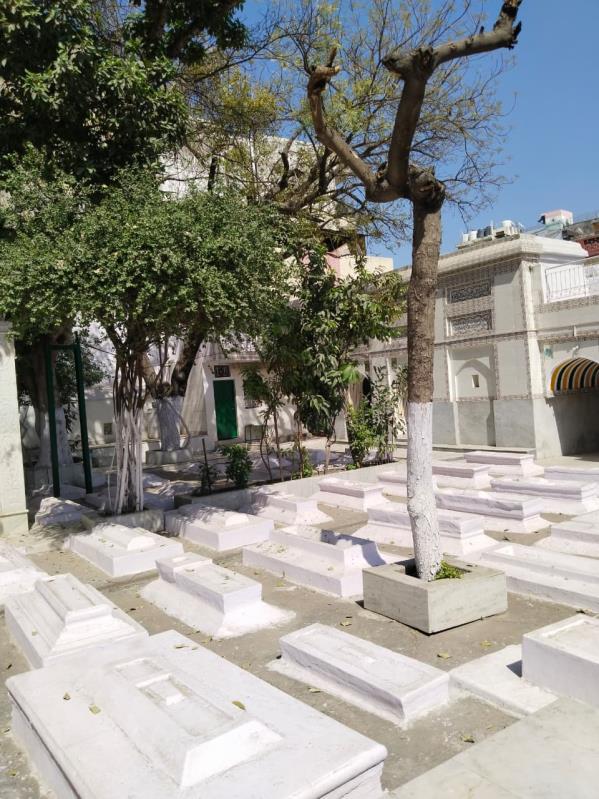
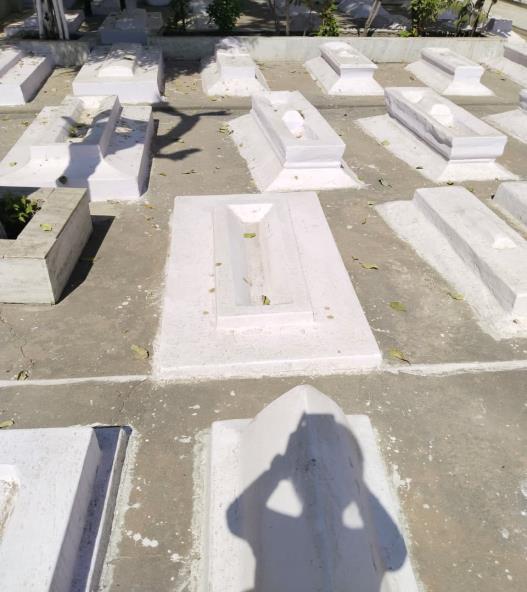
Interpretation: It also show that not all the graves are in similar design, they varies in architectural designs.
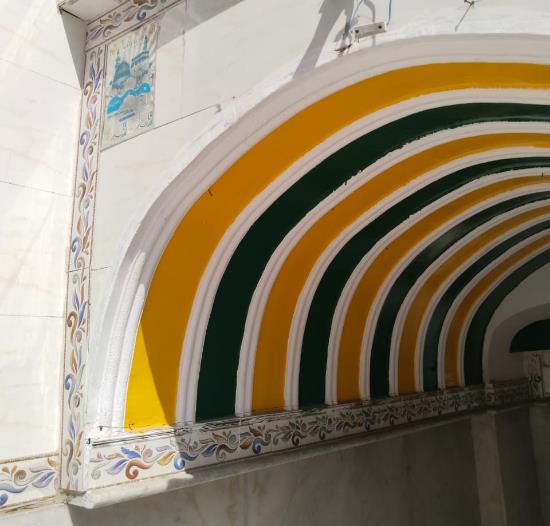
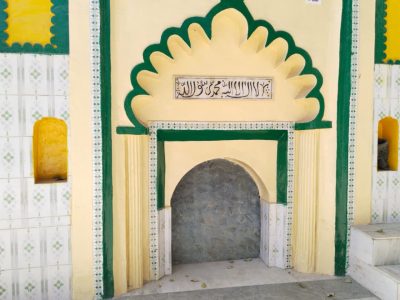
Decorative arched niche featuring painted bands and floral motifs, reflecting later surface treatments and continued use of the structure.
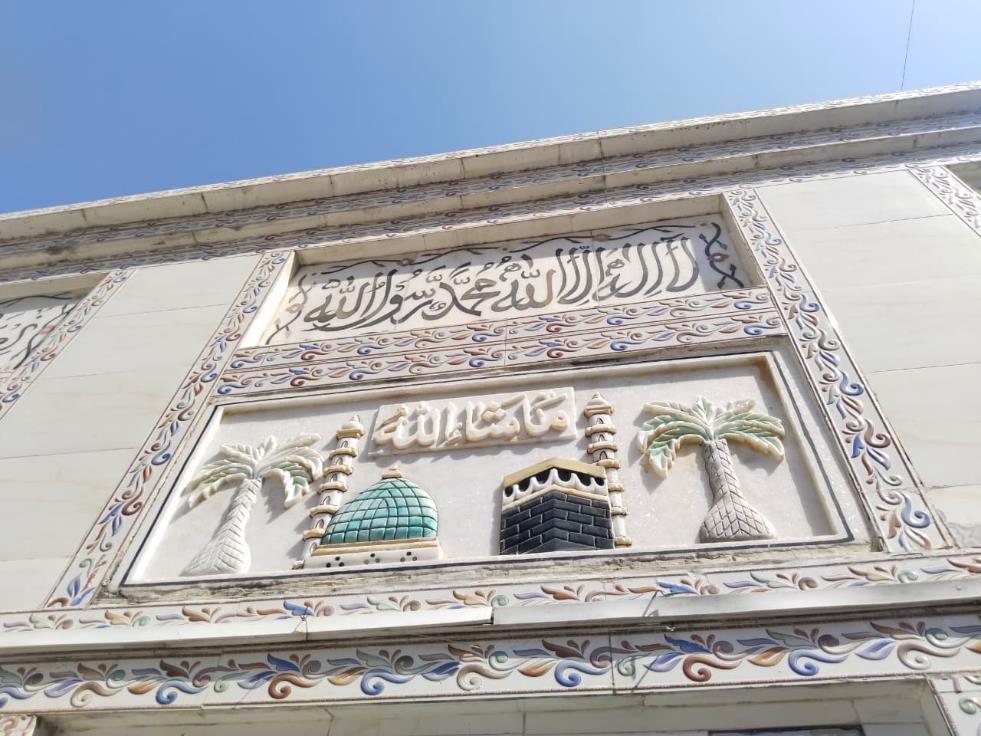
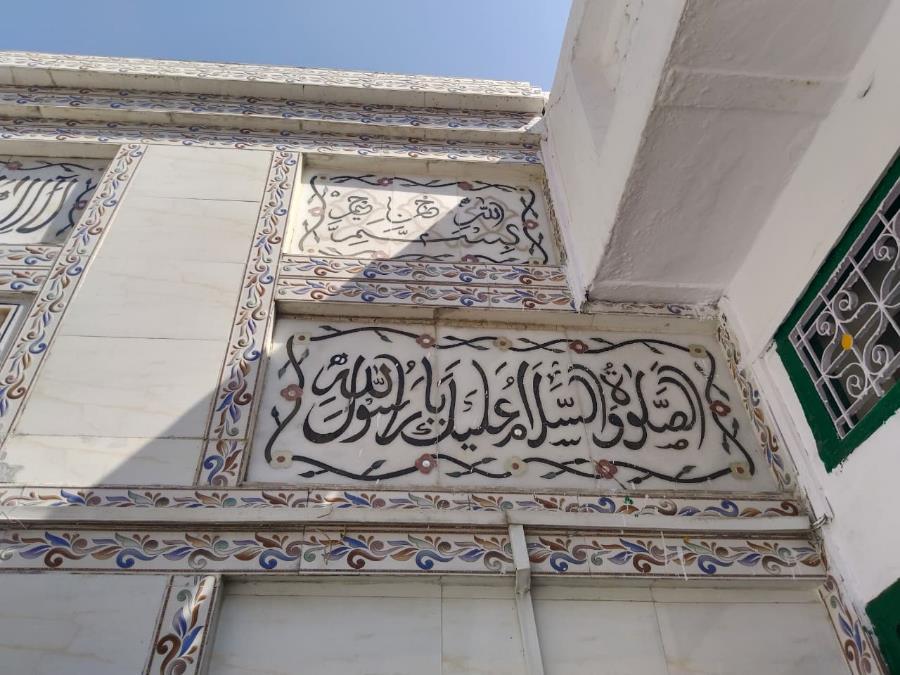
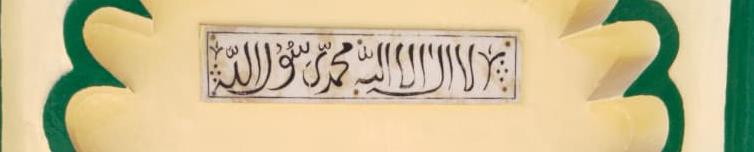
Quranic inscription of the Shahada (“There is no deity except Allah; Muhammad is the Messenger of Allah”) above decorative relief depicting the Kaaba and the dome of Masjid al-Nabawi on the mosque wall at Hijron ka Khanqah.
Another point that should be considered about the building is that it has a mosque inside. This feature can also be viewed as another religious place like the religious practices that occur around the graves. Similar to other traditional khanqahs, it has a mosque that faces Mecca and Medina in accordance with the rules for praying. Facing Mecca is one of the characteristics of the mosques since their foundation days; therefore, this guarantees performing the prayer in the right direction. Thus, the mosque in this khanqah becomes an appropriate place for Namaz and other religious services.
These mosques were usually modest in appearance and correctly oriented to qibla. Such orientation made the spiritual function of the khanqah even stronger, because the khanqah served not only as a residential place but also as a center of religious activity. Thus, having a mosque inside this Hijron ka Khanqah resembles the architectural tradition of other Sufi buildings in medieval India.
This Quranic verse has played a very important role in the Islamic architectural form due to the significance it holds from many different aspects. The verse increases the significance of the building from the spiritual perspective, along with being a guide for visitors. Tomb architecture has been very significant in the architecture of the Lodi period due to the various changes that have taken place in the structural and spatial arrangement. The major feature among all is the form of tomb architecture, especially the use of square and octagonal forms. Square tombs are made of a single dome, whereas octagonal tombs include verandahs in the surroundings along with multiple openings.
Now coming to Hijron ka khanqah, occupies a small area of about 120 square metre in Merauli. Visitors enter through a narrow iron gate, which leads to a set of marble steps. These steps descent into a rectangular courtyard surrounded by low walls made of rubble stones. The courtyard holds around 50 simple tombs, arranged in rows without markers. Each tomb is a low platform, about 2 meters long and 1 meter wide, covered in white plaster (based on Field work by author). This building is different from any other structure in Mehrauli as its construction can be seen as of modern style, located in between the busy area of Mehrauli market.
After entering through the entrance gate, the stairs lead to the courtyard where we can easily see the white washed 49 graves. We can also see a terrace next to the tombs. But one thing here is interesting is that most of the local termed this place as masjid. Even the maulana of a masjid less than 300meters away also referred this place as another masjid. According to the care taker, many peoples from Hijra community come to visit this place not only from different states of India but from all over the Indian Sub-continent (based on Interview with the care taker).
Khanqah is a holy place where not only members of Muslaim Suhfism but from hindu communities come together. In the case of Hijron ka khanqah, located in between the Mehrauli street market, it was initially served as the Sufi religious site of the Hijras. Even the name Khanqah in itself is defined as a place known to serve as the place of communal gatherings, debates, discussions, teachings, food distribution where people coming from various walks of life meet and interact with each other. This interaction leads to exchange of ideas and thoughts which help to create an environment where the Hijra’s community people feel safe.
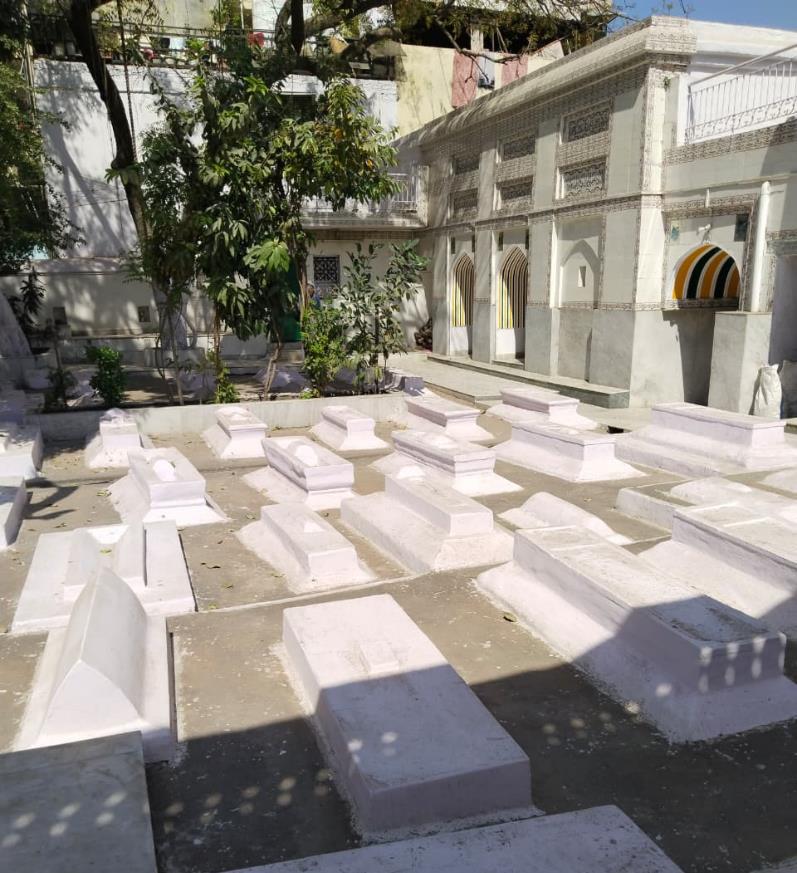
View of the courtyard showing the spatial relationship between graves, boundary walls, and architectural elements, highlighting the compact and integrated layout of the complex.
References
- Alfieri, Bianca Maria. Islamic Architecture in the Indian Subcontinent. Princeton University Press, 2000.7. Nile Green (ed.), Sacred Spaces, Sacred Places: The Sufi Khānqāh and Shrines of South Asia (2012).
- Saiyid Athar Abbas Rizvi, Sufism and Society in Medieval India (1978)Upinder Singh, Delhi: Ancient History (2006)
- George Michell, The Architecture of the Islamic World (1978)Emma Flatt, “The Spatial Dynamics of Ritual and Architecture” (Journal articles, 2019)Academic article, “HIJRON KI KHANQAH” (PDF, Academia.edu, 2020).
- City Monument – Hijron ka Khanqah, Mehrauli – The Delhi Walla, https://thedelhiwalla.blog/2016/01/16/city-monument-hijron-ka-khanqah-mehrauli/.
- Hijron Ka Khanqah – JOEJOURNEYS, https://joejourneys.com/hijron-ka-khanqah.
- Hijron Ki Khanqah | Sites | Living Museum | Project Mehrauli by Blue Darwaza Travel, https://projectmehrauli.com/museum/sites/?n=hijron-ki-khanqah.
- Rizvi, Saiyid Athar Abbas. Sufism and Society in Medieval India. Oxford University Press, 1978.
- Michell, The Architecture of the Islamic World: Its History and Social Meaning. Thames & Hudson, 1978.
- Archaeological Survey of India (ASI) Reports, including site excavation and conservation data [Academia.edu PDF, 2020].
- Oral histories recorded by INTACH, with caretakers and community elders
- Catherine Asher, The Lodi Architecture of Delhi (1992).
- Catherine B. Asher, Architecture of Mughal India (Cambridge: Cambridge University Press, 1992)
- Rajeev Bargoti, “New Light on Architectural Activities of Lodi Period: A Report on Bayana,” Proceedings of the Indian History Congress 56 (1995).
- Vanshika Poddar, “Hijron ka Khanqah: Tracing Histories of Service and Refuge of the Eunuch Community in Delhi.”
- “Hijron ki Khanqah,” descriptive account and compilation of local narratives regarding the site.
The documentation presented here is the result of independent field study conducted by Preeti Kumari. All rights to this work remain with the author and are published on Trip and Tales under her authorization. Trip and Tales holds no ownership over this content.
Trip and Tales sincerely thanks Preeti Kumari for permitting the publication of her work for the benefit of readers and heritage enthusiasts.