
Sacred Stones, Forgotten Stories
Prithvinath Temple
by
Viksit Shukla
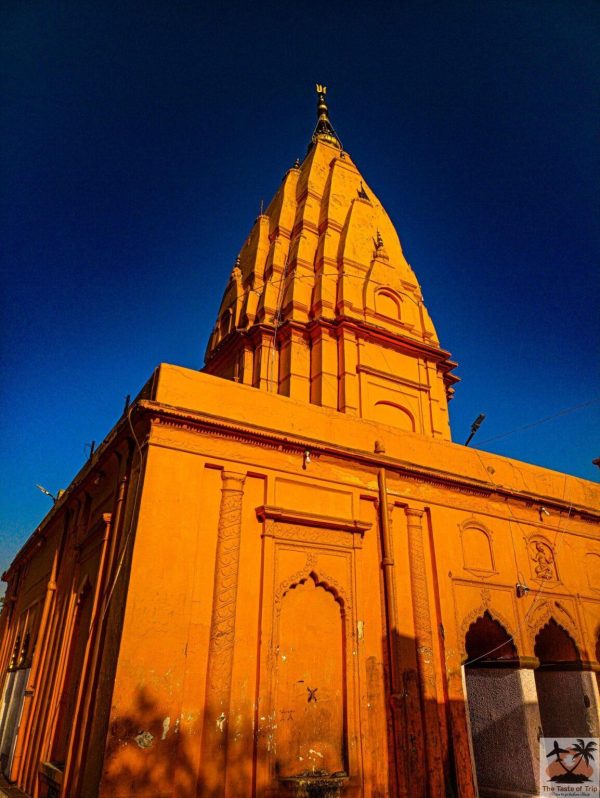
PRITHVINATH TEMPLE : Idols worshipped not preserved (Gonda)
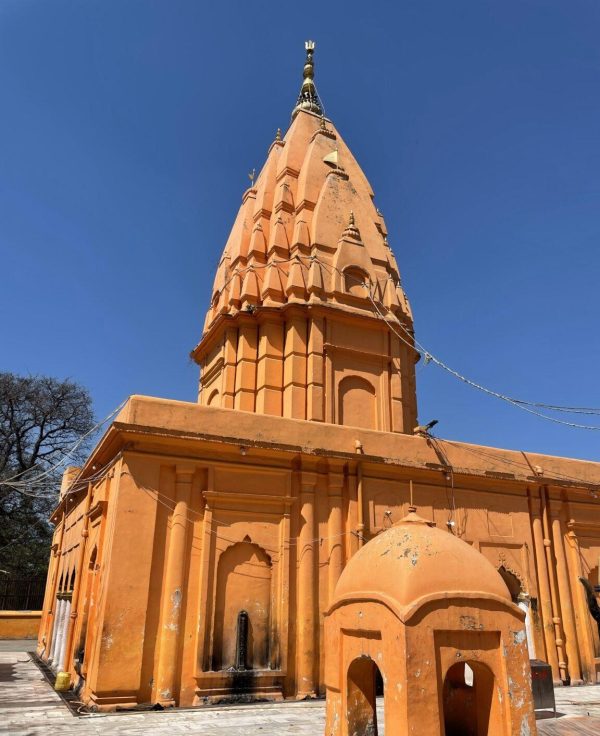
This majestic temple, the Prithvinath Temple, is located in the Khargupur region of Gonda, Uttar Pradesh. It is renowned for housing its main ‘Lingam,’ which is considered Asia’s heaviest and largest. The Lingam is believed to have been established by Bhīma, the second eldest Pandava, during their exile in the Dvapara Yuga. The temple’s peacefulness, serenity, and cultural richness are what attract devotees and tourists the most.
While you will find many online articles about this temple , its large Shivling, religious significance, local traditions, and tourism ; the most important aspect often remains unseen and overlooked, even though it is displayed within the temple itself.
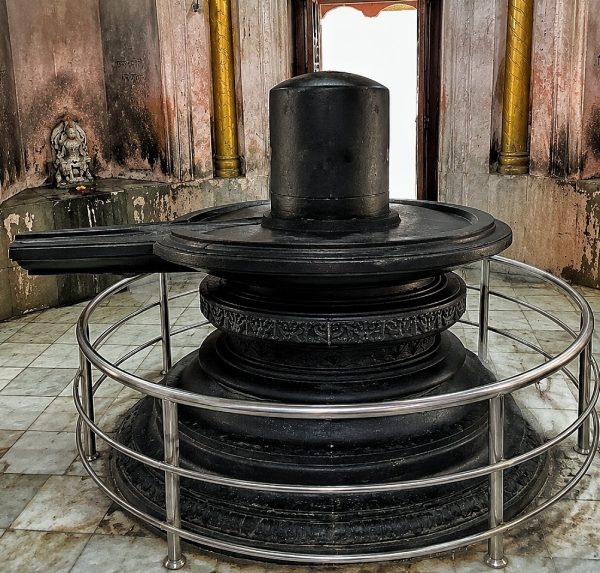
Recently, I visited temples of Gonda and Ayodhya . That’s when I came across this beautiful temple for the first time in my life. The gorgeous design and architecture caught my attention instantly, and not to mention, the Shivling was as tall as I was. But then, my eyes darted to the walls of the temple. Around 7–8 idols were placed against or inside the outer walls. These magnificent pieces were slowly eroding due to wind, rain, and even religious practices. The use of chandan on them, along with offerings of flowers, rice-filled water and milk, was gradually wearing them down. But why am I talking about something that seems so insignificant? Well, it wouldn’t seem insignificant if I told you that these idols are medieval , or perhaps even ancient.
I am deeply passionate about history and ancient culture, and just by looking at those idols, I realized they were not modern. To clear my doubts, I immediately looked for the head priest of the temple. I was eager to learn about the history of this temple, which no one seemed able to explain completely. According to the locals and the priest, the idols were unearthed from deep within the same area where the temple was being constructed around the ancient Linga. These idols, once discovered, were considered the property of the temple and have since been placed there for devotees to see.
It Is only recently that the temple authorities have realized the importance of these idols. They have tried to put up boards instructing devotees not to offer anything on them. However, the damage has already been done, and unfortunately, it seems that people either do not read the instructions carefully or still continue to offer flowers and Chandan to them.
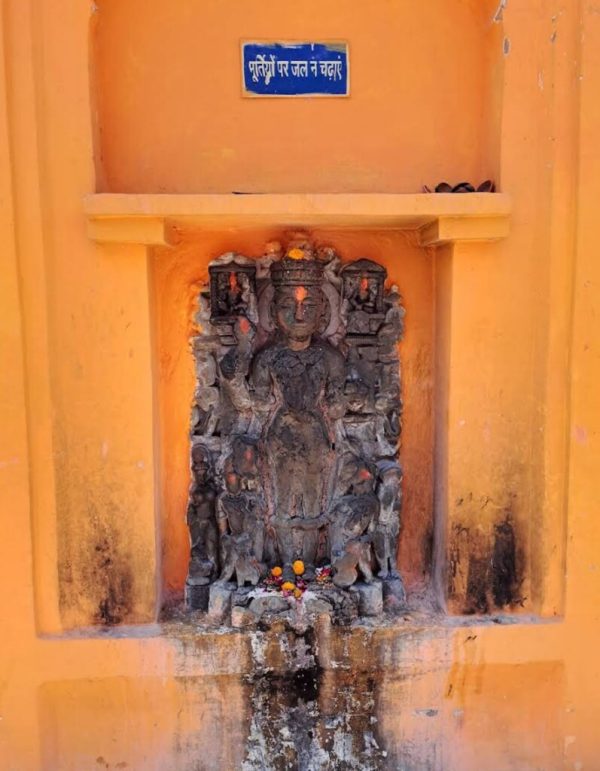
According to the priest, these idols are ancient and medieval, and they certainly look that way. While examining them, I noticed how their style closely resembles the art traditions of India’s ancient schools of art. The depictions and carvings bore a striking similarity to those time-worn masterpieces from centuries past.
Gonda is a neighbouring region to Ayodhya, and scholarly consensus places the compilation of the oldest known version of the Ramayana — the Valmiki Ramayana — between the 3rd and 5th centuries BCE. This marked a major turning point in Ayodhya’s history, establishing it as a significant center of cultural and religious importance. This leads to the conclusion that the Prithvinath Temple may have been one of the grand temples dedicated to the Shaivite pantheon, showcasing the family – pashupatinath, shakti and their sons.
Resemblance to Mathura school of Art :
The idols here resemble the Mathura school of art the most. The characteristics of the Mathura school include a blend of indigenous and Hellenistic styles, realistic human figures with natural proportions — broad shoulders and large chests to convey strength. The art focuses on Buddhist, Hindu, and Jain themes, with prominent iconography of Buddha and deities. Detailed jewelry and lighter clothing distinguish it from the Gandhara school of art. The figures are often depicted in dynamic and lifelike postures, with emotional expressions. The Mathura style also marks the evolution of Buddha’s image from aniconic to human form, with an emphasis on movement and emotion.
Significance of Trade route :
Every temple is not just a cultural hub; it’s also an economic powerhouse. If you observe, ancient temples were often built along trade routes, and the larger the trade route, the larger the temple (e.g., Taxila on the Silk Route, Thanjavur on the southern route). To maintain such a temple, a large number of devotees need to be mobilized, and a substantial amount of money is required. Therefore, trade routes play a crucial role in the temple’s existence. Our temple must have been an important checkpoint on the route leading towards Magadha. This trade route could have connected North-West India, particularly Mathura, to Eastern India, such as Magadha. This theory is further supported by the presence ofAshokan and Gupta inscriptions in the region.
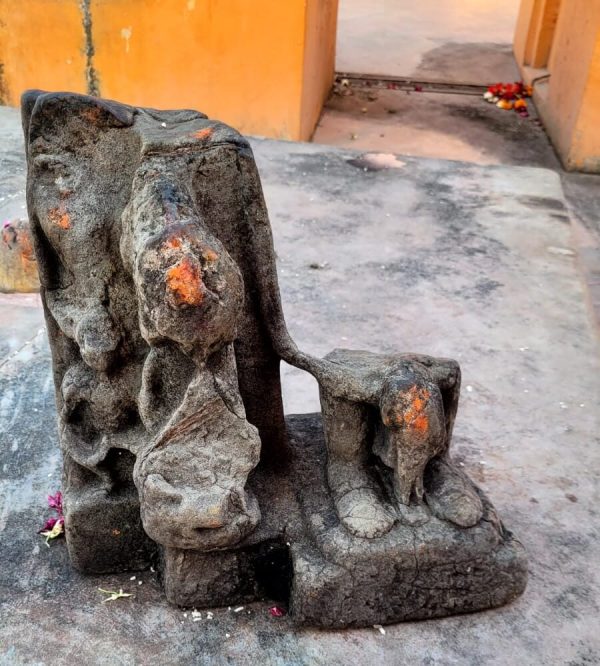
This idol is clearly one of the Trinity gods – Vishnu. It is a standing statue, which suggests that it must have been the main idol of the temple.
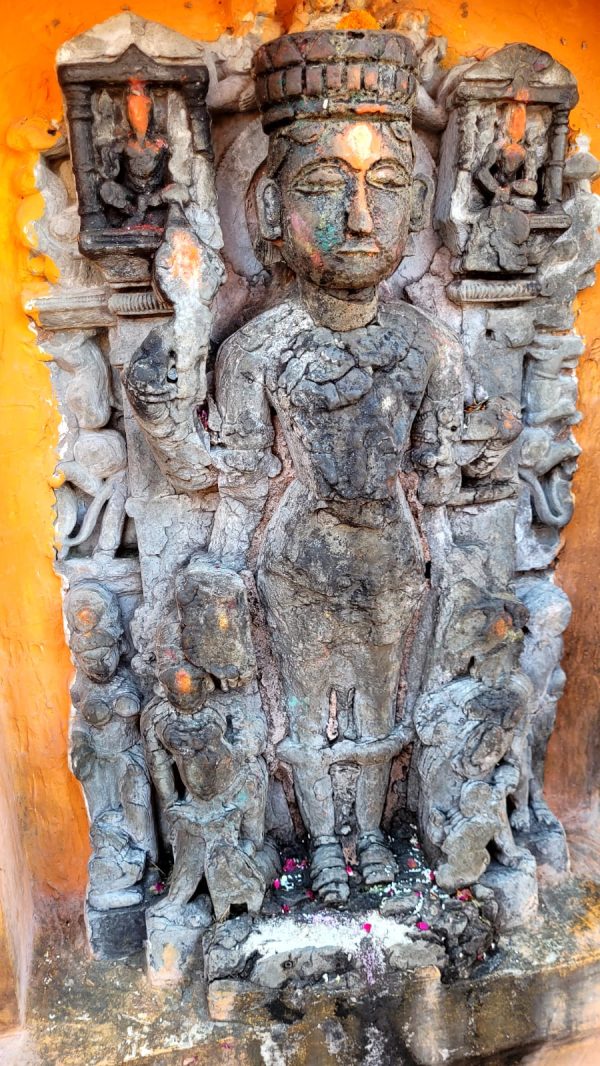
We can identify a figure with a trunk on the top left, which could represent Ganesh, while the figure on the top right could be Lakshmi.
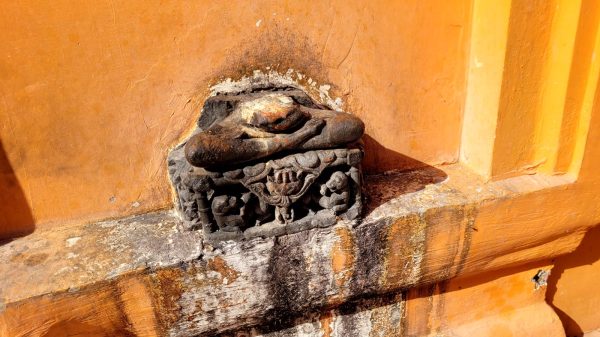
The idol depicted in the picture is a completely broken piece, so we cannot definitively determine whether it represents a main god or a Dwarpal. However, it is common for Dwarpalas to appear alone on idols, and we can see devotees depicted on the sides of this piece. It could have either been a pillar-attached idol or the main idol of the temple. The only way to confirm this is through context provided by professional excavation and survey.
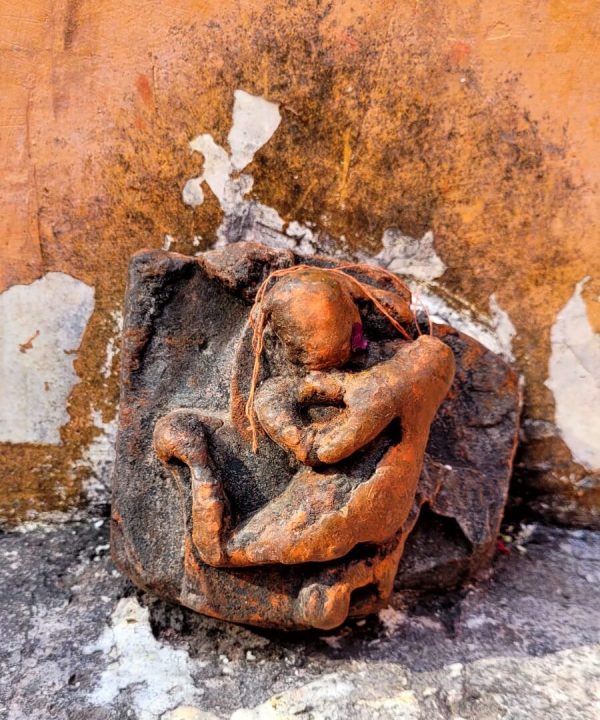
The depicted idol appears to be a small part of a larger piece. Although it is completely eroded, it resembles a Yakshini , the ancient representation of nature. It seems she is offering flowers to the deity, with her hands clasped together and her legs twisted upwards, indicating respect.
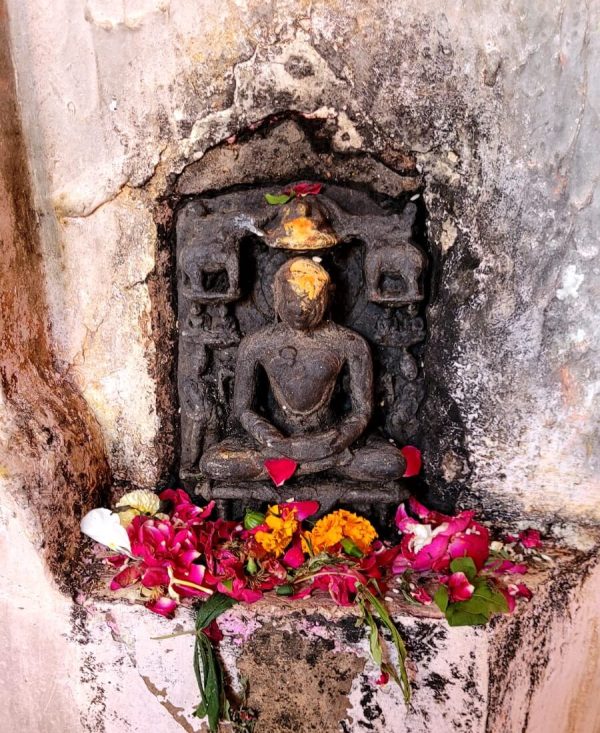
Lastly, among the findings in this temple, the most significant was the speculated Buddha idol. We can identify this as Buddha due to the sitting position, Padmasana. Four disciples of Buddha are seated on either side. Elephants, which were often associated with Buddha, are depicted on top, offering respect. Above, there is a small figure, unfortunately covered in chandan, but from what I can make out, it appears to be the ancient depiction of the personified Bodhi tree.
for example :
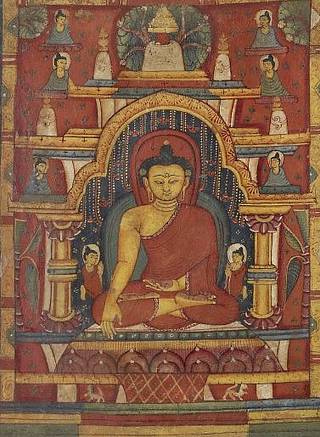
The question arises:
Why are there Shiva, Vishnu, and Buddha idols in the same place? I believe there wasn’t just one, but two shrines and temples in this area. As we know, the larger the trade route, the larger the temple. Even at Takht-i-Bahi, Taxila, evidence of three huge shrines has been found. Similarly, there must have been a small shrine dedicated to Buddha in this region.
It is absolutely heart-wrenching that such a potential piece of heritage sits here, exposed to the storm and sun, without proper care or protection. The local municipality and state government need to take action and begin working on preserving these ancient temples and their remnants in order to unearth more of our historical richness. The Archaeological Department must reach out to these remote areas for further research. As for the devotees, it is crucial not to let religious practices erode the actual heritage.
The documentation presented here is the result of independent field study conducted by Viksit Shukla. All rights to this work remain with the author and are published on Trip and Tales under her authorization. Trip and Tales holds no ownership over this content.
Trip and Tales sincerely thanks Viksit Shukla for permitting the publication of her work for the benefit of readers and heritage enthusiasts.