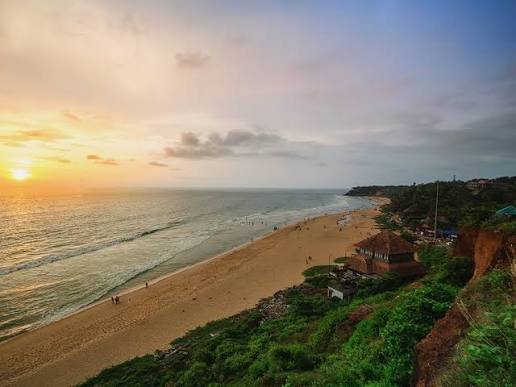
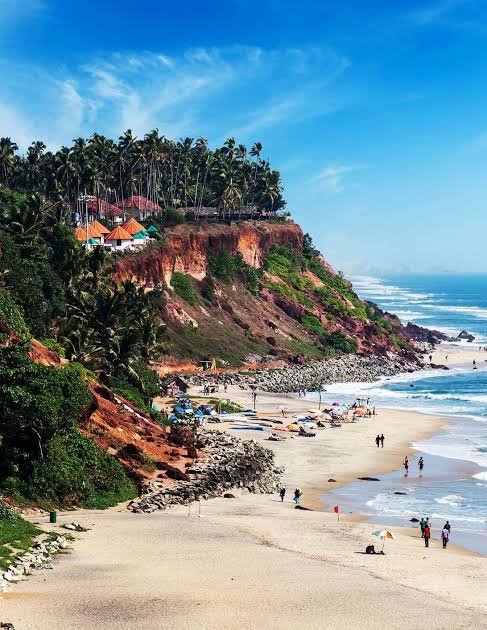
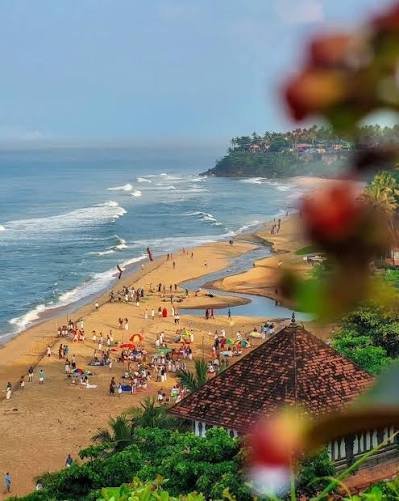
Varkala Beach is different from most beaches along Kerala’s coast. Instead of a flat shoreline opening directly onto the land, the beach sits below a striking stretch of laterite cliffs overlooking the Arabian Sea. These cliffs are part of the Varkala Formation, a recognised geological feature and national geological monument. The beach is also known as Papanasam, a name connected with its religious importance. Hindu pilgrims visit the shore for rituals and take part in traditional ceremonies associated with the waters. At the same time, the clifftop has developed into a lively coastal area with cafés, shops and places to sit above the sea.
Why Varkala’s Cliffs Matter
The most distinctive feature of Varkala is not the sand but the red laterite cliff rising directly above the Arabian Sea. This unusual coastal landscape is known as the Varkala Formation and is recognised as a geological monument by the Geological Survey of India.
The cliffs expose layers of sedimentary rock formed millions of years ago, making this stretch of coast important from a geological point of view. They also create Varkala’s characteristic landscape: the beach below, a broad clifftop above, and the sea stretching out beyond it
Sea
Arabian Sea
Beach
Papanasam shoreline
Cliff
Red laterite rock layers
Papanasam: The Beach’s Sacred Side
COASTAL VARKALA
SACRED VARKALA
Varkala Beach is also known as Papanasam, a name associated with the belief that bathing in its waters can wash away sins. Because of this tradition, the shoreline has long been connected with Hindu religious practices.
The beach becomes particularly significant for ancestral rituals, including Vavu Bali, performed for deceased family members. Priests conduct ceremonies near the shore, while devotees use the sea as part of these traditional rites.
This gives Varkala a character that differs from a purely recreational beach. The same stretch of coast serves as a place for swimming, walking and enjoying the sea while also remaining an important pilgrimage site.
Things to Do at Varkala Beach
Varkala works well when you want to slow down rather than follow a packed sightseeing schedule. The beach and cliff area offer a few simple activities that fit naturally into the setting.
Walk along the beach
The shoreline is pleasant for an unhurried walk, particularly when the sun is lower.
Watch the sunset from the cliff
The elevated viewpoint gives a broad view across the Arabian Sea.
Try water activities
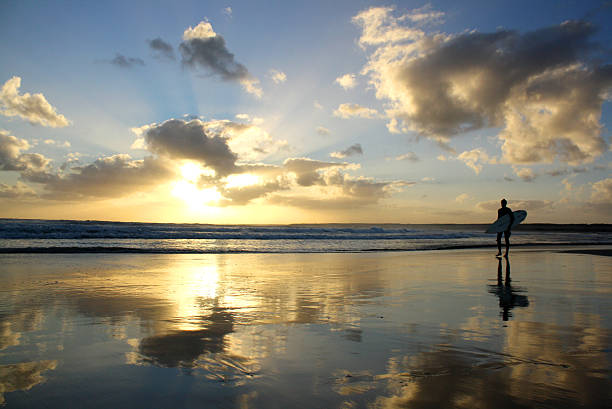
Depending on sea and weather conditions, activities such as surfing may be available through local operators.
Explore the clifftop
Walk along the pedestrian stretch to browse its cafés, restaurants and small shops.
The Cliffside After Sunset
Varkala changes character once the heat of the afternoon fades. The clifftop becomes the busier part of the area, with cafés, restaurants and small shops staying active into the evening.
Rather than treating the cliff only as a viewpoint, it is worth spending some time walking along the promenade. You can stop for a meal, browse the shops or simply look out towards the sea. The beach itself becomes quieter below, creating a noticeable contrast between the lively clifftop and the open shoreline.
What the Beach Experience Is Like
Varkala Beach is best understood as a cliff-top and shoreline experience, rather than a beach that is only about swimming. The main beach sits below the cliffs, while the area above has a long pedestrian stretch with cafés, small shops and places to stop for the sea view.
The shoreline is relatively wide in parts, and the Arabian Sea gives the beach a more open feel than the enclosed coves found in some other coastal destinations. During the day, people come down to the sand, while the clifftop becomes a natural place to walk and watch the sunset.
A useful distinction: the beach and the cliff are closely connected, but they are not the same experience. You can spend time on the sand below or stay above and explore the clifftop without needing to treat the beach as a single activity.
A Coastline Shaped by Time
Varkala’s cliffs are unusual because they occur along an otherwise relatively flat stretch of Kerala’s coastline. The exposed rock layers provide clues about the area’s geological past and are one reason the Varkala Formation has been recognised as a site of geological importance.
Look closely at the cliff face and you can see that it is not a single uniform wall. Different layers and textures appear across the exposed surface. Their appearance changes with weathering, vegetation and the light falling across the cliff.
This geological character is easy to overlook when Varkala is viewed simply as a beach destination, but it is one of the features that makes the coastline distinctive.
Nearby Places
Varkala Cliff
The laterite cliffs directly overlooking the beach are the defining landscape of Varkala and are lined with cafés, shops and walking paths.
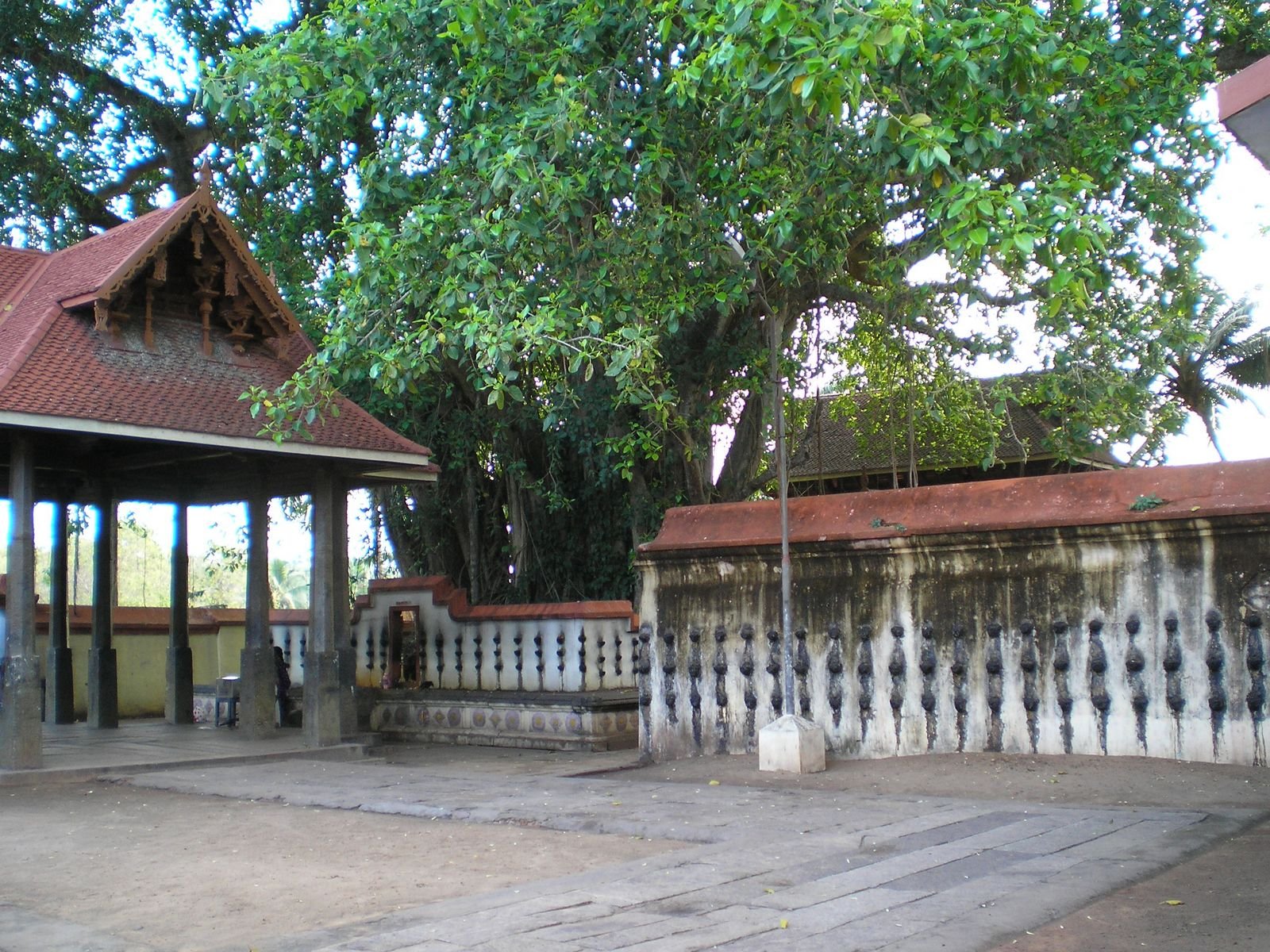
Janardhana Swamy Temple
Known for its religious importance and connection with the Papanasam tradition.
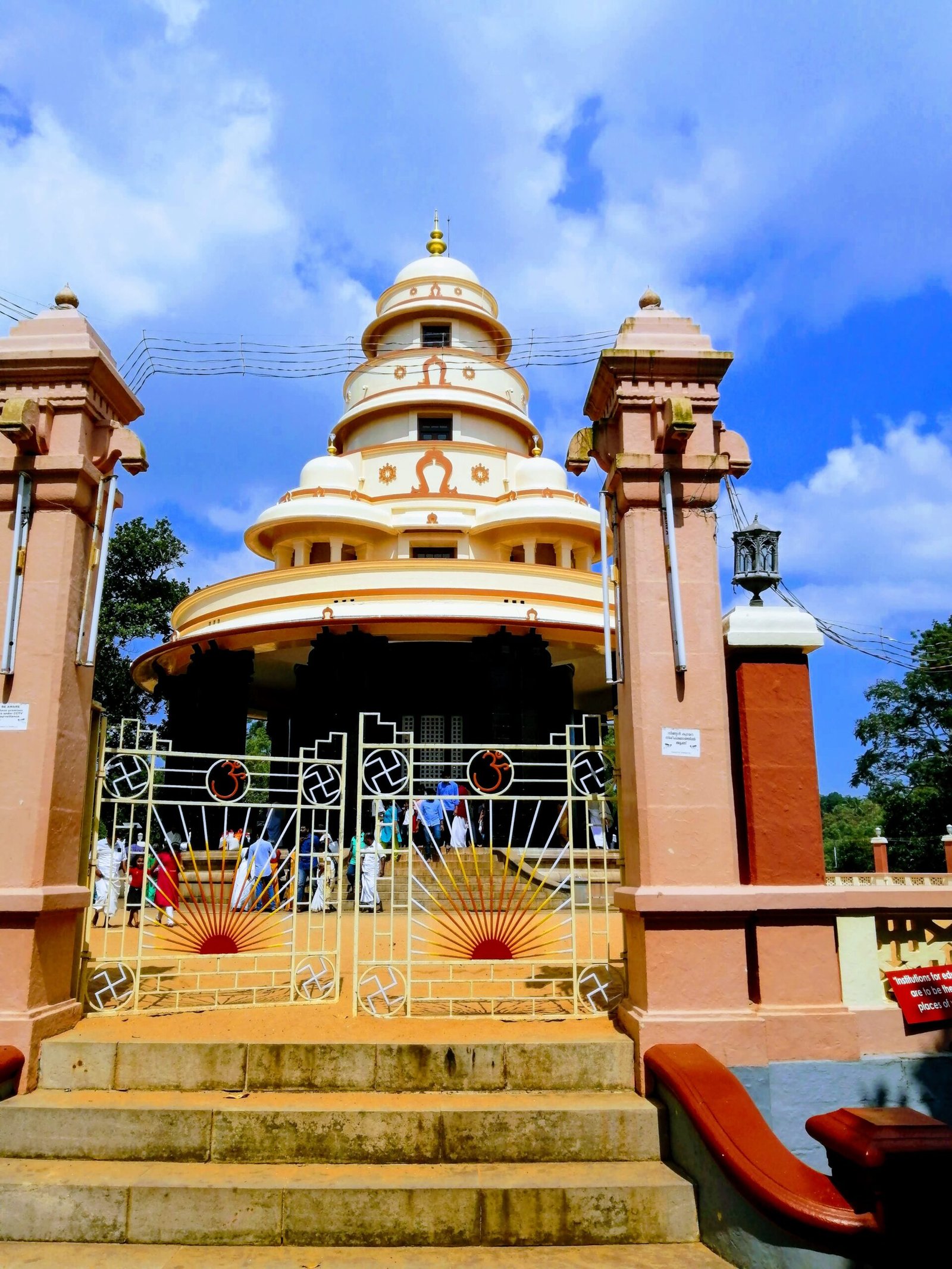
Sivagiri Mutt
A short drive from the beach, this spiritual centre is associated with Sree Narayana Guru and his teachings.
Kappil Beach
A quieter coastal spot north of Varkala, where the backwaters meet the Arabian Sea and create a distinctly different landscape.
Conclusion
Varkala Beach is memorable for the landscape that surrounds it as much as for the shoreline itself. The red cliffs, open Arabian Sea and Papanasam tradition give this stretch of Kerala coast a character that is quite different from a typical beach destination. A visit can be as simple as walking along the sand and watching the sea, followed by an evening on the cliff exploring its cafés and shops.