
¤ 6 minutes Read
Jantar Mantar Jaipur Travel Guide - Explore the UNESCO Astronomical Observatory
A complete tourist and cultural guide

Jantar Mantar Jaipur is a UNESCO World Heritage Site and one of the world’s largest and best-preserved astronomical observatories. Located in the heart of Jaipur near the City Palace, this remarkable monument features a collection of massive stone instruments designed to measure time, track celestial bodies, and study astronomical phenomena with exceptional accuracy. It stands as a testament to India’s scientific knowledge and architectural brilliance. Built in 1734 by Maharaja Sawai Jai Singh II, a passionate astronomer and the founder of Jaipur, Jantar Mantar houses 19 astronomical instruments, including the famous Samrat Yantra, the world’s largest stone sundial. The observatory was created to improve astronomical observations and the accuracy of calendars and celestial calculations.
Architecture of Jantar Mantar Jaipur
Jantar Mantar Jaipur is an extraordinary example of scientific architecture, where monumental stone instruments were designed with remarkable precision for astronomical observations. Built using stone and marble, the observatory features massive geometric structures that accurately measure time, track celestial bodies, and calculate astronomical events. Its innovative design reflects the advanced scientific knowledge of 18th-century India.
Samrat Yantra
The Samrat Yantra is the world’s largest stone sundial and the observatory’s most iconic instrument. It measures local time with remarkable precision using the position of the sun.
Jai Prakash Yantra
This unique hemispherical instrument was designed to observe the position of celestial objects and assist astronomers in making accurate astronomical calculations.
Rama Yantra
The Rama Yantra consists of two cylindrical structures used to measure the altitude and azimuth of celestial bodies, making it one of the observatory’s most innovative instruments.
Misra Yantra
The Misra Yantra is a composite instrument that was used to determine the longest and shortest days of the year and calculate time in different locations.
Precision Through Design
Every instrument at Jantar Mantar was carefully positioned and constructed using mathematical principles, allowing astronomers to make highly accurate observations long before the advent of modern technology.
Things to See at Jantar Mantar Jaipur
Jantar Mantar Jaipur is home to 19 remarkable astronomical instruments, each designed for precise observations of celestial bodies and timekeeping. Visitors can explore these fascinating structures while learning about the scientific achievements of 18th-century India.
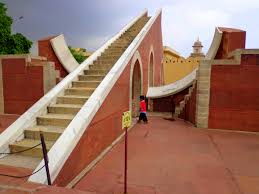
Samrat Yantra
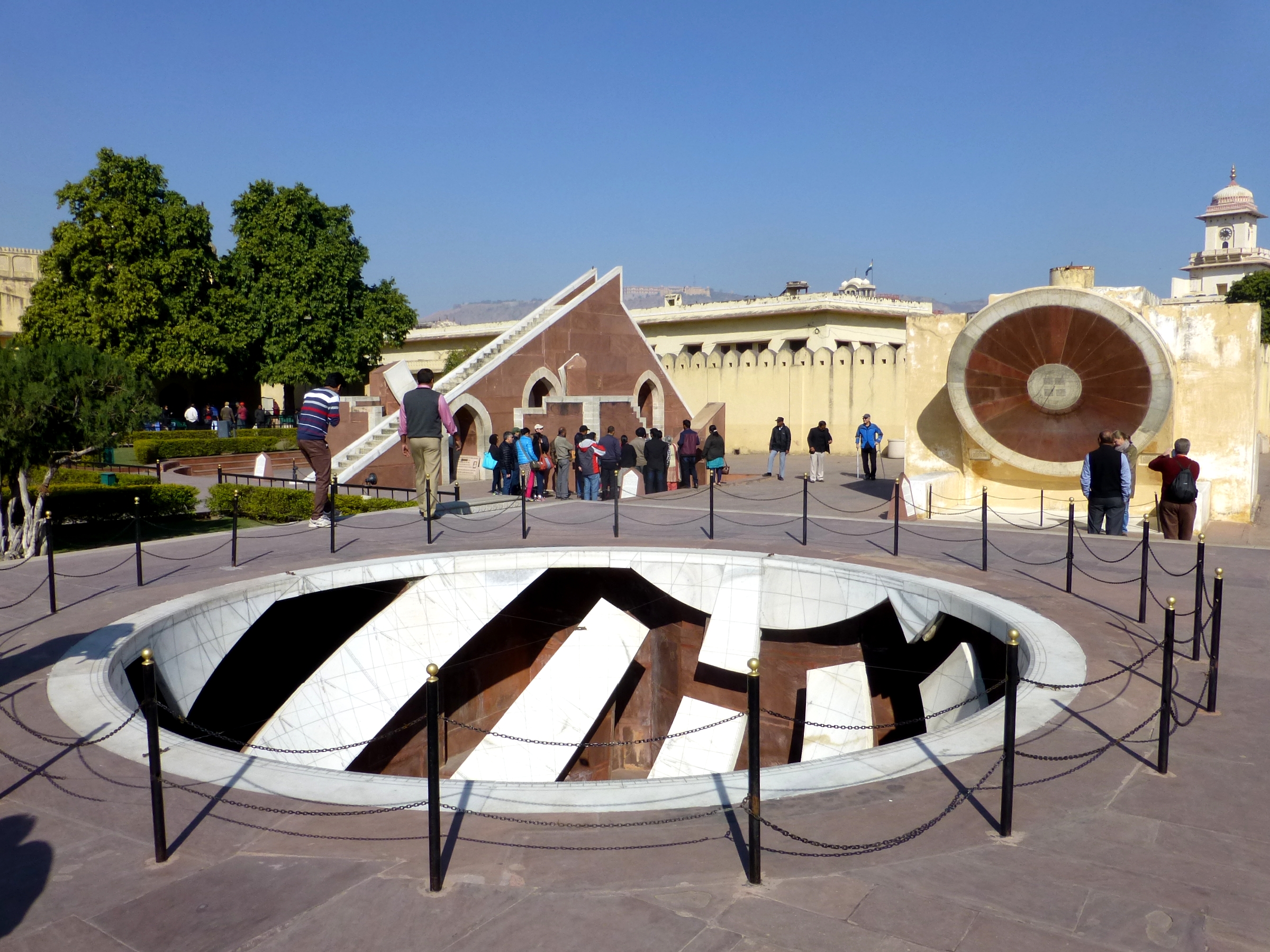
Jai Prakash Yantra
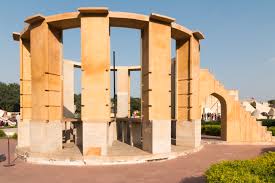
Rama Yantra
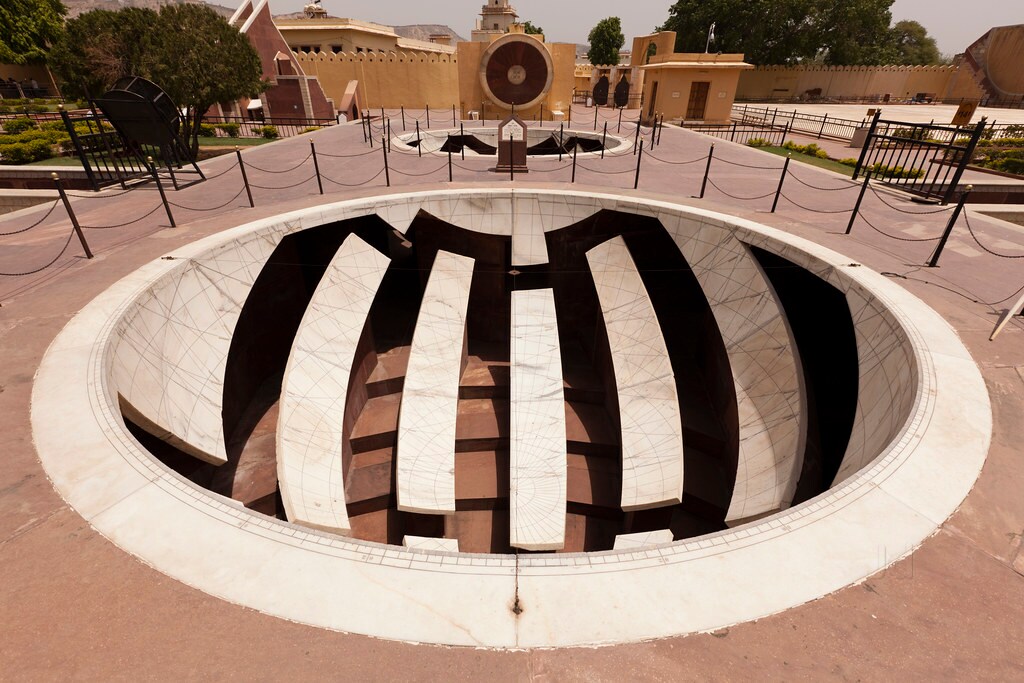
Misra Yantra
History of Jantar Mantar Jaipur
Jantar Mantar Jaipur is one of India’s most remarkable scientific monuments, built to advance astronomical observations and improve the accuracy of celestial calculations. Constructed in 1734 by Maharaja Sawai Jai Singh II, the observatory reflects the ruler’s deep interest in astronomy, mathematics, and architecture. It is the largest and best-preserved of the five Jantar Mantar observatories built across India.
Vision of Maharaja Sawai Jai Singh II
A renowned scholar and astronomer, Maharaja Sawai Jai Singh II commissioned the observatory to improve the precision of astronomical measurements and develop more accurate calendars.
One of Five Observatories
Jantar Mantar Jaipur is one of the five observatories established by Maharaja Sawai Jai Singh II in India, with the others located in Delhi, Ujjain, Varanasi, and Mathura (now largely lost).
A Center for Scientific Study
The observatory was used to observe planetary movements, determine time, predict eclipses, and calculate celestial positions with remarkable precision.
A Global Scientific Landmark
Today, Jantar Mantar Jaipur is recognized as a UNESCO World Heritage Site and remains one of the world’s finest examples of pre-modern astronomical engineering and scientific innovation.

Interesting Facts About Jantar Mantar Jaipur
Jantar Mantar Jaipur is one of the world’s most remarkable astronomical observatories and a masterpiece of scientific innovation. Its massive stone instruments continue to demonstrate the advanced astronomical knowledge and engineering skills of 18th-century India.
- Built in 1734 by Maharaja Sawai Jai Singh II
- UNESCO World Heritage Site since 2010
- Home to the world’s largest stone sundial, the Samrat Yantra
- Features 19 astronomical instruments
- Designed for observing celestial bodies and measuring time
- One of Jaipur’s most visited historical landmarks
Nearby Attractions
Jantar Mantar Jaipur is centrally located in the heart of the Pink City, making it easy to explore several of Jaipur’s iconic landmarks, royal palaces, and bustling markets in a single trip.

City Palace Jaipur

Hawa Mahal

Johari Bazaar
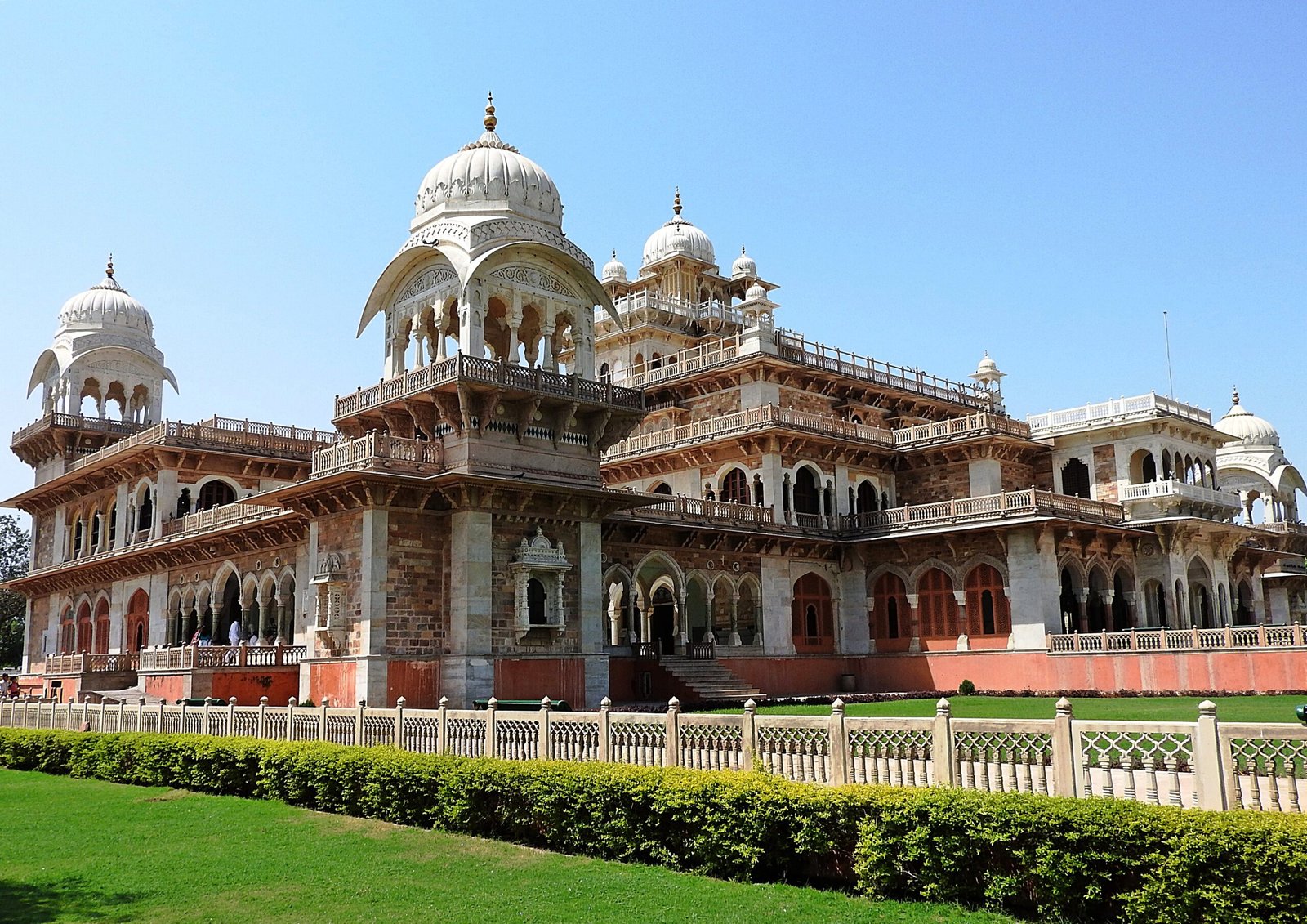
Albert Hall Museum
Conclusion
Explore Rajasthan

Varanasi Blogs
- Uttar Pradesh Cultural guide
- Places to visit in Varanasi
- Places to visit nearby Varanasi
- India’s most popular destination
- India’s archaeological marvels
Recommended articles
- Uttar Pradesh Cultural guide
- Places to visit in Varanasi
- Places to visit nearby Varanasi
- India’s most popular destination