
¤ 9 minutes Read
Agra Fort - A Grand Mughal Citadel on the Yamuna

Agra Fort in Agra was not built in one phase. Agra Fort had a fort before Emperor Akbar began rebuilding Agra Fort in 1565 turning Agra Fort into a powerful imperial complex, in red sandstone. Later Mughal rulers changed Agra Forts character further Shah Jahan, who added white‑marble palaces and refined decorative work. As a result Agra Fort today tells the story of generations of Mughal rule rather than representing the work of one emperor alone.
Historical Highlights
Akbar’s Fortress
The rebuilding that began in 1565 made Agra Fort a key center of Mughal power.
A Changing Royal Complex
Jahangir and Shah Jahan continued modifying the fort instead of leaving Akbar’s original design untouched.
From Red Stone to Marble
The contrast, between Akbars sandstone buildings and Shah Jahans marble additions records the changing taste of Mughal architecture showing how Mughal architecture styles have shifted.
UNESCO Heritage Site
Agra Fort received World Heritage status in 1983. Agra Fort remains one of Agra’s important historic landmarks.
Architecture: Where a Fortress Became a Palace
Agra Fort is interesting because it does not look like one building that was made all once. The design of Agra Fort changed as different Mughal rulers added their parts to the complex. Akbar’s buildings at Agra Fort are mainly made of sandstone and have carved details while Shah Jahan added white marble, pietra dura and more delicate Persian‑inspired decorations. The result is a fortress that feels partly military and, like a royal palace.

The Red-Sandstone Fortress
The fort’s huge walls give the fort a look. These walls stretch 2.5 km and were built to protect the fort. The walls have bastions and openings that the army uses. Inside the fort’s walls a fancy royal area lies, not just a plain army camp.
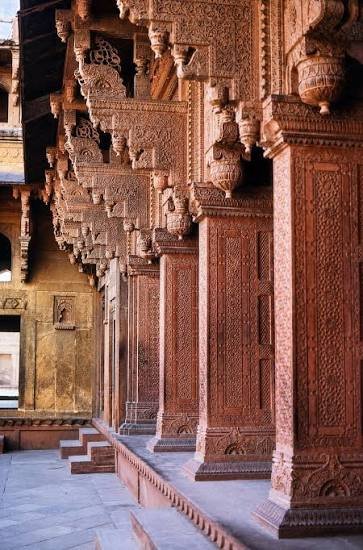
Akbar’s Heavier, Sculptural Style
The earlier buildings associated with Akbar use a lot of sandstone. Their carved brackets, pillars and other details show the influence of craftsmanship with decorative forms that feature animals and other traditional motifs. This makes the older sections noticeably different, from the marble buildings of Shah Jahan.
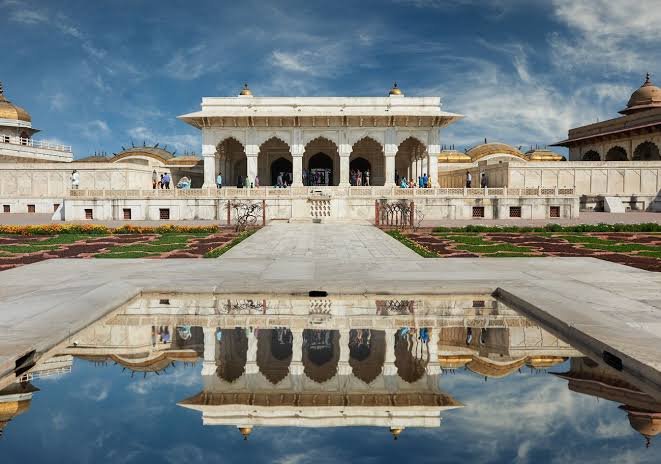
Shah Jahan’s White-Marble Transformation
Shah Jahan made changes to the look of the fort. White marble took the place of sandstone in many royal buildings. Also pietra dura, tile work that was covered in glaze and designs, from Persia gave the buildings a more elegant feel. Khas Mahal is one of the examples of this new style.
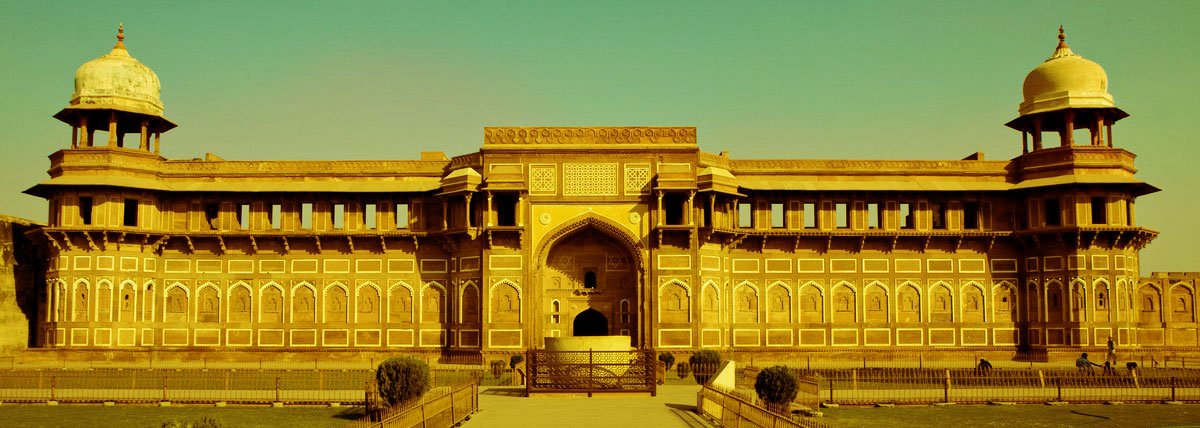
The Fort in Numbers & Stories
Agra Fort is often called a fort but that does not show what really makes the place special. Inside the walls there was a whole imperial city. There were places where kings lived places where they met people, mosques and other areas connected with the life of the court.
- 1565 : Major rebuilding began under Akbar
- 2.5 km : Length of the fortified enclosure
- 1983 : Year Agra Fort became a UNESCO World Heritage Site
- Yamuna : The river beside the fort
From Royal Residence to Fortress-Palace
Agra Fort was not built in one phase. The site had a fort before Emperor Akbar began rebuilding Agra Fort in 1565 turning Agra Fort into a powerful imperial complex, in red sandstone. Later Mughal rulers changed Agra Fort character further Shah Jahan, who added white-marble palaces and improved decorative work. As a result Agra Fort today tells the story of generations of Mughal rule rather than representing the work of one emperor alone.
1565 – Akbar Rebuilds the Fort
Akbar began a reconstruction of the old fort using red sandstone on a huge scale. Was amazed by how Akbar combined defensive walls, with palaces and spaces needed for an imperial court. The new complex was designed to protect the city and to host the emperor’s activities.
Jahangir’s Period -The Palace Complex Grows
The fort kept working as a home during Jahangirs time. Jahangiri Mahal and the areas, around it show the building styles that started under Akbar and stayed on for the group of rulers.
Shah Jahan – Marble Replaces Much of the Red Stone
Shah Jahan changed the look of parts of Agra Fort in a way. He had several royal buildings rebuilt or built ones using white marble. These buildings were decorated with pietra dura designs inspired by art and fine details. This style replaced the look of the fort, which had been mostly made of red sandstone and felt heavier, in design.
1983 – UNESCO Recognition
Agra Fort was added to the UNESCO World Heritage List in 1983. Agra Fort is a major Mughal monument and imperial complex.
What to See Inside Agra Fort
Agra Fort is best seen as a set of different spaces instead of just one big monument. When I walk through Agra Fort I notice that some parts feel very strong and defensive while other parts are surprisingly delicate with marble screens, gardens and decorated palace rooms. A few buildings, in Agra Fort also hold stories that are closely tied to Mughal court life.
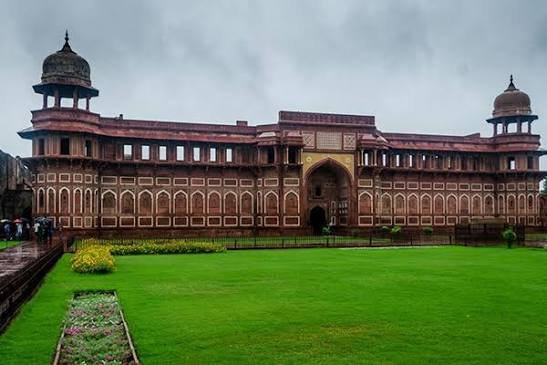
Jahangiri Mahal
One of the forts palaces that still stands Jahangiri Mahal is from the earlier part of the complex and is closely linked to Akbars time. The red sandstone and the details that are carved into it make it look very different, from the marble buildings built later by Shah Jahan.
Diwan-i-Am
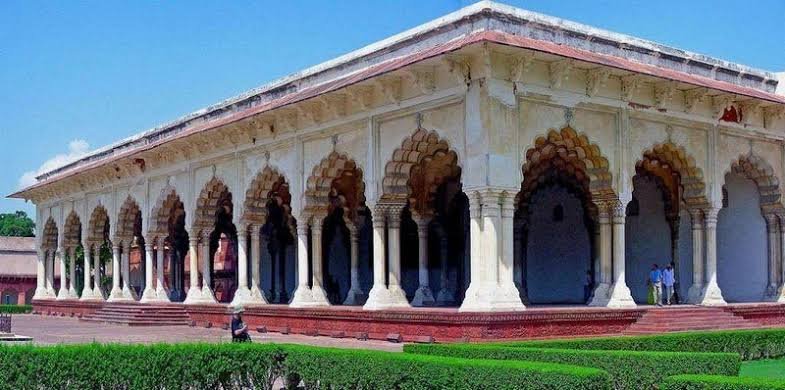
I remember the Hall of Public Audience the Hall of Public Audience where the emperor handled petitions and matters that were brought before the court. The open pillared setting of the Hall of Public Audience gives a picture of how formal royal gatherings were organized.
Khas Mahal
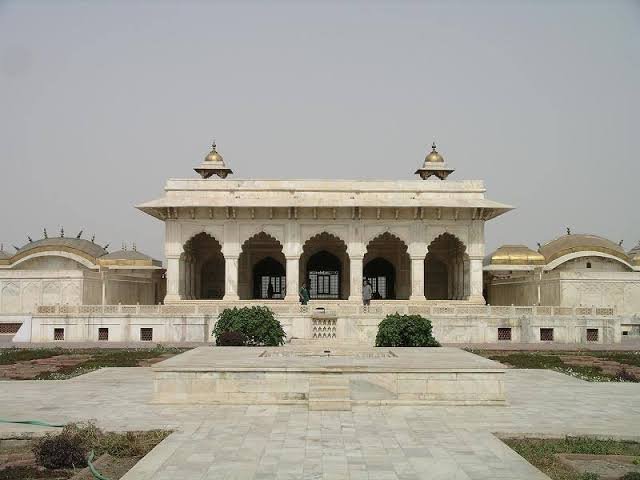
Khas Mahal is one of the fort’s white‑marble structures. Notice that Khas Mahal’s decoration and palace setting show how Shah Jahan transformed sections of the older red‑sandstone fortress into a more luxurious royal residence.
Sheesh Mahal
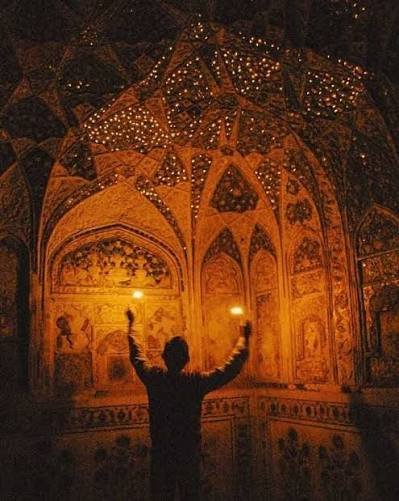
The Palace of Mirrors is famous, for the way it uses small mirror pieces in its interior design. It is not the size of the palace that stands out. The careful and detailed work done on the inside that makes the space truly memorable.
Nearby Attractions Around Agra Fort
Agra Fort stands in the heart of one of India’s most impressive collections of Mughal-era buildings. When you visit Agra Fort you can easily combine it with a trip to the Taj Mahal and a few smaller known spots, along the Yamuna River. This way travellers get a view of how Mughal architecture evolved over time.

Taj Mahal

Mehtab Bagh

Ram Bagh

Akbar’s Tomb, Sikandra
Conclusion: Why Agra Fort Still Matters
Agra Fort is often mistaken for another big Mughal monument but Agra Fort really stands out because Agra Fort holds so many stories inside Agra Forts walls. Agra Fort started as a fortress during Akbars time and later turned into a grand royal home with each new ruler adding a new touch to the buildings. The heavy red stone of the parts of Agra Fort contrasts with the light marble that Shah Jahan added, making Agra Forts whole area very interesting to walk through. Agra Fort is also linked to the Taj Mahal, the Yamuna river and the last years of Shah Jahan adding another layer of meaning for visitors. Agra Fort became a UNESCO World Heritage Site in 1983. Today Agra Fort is one of the best places, in Agra to see how Mughal rulers lived governed and built their world.
Explore Uttar Pradesh
Varanasi Blogs
- Uttar Pradesh Cultural guide
- Places to visit in Varanasi
- Places to visit nearby Varanasi
- India’s most popular destination
- India’s archaeological marvels
Recommended articles
- Uttar Pradesh Cultural guide
- Places to visit in Varanasi
- Places to visit nearby Varanasi
- India’s most popular destination