
¤ 6 minutes Read
Moti Masjid Agra - The Elegant Pearl Mosque of Agra Fort
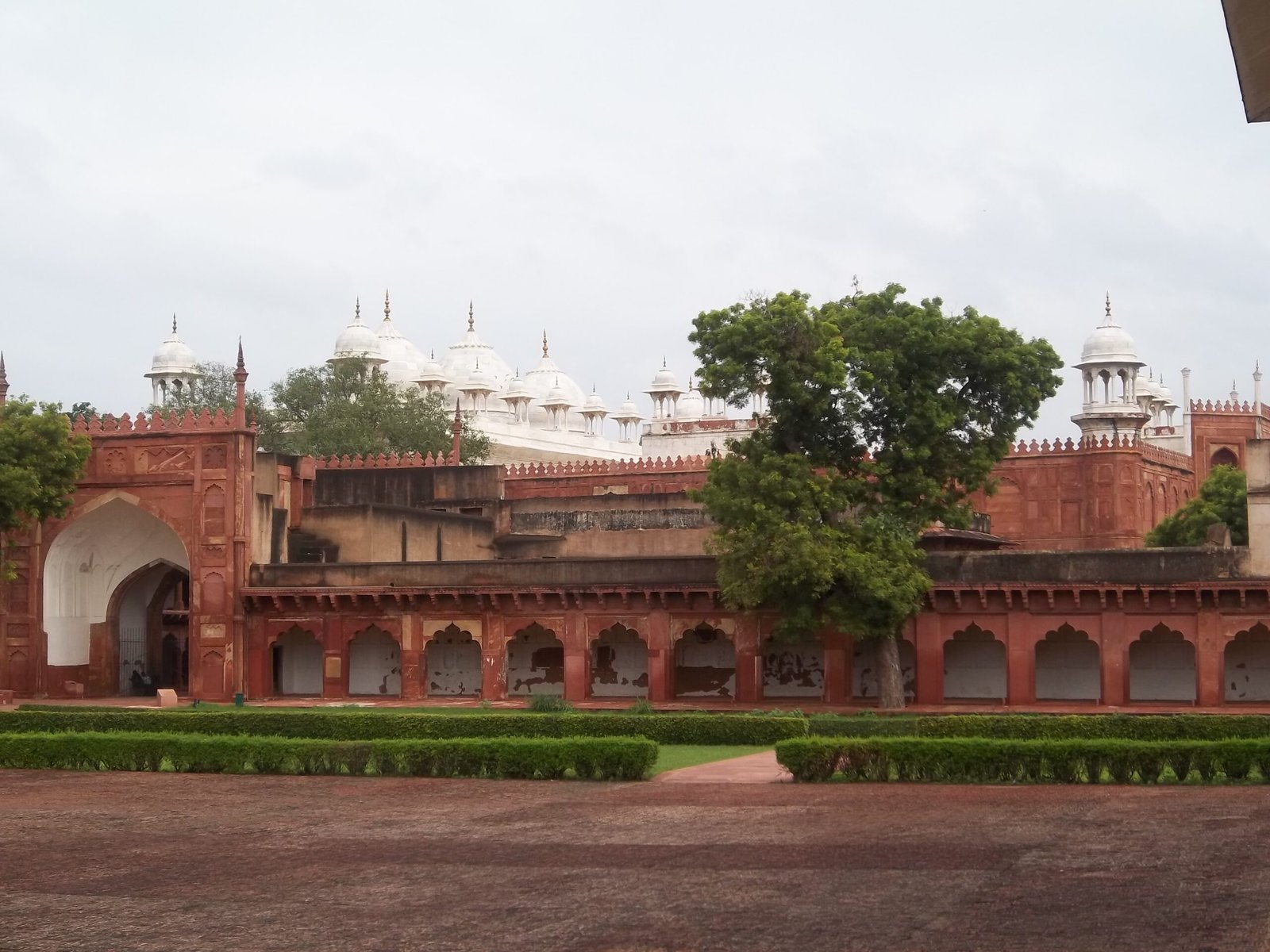
Moti Masjid, or the Pearl Mosque, sits inside Agra Fort. Shah Jahan built it between 1648 and 1654 for members of the royal court. Unlike the red sandstone buildings around it, the mosque uses white marble as its main material. The change, in colour is what catches your eye first. I notice the red sandstone frames the mosque while the white marble makes its courtyard and prayer hall look much lighter. The design keeps decoration under control by using arches, domes and balanced spaces.Moti Masjid, which is part of the Agra Fort complex is best explored with the forts other royal buildings. Moti Masjid, with its scale and simple design offers a quieter contrast, to the larger structures of Agra Fort nearby.
History: Built for Shah Jahan’s Royal Court
Shah Jahan added Moti Masjid to Agra Fort during his reign. Construction took place between 1648 and 1654, when the emperor was also adding several marble structures to the fort. The mosque served members of the royal court.
1648 - Construction Begins
The construction of Moti Masjid began as part of Shah Jahan’s work at Agra Fort. The mosque stands near the Diwan-i-Aam, the hall where the emperor met officials and the public.
1648–1654 - The Pearl Mosque Takes Shape
White marble became the main feature of the building. This gave Moti Masjid a very different look from the red sandstone structures that dominate much of Agra Fort. Its simple design also reflects the elegant style seen in many buildings from Shah Jahan’s time.
A Mosque Within the Fort
Moti Masjid was never a separate city mosque. It formed part of the Mughal complex inside Agra Fort and served the religious needs of the royal court. Today, it remains one of the notable buildings within the fort.
What to Notice Inside Moti Masjid
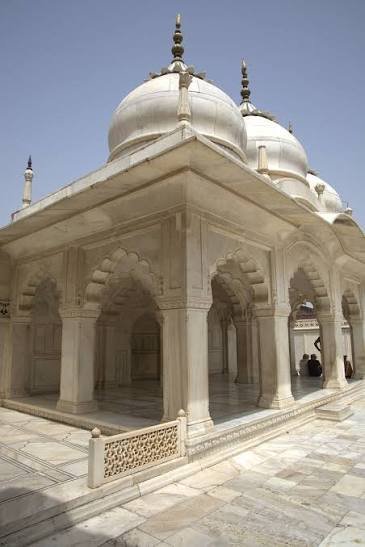
The Marble Courtyard
The courtyard is made of marble. Has arcaded cloisters on three sides. In the middle there is a marble tank that draws attention to the area making it a strong focal point. In one corner an octagonal marble pillar, with a stands tall.
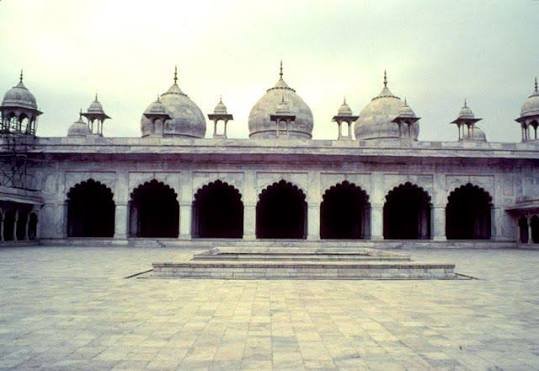
Seven Arches of the Prayer Hall
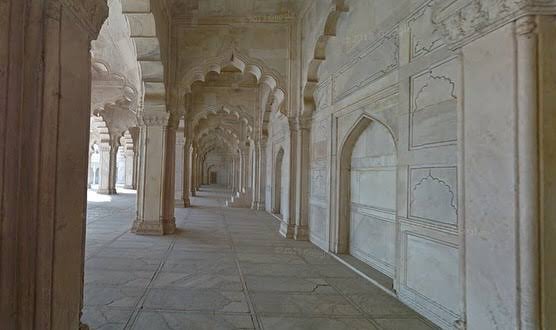
The prayer chamber opening, toward the courtyard through an arcade of seven arches. This arrangement of the prayer chamber creates a repeated pattern that gives the prayer hall a balanced almost symmetrical appearance.
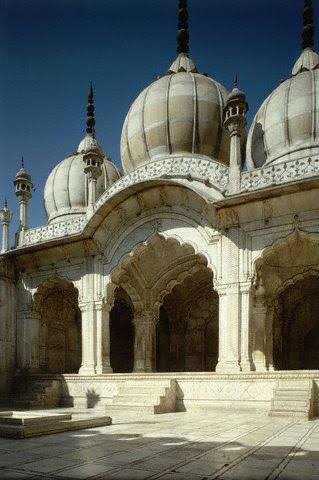
Three Marble Domes
Three big rounded domes sit on top of the room where people pray. Above the edge of the wall smaller square chhatris make the roof look more interesting and at the corners of the building there are octagon-shaped towers that have marble domes on top.
The Marble Screens
On each side of the prayer chamber there are prayer spaces that are traditionally linked with women. Marble lattice screens separate these prayer spaces from the hall giving both privacy and a touch of delicate detail, to the otherwise simple interior.
Moti Masjid at a Glance
The Moti Masjid does not rely on decoration to leave an impression. Its white marble, balanced courtyard and simple repeating shapes form its identity. That sense of restraint is part of what makes it different, from the buildings found in other parts of Agra Fort.
Nearby Places to Add to Your Agra Itinerary
A visit, to Moti Masjid already takes you inside Agra Fort so it makes sense to continue with Agra’s major Mughal landmarks. Several can be combined into a heritage-focused day.

Taj Mahal
Itmad-ud-Daulah’s Tomb
Jama Masjid
Mehtab Bagh
Conclusion: A Quiet Highlight of Agra Fort
Moti Masjid may not have the grandeur of Agra Fort’s palaces or the worldwide fame of the Taj Mahal. That is precisely what makes it special. It stands out because of its beauty. Built by Shah Jahan between 1648 and 1654 the mosque blends marble with careful design. The structure features proportions, a large open courtyard and three distinct domes. All of this is set within the fort complex making it a peaceful and elegant place to visit. Even though Moti Masjid looks simple at glance when you walk through Agra Fort, a closer look shows how carefully Moti Masjid was planned. Moti Masjid stands out because its pale marble walls contrast sharply with the sandstone of the rest of Agra Fort making Moti Masjid one of the most distinctive buildings, in the complex.
Explore Uttar Pradesh

Varanasi Blogs
- Uttar Pradesh Cultural guide
- Places to visit in Varanasi
- Places to visit nearby Varanasi
- India’s most popular destination
- India’s archaeological marvels
Recommended articles
- Uttar Pradesh Cultural guide
- Places to visit in Varanasi
- Places to visit nearby Varanasi
- India’s most popular destination