
Monuments of Memory
An Archeological overview of Megaliths in Palakkad, Kerala
by
Anvita Viji K
ABSTRACT
Megalithic culture, or the practice of using stones to commemorate or mark the place of burial of an individual, was widely practised during the Iron Age and Early Historic period. This article examines the culture in relation to Palakkad district, Kerala. It explores the tradition and the meaning attached to these stones, and how they live in memory long after the person’s death and how several beliefs, such as life after death, are associated with it. It examines a few sites in the district and, by elaborating on the material remains and the burial architecture found, it analyses how the topography influences the material culture of the society. Finally, the paper addresses the challenges in relation to these monuments and their universal similarity, apart from certain differences, throughout all stages of time.
INTRODUCTION
Landscapes hold memory. They whisper stories from a time long before our own, though their echoes often go unheard until someone stops to look a little closer. Long before scripts were written or languages were formalised, human beings were leaving unmistakable traces of their existence wherever they wandered. In the mountainous reaches of Palakkad, these hidden traces point to a society that existed in the past, during the Iron Age and Early Historic period, known as the Megalithic culture.
Megaliths, derived from the Greek words “large stones”, are such traces left by humans pertaining to the burial and ritualistic aspects of death. These are monuments made up of blocks of stones in different types to commemorate or mark the place in which a person has died. Stonehenge, located in England, is one of the examples of such monuments
The types of monuments which are used for this often differs in shapes and the material used depending upon the geography and the common types are Dolmens, Menhirs (mainly consisting of a single stone), Cist burials (a rectangular structure consisting of slabs), Kudakallu (a variety seen in South India consisting of a stone shaped like an umbrella, used to identify the place of burial), Topikallu or otherwise known as hat stone, etc. Apart from the burial architecture, the dead person is also accompanied by material goods such as pottery, mainly consisting of black and red ware, various types of beads, and iron implements. This is primarily associated with the belief system that the dead will later need those items for their afterlife. Or maybe the material remains and associated pottery might be only related to the elite or the prestigious group of the community. Anyway, the megaliths stand as a huge archaeological marker of the past communities who have walked through these lands.
In India, these sites are mainly observed in the regions of the Deccan Plateau, and are also found in regions such as Punjab and Kashmir, northeast India and also in South India. Research and documentation were started in the colonial period, with the initiatives of J. Babington’s work ‘Description of the Pandoo Coolies in Malabar’ in 1823, which is often cited as the first published megalithic burial in India.
Mortuary Landscapes of Palakkad
Palakkad is a district which is located in the central part of Kerala and is prominently known as the Gateway to Kerala due to the Palakkad Gap, a natural corridor in the Western Ghats. The areas abundant in these Megalithic practices include the villages, set apart in the rocky landscapes, and are found in proximity to water sources. This might indicate the settlement pattern of the population, as food and water are the major requirements. Alongside that, they also looked for raw materials to make these structures, as most of them are found near quarries, which can indicate that these practices played an important role in the society that lived there. Pallateri, Pallasana, Malampuzha, Attapady, Kollamgode, Nenmara, Anakkara, etc. show an abundant number of such structures. Interestingly, we can observe that the burials occur in clusters (many within an area) and also individually.
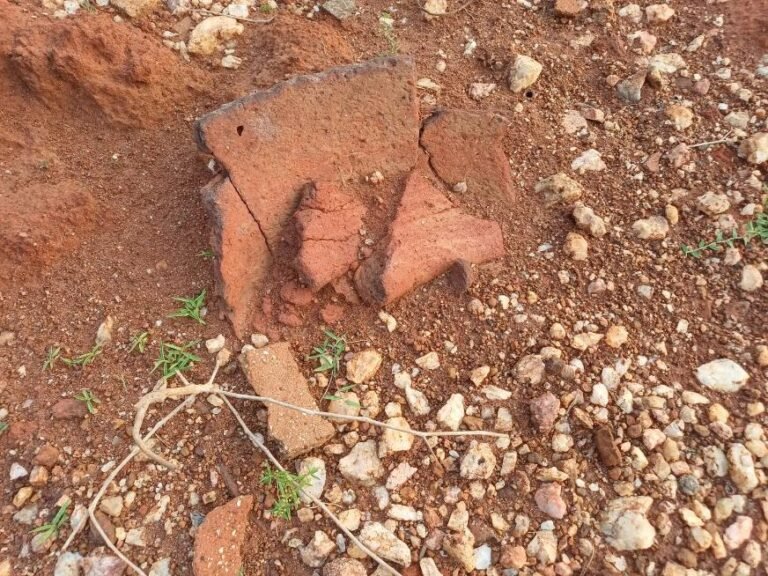
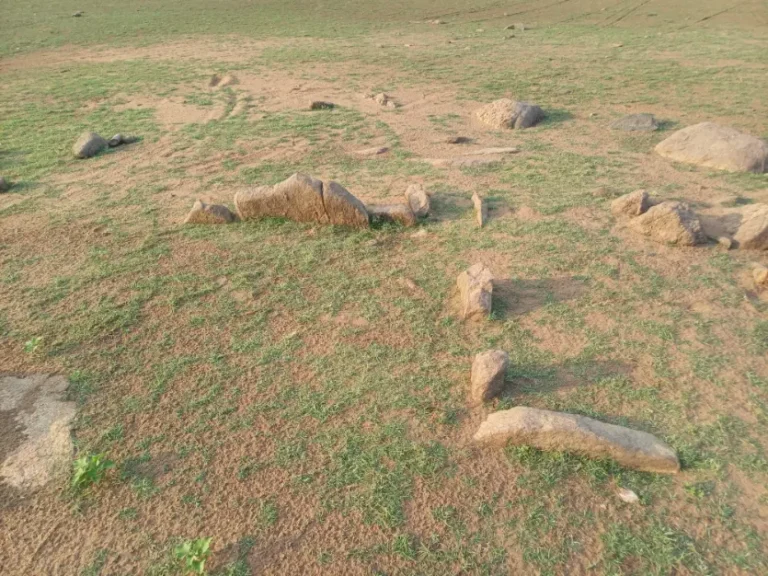
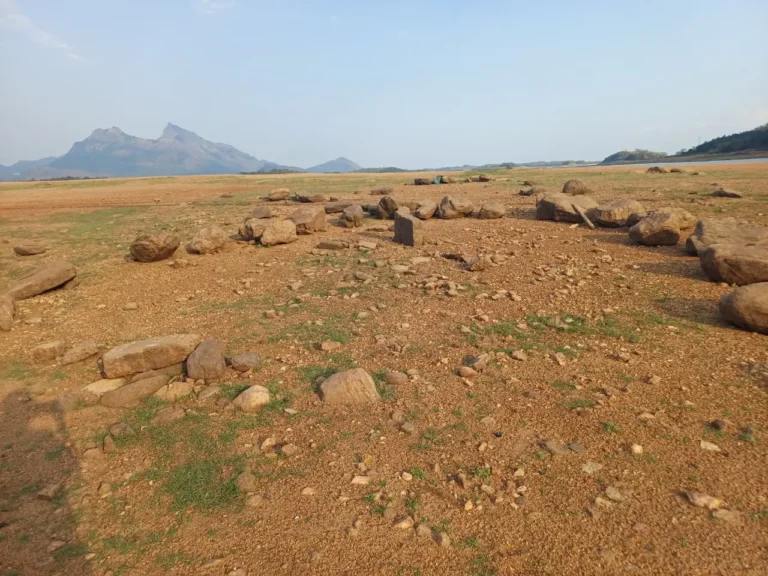
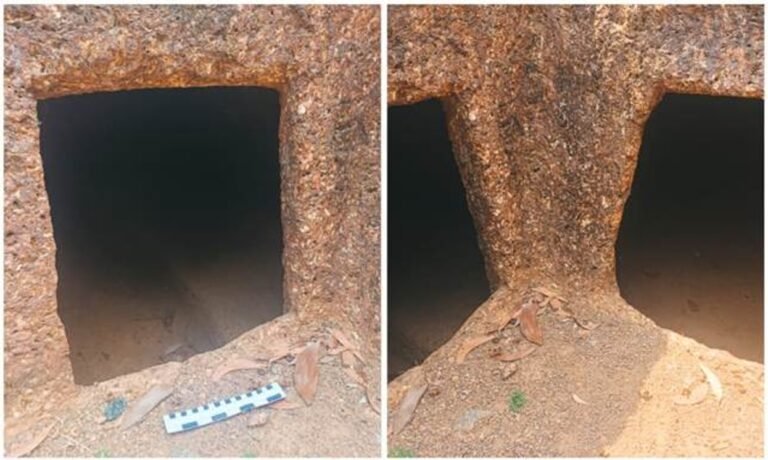
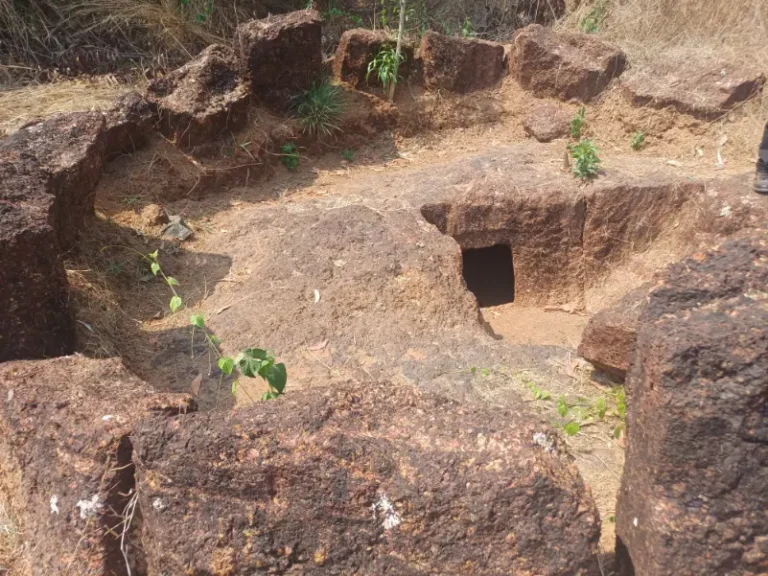
A striking example is at the site of Malampuzha is one such site, which was excavated in March 2025 by ASI and revealed a large number of such megalithic structures. It mainly consists of the area within a dam reservoir, and therefore remains seasonally submerged. The megaliths found mainly include stone and cist burials, which include burials in the form of cists (a rectangular formation in megalithic architecture), surrounded by a stone circle. Kunnumpuram, a site in the Malampuzha reservoir area, has numerous cists, stone circles and urn burials (in which bodies are placed inside an urn). While in Pallateri, a village close to Palakkad town, the documented megaliths are few to be seen due to the development of houses and construction activities, but still there is evidence of stone circles and cists along with pottery and tools recollected by the people living there. In Anakkara, knowledge of such monuments exists among the people there, and therefore the monuments do not have much damage. There we can see a different kind of megalithic burial architecture, mainly rock-cut caves with raised platforms for the bodies to be kept along with the material goods. Here, there have also been the findings of an iron trident, carnelian beads, pottery, and iron lamps, which indicate expert knowledge in iron manufacture.
Interestingly, most of the cultures have the tradition of marking the place of the burial with a stone. Whether it be an umbrella stone in Kerala, a pyramid in Egypt, or a gravestone in a modern churchyard, human beings across all time have taken care to honour and commemorate their dead. All these structures have one thing in common: they were used as part of burial traditions. Primarily, the primary idea comes from marking the ground to indicate a burial, which would have later been followed by the complex burial architecture and beliefs. All these burials point out the fact that the people embodied the nature to reflect and remember their ancestors and also how the same natural differences paved way for different but weirdly similar traditions across regions.
The documentation presented here is the result of independent field study conducted by Anvita Viji K. All rights to this work remain with the author and are published on Trip and Tales under her authorization. Trip and Tales holds no ownership over this content.
Trip and Tales sincerely thanks Anvita Viji K for permitting the publication of her work for the benefit of readers and heritage enthusiasts.